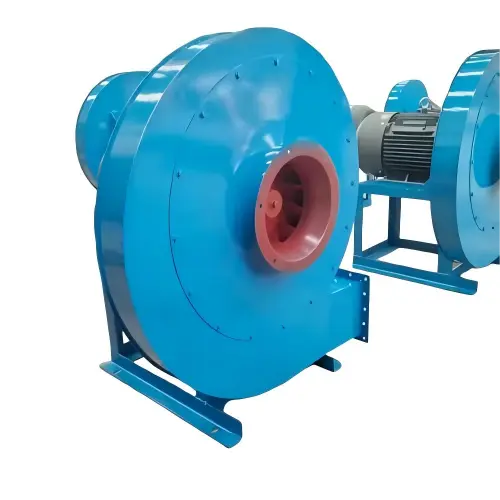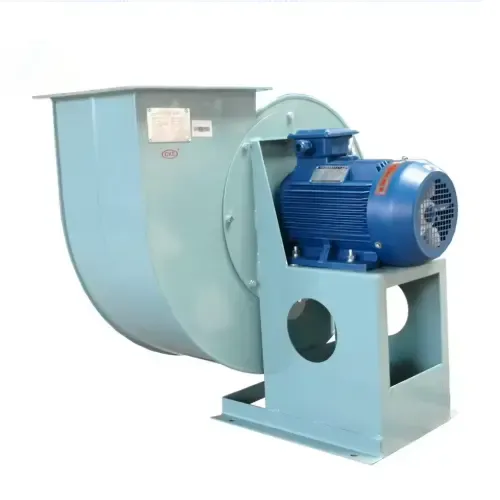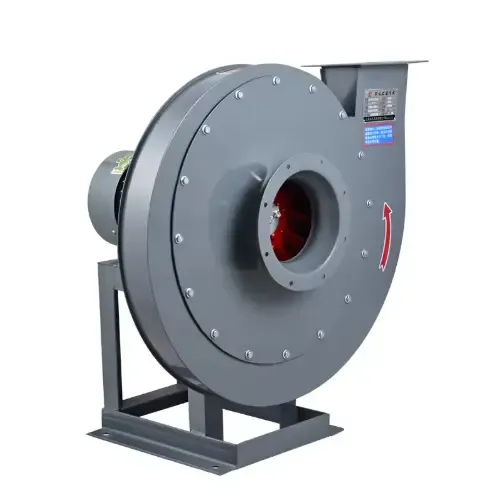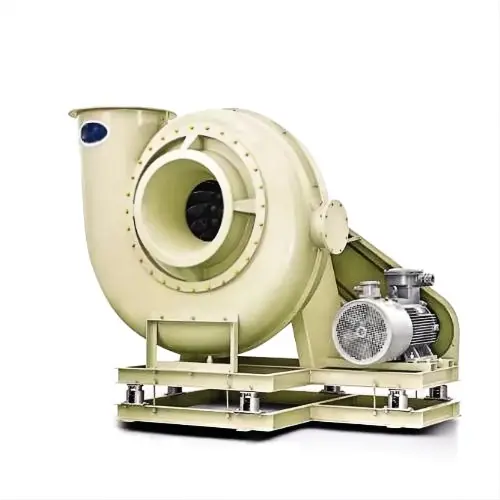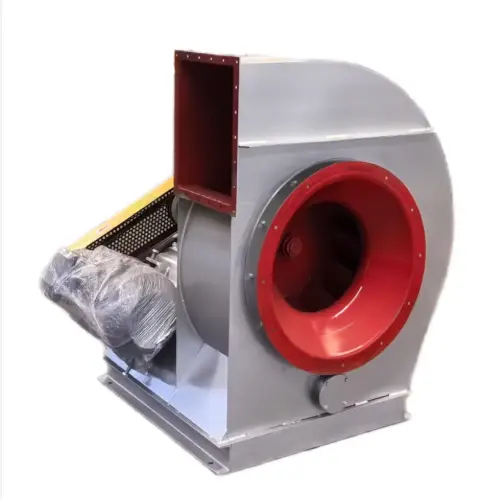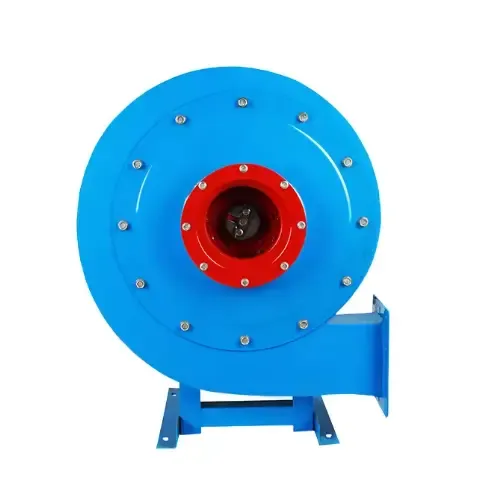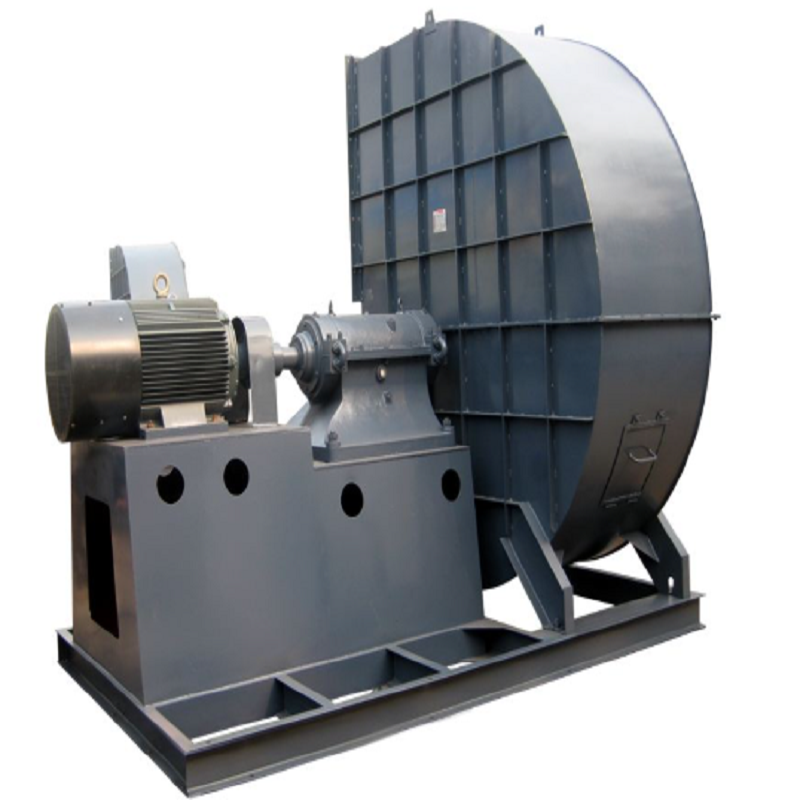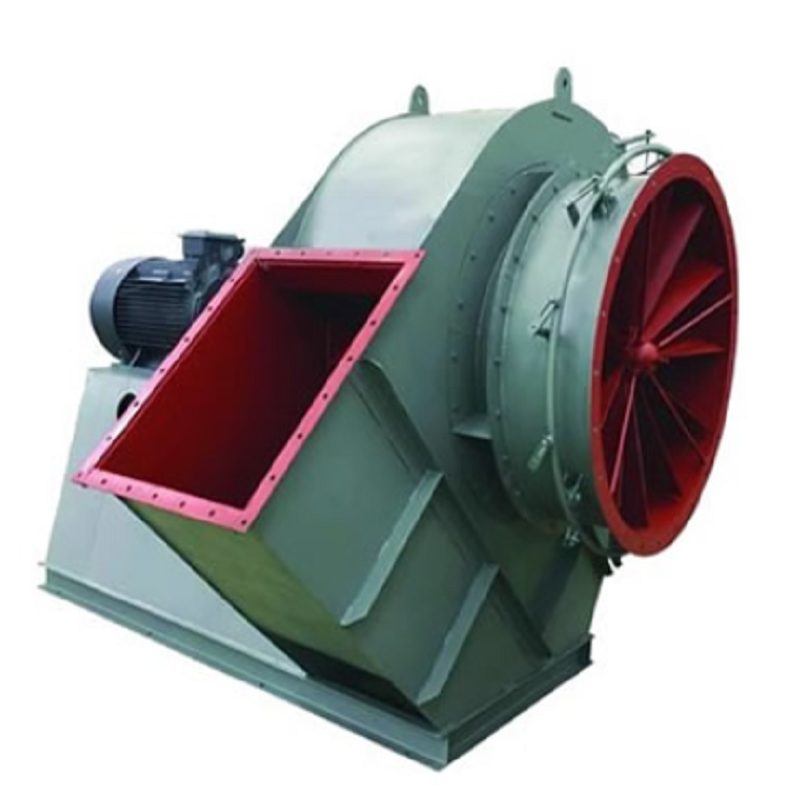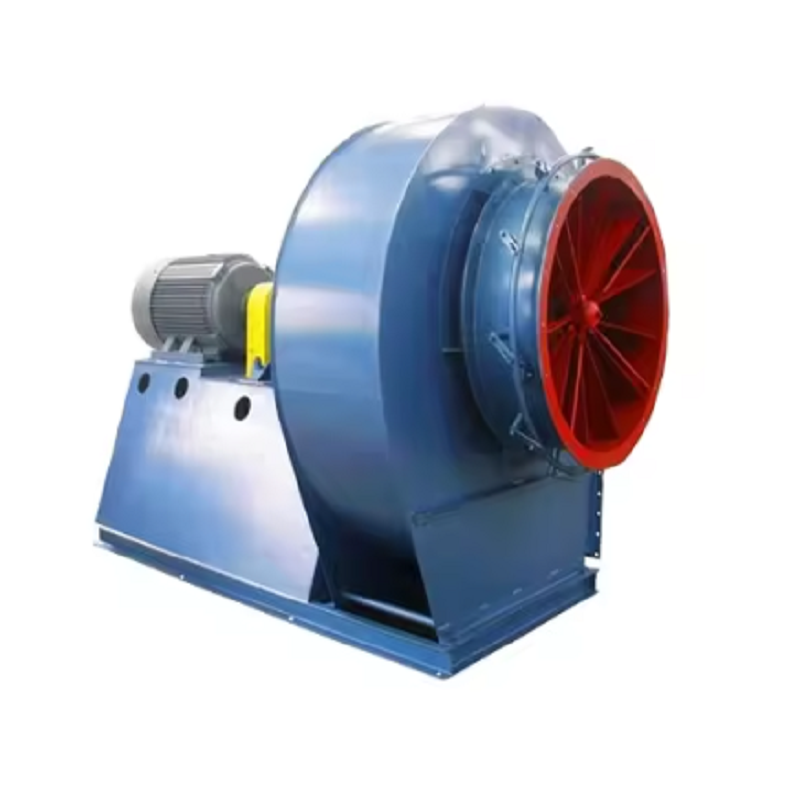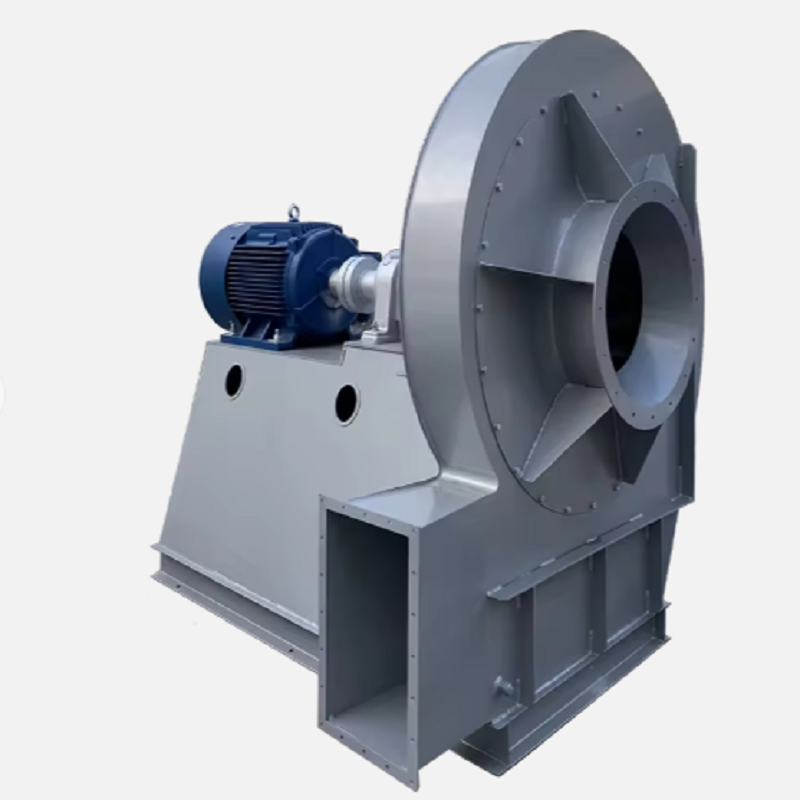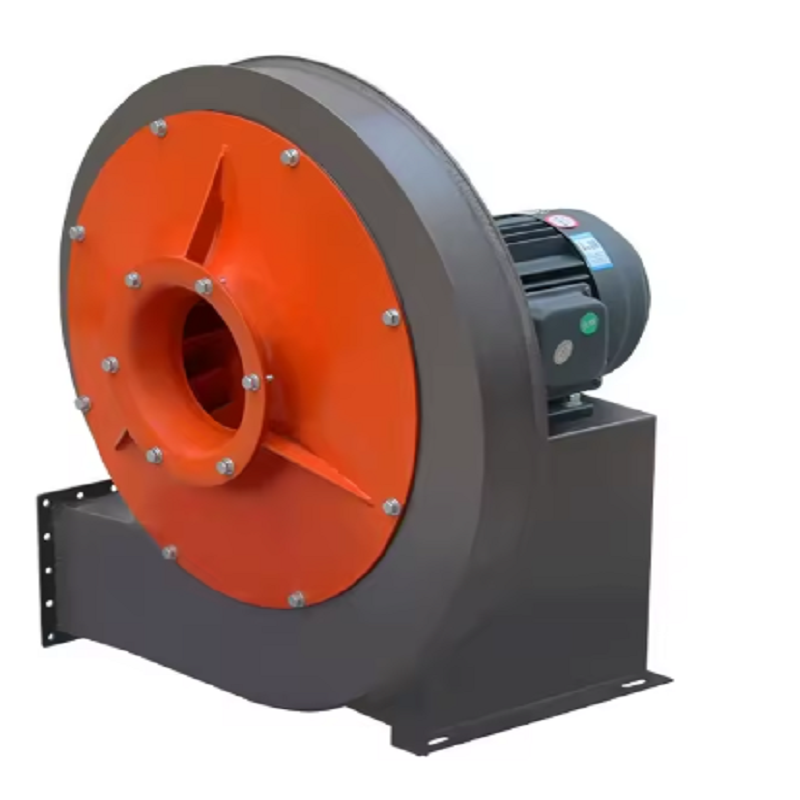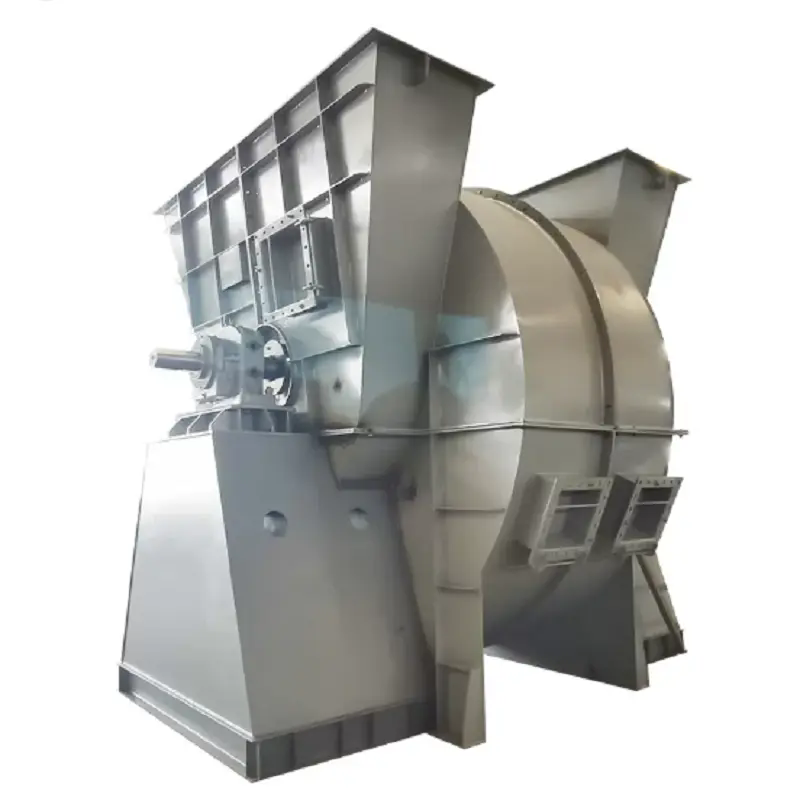
Boiler air and flue gas systems operate under conditions that can be much more demanding than ordinary industrial ventilation. High temperature, moisture, combustion products, dust, and corrosive components can all affect fan performance and service life. In these applications, a Stainless Steel Centrifugal Fan can be considered when the gas conditions create a corrosion risk that ordinary carbon steel construction cannot adequately handle.
The important point is that stainless steel should not be selected simply because the system is classified as “high temperature.” A Stainless Steel Centrifugal Fan still has to be designed around the actual airflow, pressure, gas temperature, gas composition, dust loading, operating hours, and control method. These parameters determine the impeller design, casing material, shaft arrangement, bearings, drive configuration, and required protection.
The first step when selecting a Stainless Steel Centrifugal Fan for a boiler system is to establish the actual duty point. For example, a boiler exhaust system may require 20,000 m³/h at 2,000 Pa, with a normal gas temperature of 180°C and a maximum temperature of 220°C.
The specification should not simply state “20,000 m³/h boiler fan.” The pressure must be included because the required airflow depends on the resistance of the complete system. A typical flue gas system may include a boiler outlet, ductwork, cyclone or dust collector, scrubber, damper, chimney, and several elbows. Each component contributes pressure loss.
For a Stainless Steel Centrifugal Fan, the fan curve should therefore be checked against the calculated system resistance. If the system resistance is underestimated during selection, the fan may deliver less airflow than expected after installation. If the fan is substantially oversized, the operating point may move too far to the right of the intended performance range, increasing airflow and motor load.
Temperature has a direct effect on the design of a Stainless Steel Centrifugal Fan. The engineering specification should include both normal operating temperature and maximum temperature rather than using a general description such as “hot flue gas.”
For example:
Normal gas temperature: 180°C
Maximum gas temperature: 220°C
Required airflow: 20,000 m³/h
Required pressure: 2,000 Pa
At elevated temperatures, the gas density is lower than ambient air. This affects the pressure and power calculations and can also influence the mechanical arrangement of the fan. Shaft expansion, bearing temperature, thermal deformation, and heat transfer toward the bearing housing should all be considered.
In a Stainless Steel Centrifugal Fan handling hot flue gas, the impeller may be manufactured from stainless steel while the shaft, bearings, cooling arrangement, and other components are selected according to their individual temperature limits. The complete fan should be treated as a thermal system rather than assuming that changing only the impeller material solves the high-temperature problem.
Boiler flue gas is not always chemically aggressive, but certain fuels and combustion processes can produce conditions where corrosion becomes a major concern. A Stainless Steel Centrifugal Fan may be used when the gas contains moisture combined with acidic or corrosive compounds.
For example, depending on the fuel and process, flue gas may contain sulfur compounds, chlorides, water vapor, fly ash, or other combustion products. If the gas temperature falls below the dew point, condensation can occur inside the duct or fan. This can accelerate corrosion considerably.
This is an important practical issue when specifying a Stainless Steel Centrifugal Fan. The operating temperature alone does not determine corrosion risk. Engineers should also know the moisture content, expected dew point, chemical composition, and whether the fan can experience cold startup or shutdown conditions.
Selecting “stainless steel” without specifying the grade is not sufficient for a Stainless Steel Centrifugal Fan used in a demanding boiler system.
304 stainless steel may be suitable for some relatively mild environments, while 316L can provide better resistance in applications involving certain chlorides and corrosive process gases. More aggressive chemical conditions may require other grades or special alloys.
A practical material review should consider:
Gas composition
Chloride concentration
Acidic components
Gas temperature
Moisture level
Condensation risk
Dust characteristics
Required service life
For example, if a flue gas system contains humid acidic components, simply upgrading from carbon steel to 304 stainless steel without reviewing the actual chemical environment may not provide the expected service life. The material selection for a Stainless Steel Centrifugal Fan should therefore be based on process chemistry rather than the material name alone.
Consider a process boiler with the following operating conditions:
Airflow: 18,000 m³/h
Pressure: 2,200 Pa
Normal temperature: 160°C
Gas: Moist flue gas containing acidic components
Operation: 20 hours/day
The original fan uses carbon steel construction. After several months, corrosion appears around the impeller inlet and casing, particularly in areas where moisture accumulates.
Before replacing the fan, technicians should determine why condensation is occurring. If the gas temperature drops significantly during low-load operation, local surfaces may fall below the dew point. Water combined with acidic compounds can then attack the metal surface.
A Stainless Steel Centrifugal Fan can improve corrosion resistance, but the system should also be reviewed for insulation, drainage, operating temperature, shutdown procedures, and cold-start conditions. Otherwise, the same condensation problem can continue even after the fan material is upgraded.
Boiler flue gas can contain fly ash and other solid particles. For a Stainless Steel Centrifugal Fan, corrosion resistance does not automatically mean resistance to abrasive wear.
If the gas contains a high concentration of hard particles, the impeller blade leading edges may gradually erode. Uneven wear can also affect the impeller balance and cause vibration.
When evaluating a Stainless Steel Centrifugal Fan for dusty gas, technicians should record particle size, concentration, hardness, and moisture content. If the dust is abrasive, wear-resistant construction, replaceable wear plates, or suitable blade geometry may be required in addition to corrosion-resistant material.
A practical inspection schedule should include checking the blade leading edges, back plate, inlet cone, casing, and areas where dust tends to accumulate. Measuring blade thickness at fixed inspection points is useful because it allows engineers to identify the rate of material loss instead of relying only on visual inspection.
A common purchasing mistake is to specify a Stainless Steel Centrifugal Fan by motor power alone.
For example, a customer may say that the existing fan uses a 30 kW motor and therefore the replacement fan should also use a 30 kW motor. This does not provide enough information for proper selection.
Fan power depends on airflow, pressure, gas density, fan efficiency, transmission efficiency, and operating conditions. A simple preliminary calculation is:
P ≈ Q × ΔP / (1000 × η)
where Q is airflow in m³/s, ΔP is pressure in Pa, and η is overall efficiency.
For example, if airflow is 20,000 m³/h, pressure is 2,000 Pa, and the assumed overall efficiency is 70%, the estimated power requirement is approximately:
20,000 / 3,600 = 5.56 m³/s
P ≈ 5.56 × 2,000 / (1000 × 0.70)
P ≈ 15.9 kW
The final motor selection must still account for the actual fan curve, transmission losses, operating range, startup requirements, and service factor. This calculation is useful for checking whether the proposed motor size is reasonable, not for replacing the manufacturer's performance calculation.
Suppose a Stainless Steel Centrifugal Fan is specified for 20,000 m³/h at 2,000 Pa, but the boiler system only achieves 17,000 m³/h after commissioning.
Replacing the fan immediately would be premature.
The commissioning team should measure the actual fan speed, inlet pressure, outlet pressure, damper position, motor current, and system pressure losses. The filter or dust collector should also be inspected because a higher-than-expected pressure drop can move the operating point away from the design condition.
For example, if the dust collector was expected to create a 500 Pa pressure loss but actually produces 850 Pa, the additional 350 Pa resistance may explain much of the airflow reduction.
In this situation, the Stainless Steel Centrifugal Fan may be operating correctly while the system itself is creating excessive resistance. Correcting the process-side problem can be more effective than replacing the fan.
The opposite situation is also common. A Stainless Steel Centrifugal Fan designed for 20,000 m³/h may deliver 24,000 m³/h after installation because the actual system resistance is lower than expected.
This can increase motor power consumption and may move the fan away from its intended operating point.
Technicians should check:
Fan rotational speed
Damper position
Actual system resistance
Pulley ratio
VFD frequency
Motor current
Fan pressure
Vibration
If the fan is running at 1,100 rpm instead of the original 1,000 rpm, the approximate affinity-law relationships indicate that airflow can increase by about 10%, pressure by about 21%, and power by about 33%, assuming comparable operating conditions.
This is why speed changes on a Stainless Steel Centrifugal Fan should be made gradually while monitoring motor current, vibration, bearing temperature, airflow, and pressure.
A Stainless Steel Centrifugal Fan should not be judged only by whether it produces the required airflow. Vibration should be monitored during commissioning and routine operation.
Common causes of increasing vibration include:
Impeller imbalance
Dust buildup
Blade erosion
Shaft misalignment
Bearing deterioration
Loose foundation bolts
Belt misalignment
Coupling problems
For dusty boiler applications, impeller buildup is particularly important. If dust accumulates unevenly on one or more blades, the original dynamic balance can change.
If vibration gradually increases after several months of operation, technicians should compare the current vibration level with the commissioning baseline. If the fan speed has not changed but vibration has increased significantly, inspection of the impeller and bearings should be carried out before the problem develops into a major mechanical failure.
The mechanical arrangement of a Stainless Steel Centrifugal Fan should also reflect the temperature and installation environment.
For high-temperature flue gas applications, the bearing assembly may need to be positioned away from the hot gas path. Depending on the design, a cooling disc, extended shaft, or other heat-management arrangement may be required.
The purpose is not simply to keep the stainless-steel impeller from corroding. The bearing and lubricant must also remain within their allowable operating temperature.
During commissioning, bearing temperature should be monitored from cold startup through stabilized operation. A fan that appears normal after five minutes may show a significantly different bearing temperature after several hours of continuous operation.Control the Fan According to Boiler LoadBoiler airflow requirements change with process load. A Stainless Steel Centrifugal Fan operating continuously at full speed when the boiler is running at partial load can waste energy.
For systems with significant load variation, a VFD can provide more flexible airflow control than keeping the fan at constant speed and using a damper to throttle the flow.
However, VFD operation should be checked against the fan's allowable speed range. The motor must also be suitable for inverter operation, and the impeller, bearings, shaft, and balancing condition must be appropriate for the maximum operating speed.
A practical commissioning procedure is to establish several operating points—for example 50%, 75%, and 100% boiler load—and record airflow, pressure, motor current, speed, vibration, and bearing temperature at each point.
This creates a useful operating map for the Stainless Steel Centrifugal Fan and helps operators identify abnormal performance later.
Before putting a Stainless Steel Centrifugal Fan into long-term boiler service, technicians should verify the following:
Process conditions
Normal gas temperature
Maximum gas temperature
Gas composition
Moisture content
Dust concentration
Expected dew point
Required airflow
Required pressure
Mechanical condition
Impeller balance
Shaft alignment
Bearing condition
Coupling or belt alignment
Foundation bolts
Impeller-to-casing clearance
Rotation direction
Operating data
Fan speed
Motor current
Airflow
Static or total pressure
Bearing temperature
Vibration
Recording these values during commissioning provides a baseline. If airflow decreases or vibration rises six months later, technicians can compare the new measurements against the original operating data instead of troubleshooting without a reference.
A Stainless Steel Centrifugal Fan can be an effective solution for boiler air and flue gas systems where corrosion, moisture, temperature, or process contamination creates requirements beyond ordinary carbon-steel construction.
But stainless steel alone does not make a fan suitable for every boiler application. The correct design must consider the complete operating environment, including airflow, pressure, temperature, gas chemistry, dust loading, condensation risk, fan speed, bearing temperature, and control strategy.
For engineers specifying a Stainless Steel Centrifugal Fan, the most useful approach is to provide complete process data before selecting the fan. With accurate operating conditions, the manufacturer can select the appropriate stainless-steel grade, impeller construction, shaft arrangement, bearing configuration, drive system, and control method.
That approach reduces the risk of corrosion, insufficient airflow, excessive motor load, vibration, premature wear, and unnecessary energy consumption—and gives the boiler system a much more reliable basis for long-term operation.