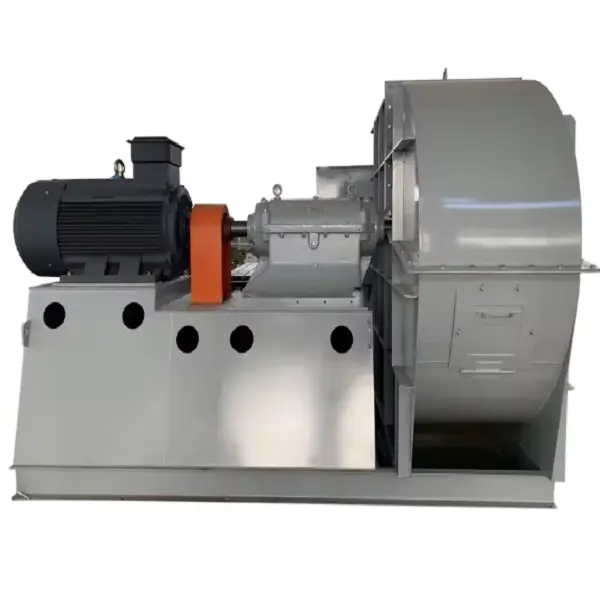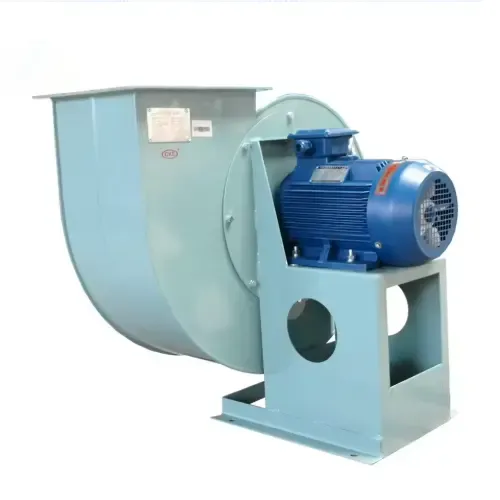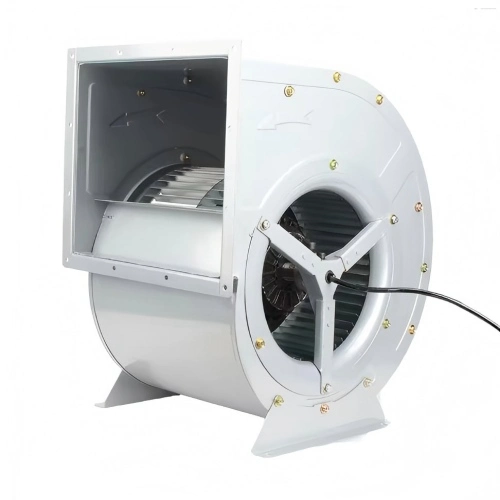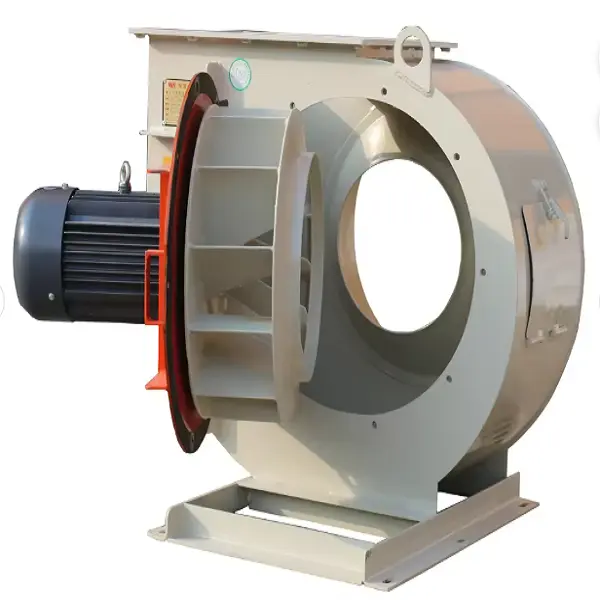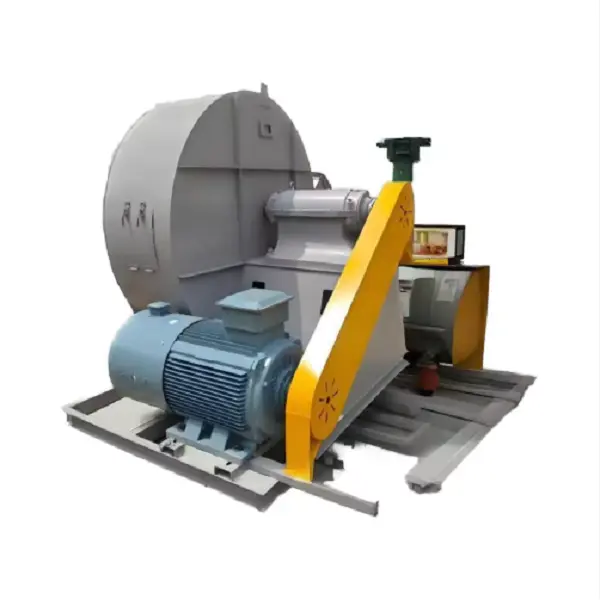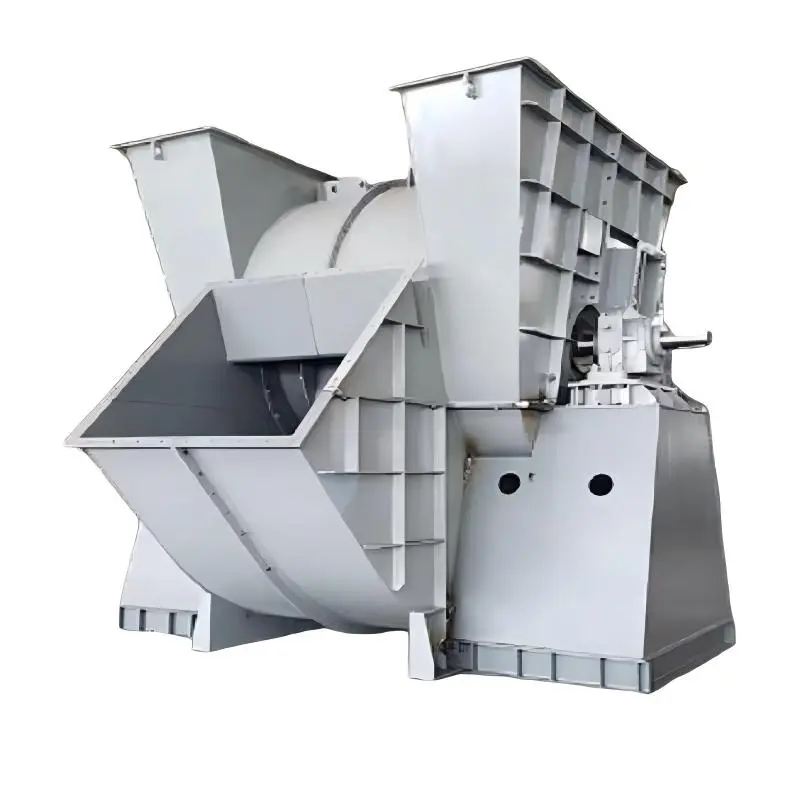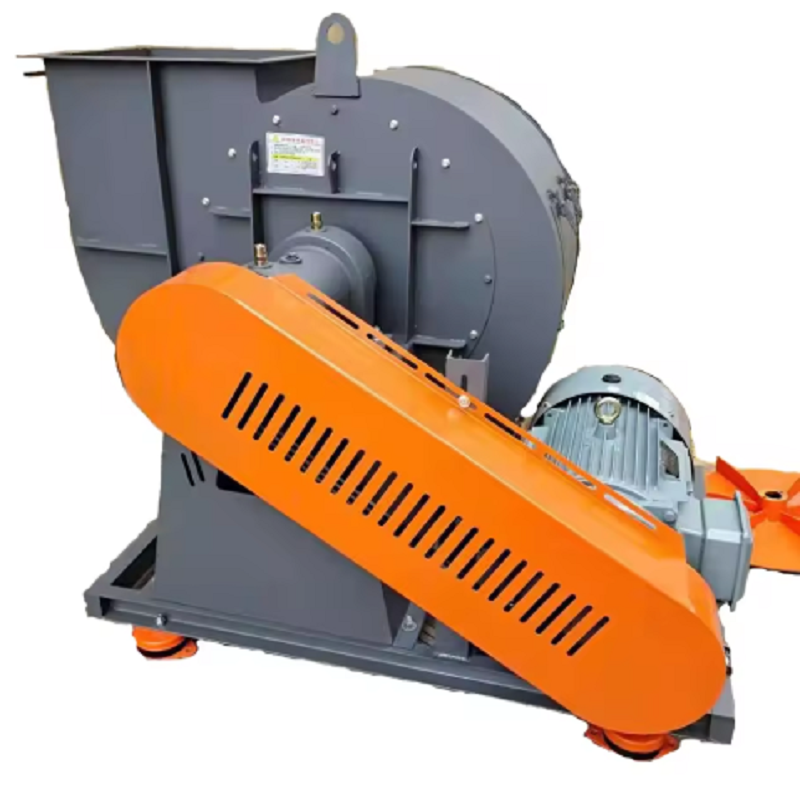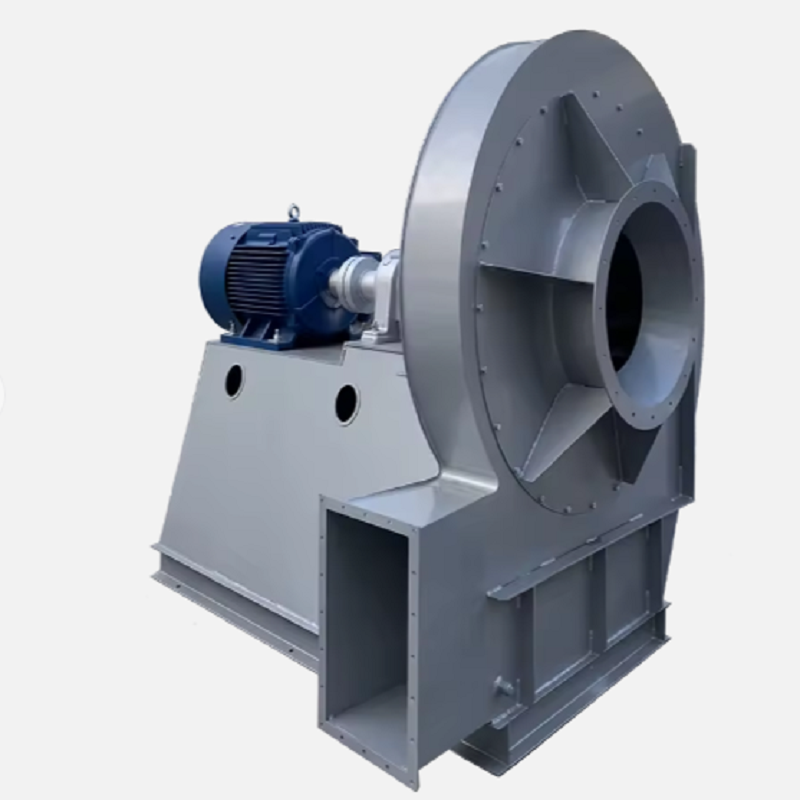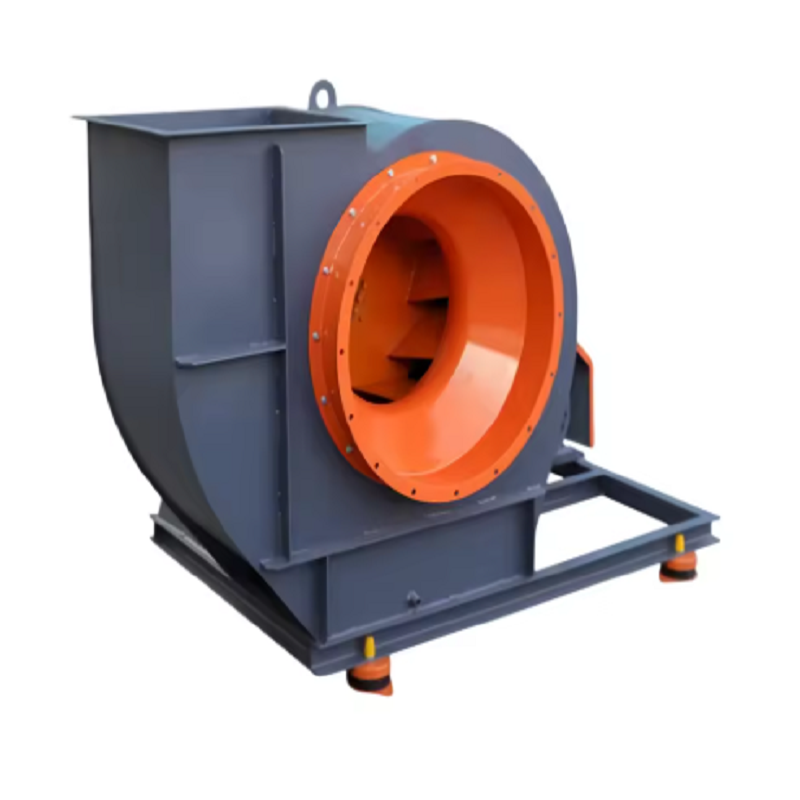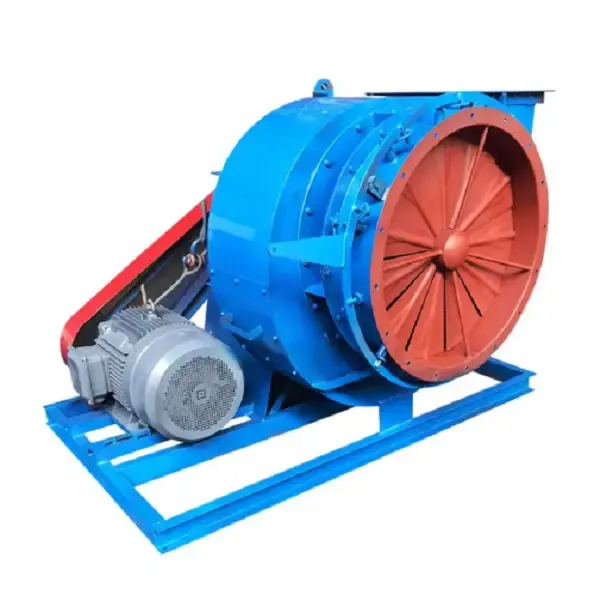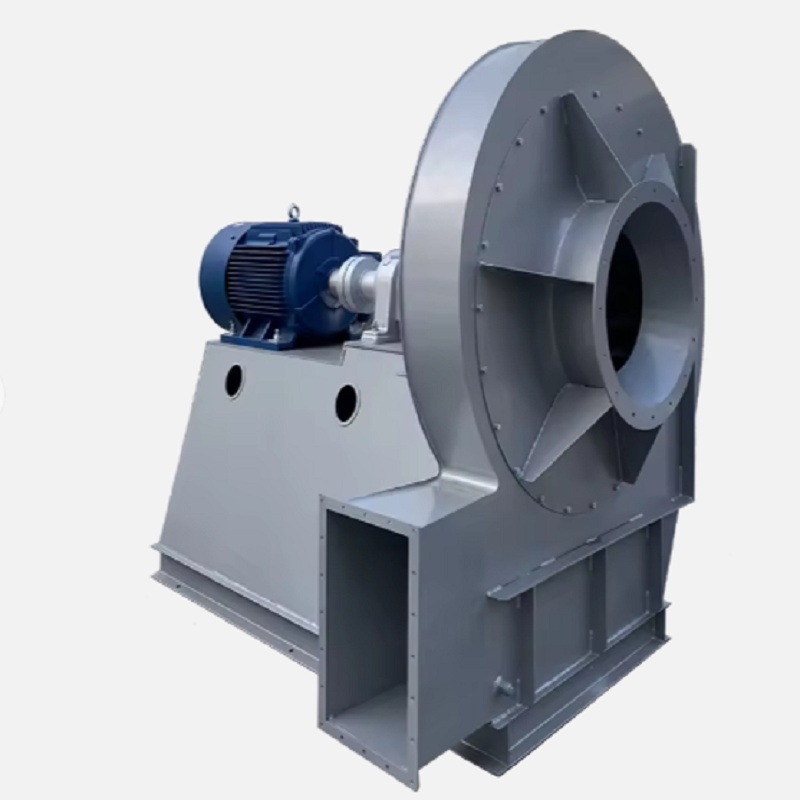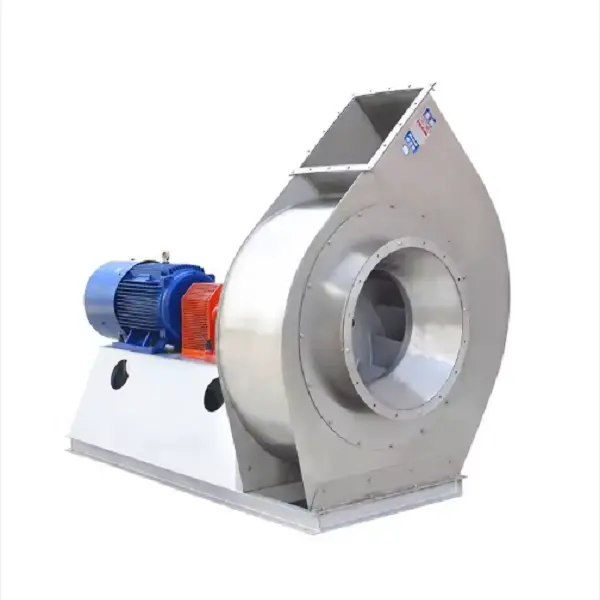
Reliable industrial ventilation is not simply a matter of moving as much air as possible. In an operating plant, the fan must deliver the required airflow and static pressure while keeping power consumption, vibration, and acoustic emissions under control. This is where High-Efficiency Low-Noise Centrifugal Fans become particularly useful. Proper selection starts with the actual system resistance and duty point rather than choosing a fan only by motor power or nominal airflow.
When I select High-Efficiency Low-Noise Centrifugal Fans for an industrial ventilation project, I first establish the required airflow and total system pressure. The calculation needs to include straight duct friction, elbows, dampers, filters, heat exchangers, silencers, hoods, and other components. A fan selected only for 20,000 m³/h without checking whether the system requires 800 Pa or 2,000 Pa can easily end up operating at the wrong point.
For example, suppose a workshop exhaust system requires 20,000 m³/h at 1,800 Pa. Before selecting the fan, I would measure or calculate the pressure loss of the complete duct system. If the actual resistance is 2,100 Pa, selecting a fan based on 1,800 Pa will leave insufficient operating margin. On the other hand, selecting a much larger fan simply "for safety" may push the operating point away from the best-efficiency region and increase energy consumption and noise. Fan selection should therefore be based on the intersection of the fan curve and system curve.
A common mistake is to treat efficiency and noise as two completely separate specifications. In reality, fan speed, impeller design, airflow velocity, and operating point affect both. High-Efficiency Low-Noise Centrifugal Fans normally achieve better acoustic performance when the aerodynamic design allows the required duty to be achieved without excessive rotational speed.
For the same airflow and pressure, a larger impeller operating at a lower speed can often reduce tip speed and aerodynamic noise compared with a smaller, faster-running impeller. Backward-curved or backward-inclined impellers are frequently considered when both efficiency and noise are important because their aerodynamic characteristics can support efficient operation at industrial duty points.
I often see a practical problem during commissioning: the fan produces considerably more airflow than the process requires, so the operator partially closes the discharge damper. Although this can reduce airflow, it does not necessarily provide the most energy-efficient solution.
Consider a fan originally designed for 24,000 m³/h at 1,500 Pa, while the process actually needs 20,000 m³/h at approximately 1,500 Pa. If the fan is driven by a VFD, reducing speed can be evaluated instead of permanently throttling the system. According to the fan affinity relationships, airflow varies approximately with speed, pressure with the square of speed, and power with approximately the cube of speed. Therefore, reducing speed from 1,000 rpm to about 833 rpm gives a first-order airflow estimate of around 20,000 m³/h, although the final operating point must still be verified against the actual system curve.
This is one reason High-Efficiency Low-Noise Centrifugal Fans work particularly well in applications where ventilation demand changes during different production stages. Instead of continuously running at full speed and dissipating excess pressure through a damper, the control system can adjust fan speed to match the process demand.
Here is a typical engineering situation. A metal-processing workshop needs approximately 18,000 m³/h of exhaust air. The original fan uses a relatively small impeller at high rotational speed. During commissioning, the measured airflow is acceptable, but workers report excessive noise near the fan room.
Rather than immediately installing a larger silencer, I would first check five items: fan rotational speed, operating point, inlet flow condition, outlet duct arrangement, and mechanical vibration. A partially blocked inlet, sharp elbow immediately before the inlet, or abrupt discharge transition can create turbulence and additional noise even when the fan itself is correctly selected.
For High-Efficiency Low-Noise Centrifugal Fans, the first corrective step should be to determine whether the fan can meet the same duty at a lower speed with an appropriately sized impeller. The second step is to inspect the duct layout. If the aerodynamic conditions are poor, correcting the inlet or outlet arrangement can sometimes improve the situation without changing the fan itself. Noise should therefore be treated as a system problem rather than simply a fan-nameplate specification. Check Sound Power Instead of Looking Only at dB(A)When specifying High-Efficiency Low-Noise Centrifugal Fans, I recommend asking the manufacturer exactly how the noise value was obtained. A single "65 dB(A)" figure is not enough for a serious industrial specification because sound pressure depends on measurement distance, room acoustics, installation conditions, and background noise.
For a project with strict acoustic requirements, it is more useful to request sound-power data and, where available, octave-band information. AMCA provides dedicated procedures and certification programs covering fan aerodynamic and sound performance, including AMCA 210 for aerodynamic testing and AMCA 300/301 for sound testing and rating.
This becomes important when the fan is installed close to offices, control rooms, laboratories, or occupied production areas. A fan that looks quiet in an open factory test environment may produce a completely different perceived noise level after installation inside a reflective equipment room.
Even well-designed High-Efficiency Low-Noise Centrifugal Fans can perform poorly if the connected ductwork creates excessive turbulence. In practical installations, I check the distance between the fan inlet and the nearest elbow, reducer, damper, or branch connection.
For example, if an elbow is installed immediately upstream of the fan inlet, the airflow entering the impeller may become highly non-uniform. The fan may still produce the required average airflow, but pressure loss, vibration, and noise can increase. Similar problems can occur at the discharge when an abrupt transition causes flow separation.
This is why fan installation should be considered as a complete aerodynamic system. The fan curve represents the fan under defined test conditions; the installed system introduces additional losses and system effects that must be considered during engineering.Select the Drive Arrangement According to the ApplicationDrive configuration is another important consideration. Direct-drive High-Efficiency Low-Noise Centrifugal Fans eliminate belts and pulleys, reducing belt-related maintenance and mechanical losses. They are particularly attractive where the required operating speed is relatively fixed.
Belt-driven fans remain useful when speed adjustment or mechanical flexibility is required. Pulley ratios can be changed during commissioning, but belt tension, alignment, bearing condition, and belt wear must then become part of the maintenance program. If a VFD is used, the motor and drive system also need to be checked across the intended speed range rather than assuming that every standard motor can operate indefinitely at any frequency.
Another practical mistake is comparing fans only by their maximum efficiency value. A fan may have an excellent peak efficiency but operate far away from that point in the customer's actual installation.
For example, imagine two candidate High-Efficiency Low-Noise Centrifugal Fans. Fan A reaches its peak efficiency at 20,000 m³/h and 1,800 Pa, while Fan B reaches peak efficiency at 26,000 m³/h and 1,800 Pa. If the plant permanently needs only 20,000 m³/h, Fan A may be better aligned with the actual duty, assuming other specifications are suitable. The correct comparison therefore needs to use the actual duty point, not the headline efficiency number.
This also explains why excessive safety margins can become counterproductive. Oversizing the fan can increase initial cost, motor size, throttling requirements, and operating noise while leaving the fan away from its best operating region. Commissioning: Establish a Baseline Before Handing Over the Fan
After installing High-Efficiency Low-Noise Centrifugal Fans, I recommend recording a commissioning baseline rather than simply checking whether the fan starts successfully.
At minimum, I would record:
Airflow
Fan static or total pressure
Motor voltage
Motor current
Fan speed
Bearing temperature
Overall vibration
Ambient and process-air temperature
Noise level at defined measurement locations
For example, if the commissioned fan operates at 20,000 m³/h, 1,800 Pa, 980 rpm, the measured motor current and vibration should be documented. Six months later, if airflow has fallen to 18,000 m³/h while speed remains unchanged, the maintenance team has a reference point for investigating filter loading, duct blockage, damper position, belt slip, impeller buildup, or system resistance changes.
The efficiency of High-Efficiency Low-Noise Centrifugal Fans cannot be maintained by fan design alone. Dust accumulation on the impeller can change rotor balance and aerodynamic performance. Loose foundation bolts can create mechanical vibration. Misaligned belts can increase bearing loads, while deteriorated bearings can introduce both vibration and noise.
For dusty industrial applications, I recommend establishing an inspection interval based on actual operating conditions rather than using an arbitrary calendar period. During inspection, check impeller cleanliness, blade condition, shaft condition, bearing temperature, bearing vibration, belt tension, coupling alignment, and foundation fasteners.
If the fan becomes noticeably louder after several months of operation, I would not immediately assume that the aerodynamic design has failed. Mechanical imbalance, bearing deterioration, deposits on the impeller, loosened components, and changes in duct resistance should all be checked systematically.
Before ordering High-Efficiency Low-Noise Centrifugal Fans, I would confirm the following information with the supplier:
Required airflow in m³/h or CFM.
Required static or total pressure in Pa or in. w.g.
Air temperature and density.
Dust, moisture, corrosive gases, or other contaminants.
Required operating speed.
Motor power, voltage, frequency, and efficiency class.
Direct-drive or belt-drive arrangement.
VFD operating range, if applicable.
Maximum allowable sound level and measurement method.
Impeller material and casing material.
Fan performance curve.
Efficiency at the actual duty point.
Vibration and balancing requirements.
Installation orientation and duct dimensions.
Maintenance access and replacement requirements.
The objective is not simply to purchase a fan advertised as "high efficiency" or "low noise." The real objective is to select a fan that operates efficiently and acoustically within the actual industrial ventilation system.
High-Efficiency Low-Noise Centrifugal Fans can provide a practical balance between airflow performance, energy consumption, acoustic control, and long-term reliability. The key is not a single component or specification. Fan size, impeller geometry, rotational speed, system resistance, duct design, drive arrangement, motor selection, and maintenance all influence the final result.
In my experience, the most reliable approach is straightforward: define the duty point accurately, calculate the complete system resistance, select the fan near its efficient operating region, control speed when the process requires variable airflow, and verify airflow, pressure, vibration, temperature, power, and noise during commissioning. This approach turns a "low-noise fan" from a marketing description into a measurable engineering result.