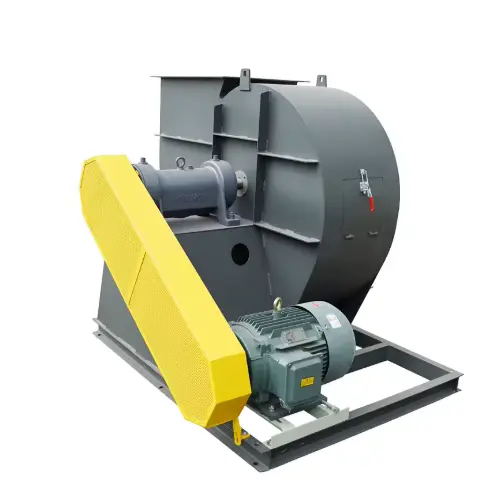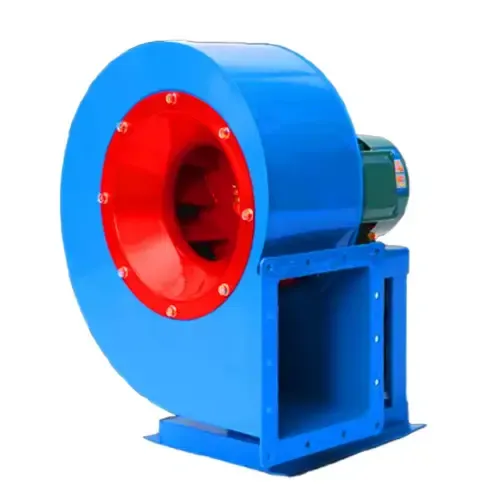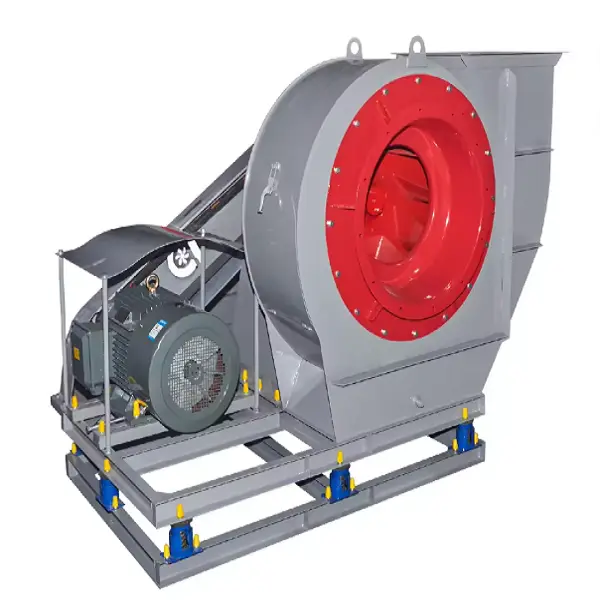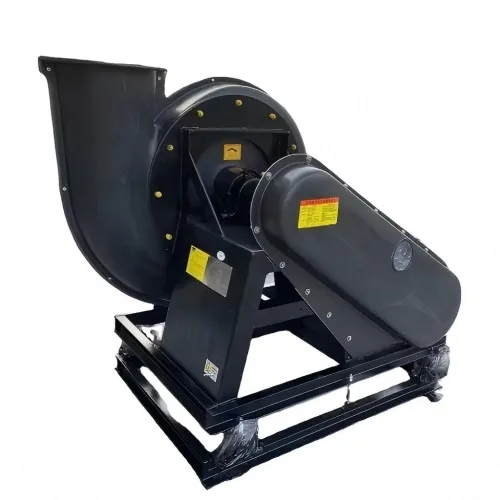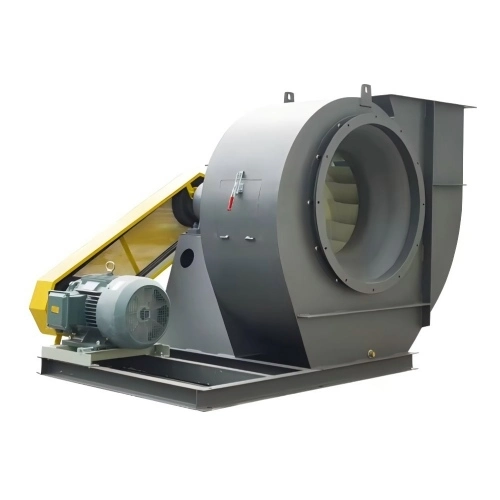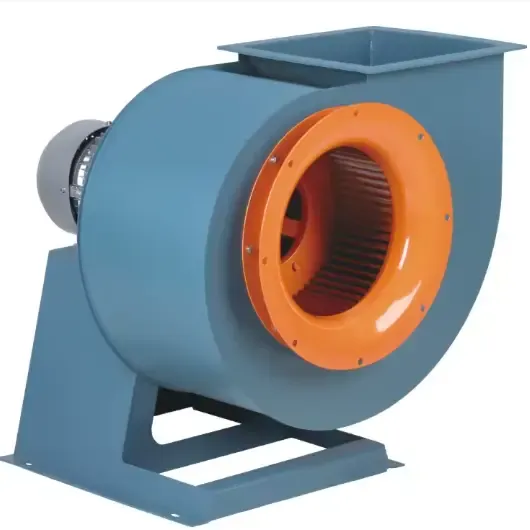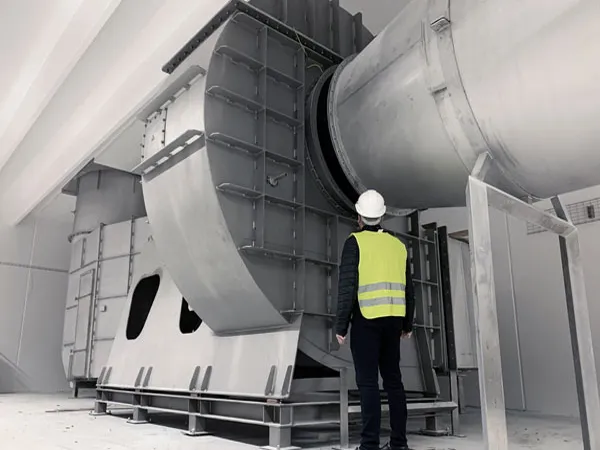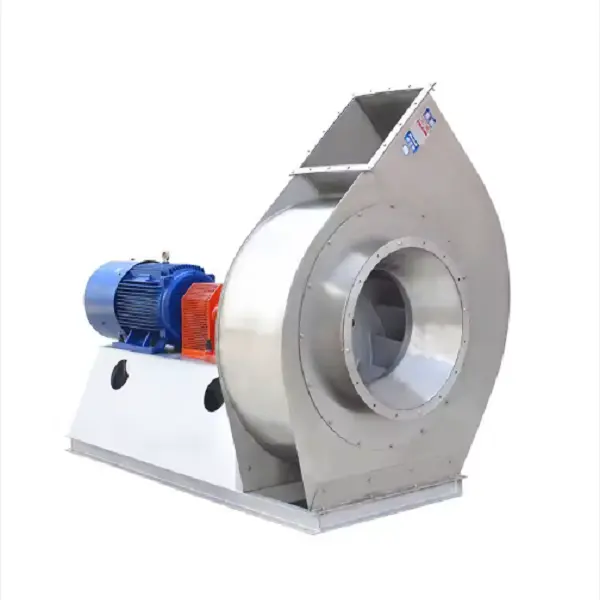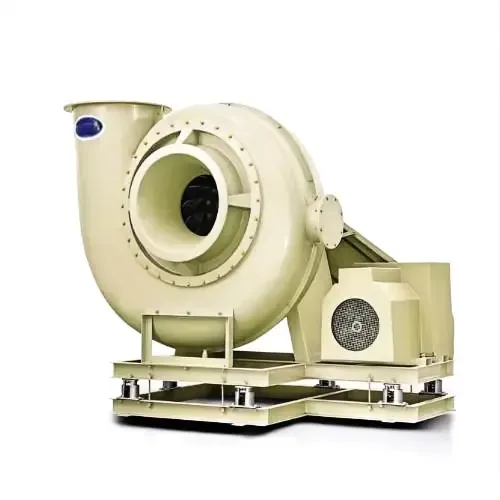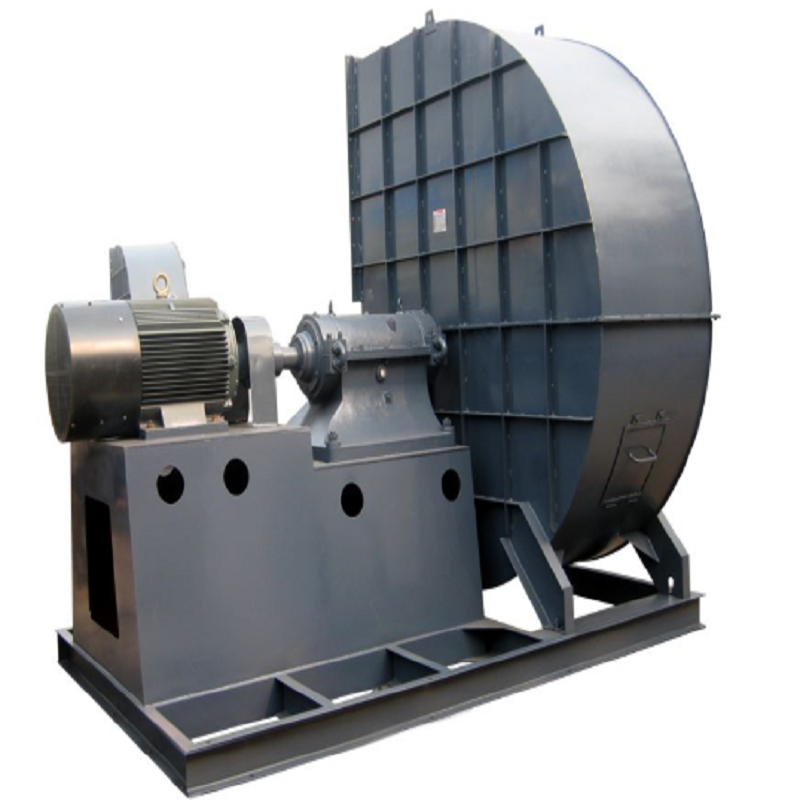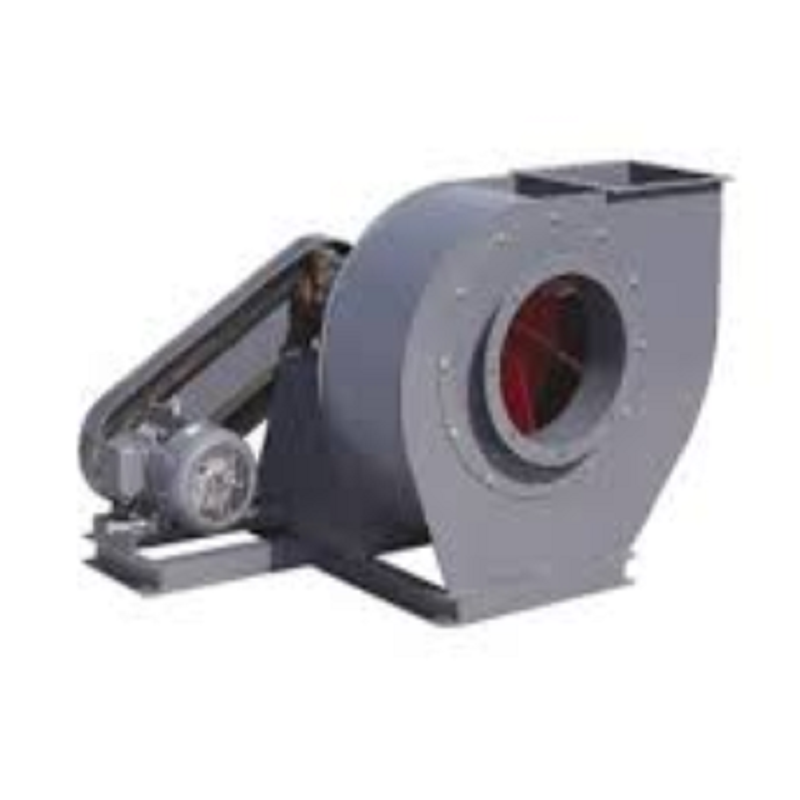
Industrial ventilation is rarely a one-size-fits-all application. In a real production plant, airflow requirements can change significantly depending on temperature, dust concentration, gas composition, pressure loss, installation space, and operating hours. This is where a Customized Industrial Centrifugal Fan becomes useful. Instead of selecting a fan from a standard catalog and trying to adapt the system around it, engineers can configure the fan around the actual process conditions.
A common mistake in industrial ventilation projects is selecting a fan mainly according to the required airflow. For example, a process may require 50,000 m³/h, but airflow alone does not determine whether the fan will operate correctly. The system may also have 2,500 Pa of static pressure, high inlet temperature, abrasive particles, or corrosive gases.
When I evaluate a ventilation system, I normally start with four basic parameters: required airflow, static pressure, gas temperature, and gas composition. I then look at operating hours, dust loading, installation restrictions, motor requirements, and whether the process has variable airflow demand. A Customized Industrial Centrifugal Fan can be designed around these conditions rather than forcing the process to fit a standard fan.
The first practical step is to establish the fan operating point. The required airflow should be determined under actual operating conditions, not simply copied from the process equipment manufacturer's nominal value.
For example, suppose an exhaust system requires 80,000 m³/h at 3,000 Pa. If the ductwork, cyclone, filter, damper, and elbow losses are underestimated, the actual system resistance may reach 3,400–3,600 Pa. A fan selected for 80,000 m³/h at only 3,000 Pa will not deliver the expected airflow.
For a Customized Industrial Centrifugal Fan, I recommend calculating the complete system resistance before finalizing the fan. This includes straight duct friction, fittings, filters, scrubbers, dampers, heat exchangers, and process equipment. A reasonable operating margin can then be considered without excessively oversizing the fan.
The impeller is one of the most important components to customize. Different blade profiles and blade angles provide different pressure, airflow, efficiency, and particle-handling characteristics.
For relatively clean air and high-efficiency ventilation, an airfoil or backward-curved impeller may be appropriate. For systems containing heavier dust or material particles, a more robust blade configuration may be preferred. The impeller diameter and rotational speed also need to be matched to the required operating point.
In one industrial exhaust application, the original fan was operating at a high rotational speed and consuming more power than expected. After checking the system curve, the problem was not simply motor efficiency. The fan was operating away from its efficient region. The redesigned Customized Industrial Centrifugal Fan used a better-matched impeller and operating speed, allowing the system to reach the required airflow without relying on excessive fan speed.
Material selection is another area where customization has a direct impact on service life. A fan handling ordinary atmospheric air does not face the same conditions as a fan handling acidic gas, hot flue gas, or moisture-containing exhaust.
For corrosive applications, stainless steel or other corrosion-resistant materials may be considered. For high-temperature systems, the engineer must also consider thermal expansion, bearing arrangement, shaft temperature, sealing, and cooling requirements.
For example, a chemical production exhaust system may operate around 180°C while carrying corrosive vapors. Using an ordinary carbon-steel fan without considering corrosion protection can result in rapid casing and impeller deterioration. In this situation, a Customized Industrial Centrifugal Fan can incorporate corrosion-resistant materials in the gas-contact areas while keeping structural components optimized for cost and mechanical strength.
Temperature is often misunderstood during fan selection. Simply choosing a material with a higher temperature rating does not solve the entire problem.
At elevated temperatures, gas density changes, which affects fan pressure and power calculations. Thermal expansion can also influence impeller clearances, shaft alignment, bearing temperature, and casing deformation. For continuous high-temperature operation, the bearing arrangement and shaft protection need to be considered together with the impeller and casing.
In a furnace exhaust project, for instance, the process gas temperature was approximately 250°C. The fan was installed downstream of the furnace and required continuous operation. The design therefore considered the hot-gas condition, shaft temperature, bearing protection, thermal expansion, and maintenance access. This type of engineering is one of the main advantages of a Customized Industrial Centrifugal Fan over a generic ventilation fan.
Dust is another major factor that can shorten fan service life. Fine particles can accumulate on the impeller and create imbalance, while abrasive particles can gradually wear blade surfaces.
For dusty applications, I would first determine the particle characteristics rather than simply labeling the application as “dusty.” Particle size, concentration, hardness, moisture content, and stickiness can all affect fan design.
Consider a cement plant exhaust line carrying a substantial amount of fine particulate matter. If dust gradually builds up unevenly on the impeller, vibration can increase even though the bearings and motor are still in good condition. A practical maintenance program should therefore include regular impeller inspection and cleaning. Depending on the application, the Customized Industrial Centrifugal Fan can also be designed with reinforced wear-prone components and easier access for inspection.
Many industrial processes do not operate at a constant airflow requirement. Production rates may change during different shifts, or the ventilation demand may increase only during specific process stages.
Running an oversized fan continuously with a throttled damper can waste considerable energy. A variable frequency drive (VFD) can provide better control when the process allows fan-speed regulation.
For example, a production facility may require 100% airflow during peak production but only 60–70% airflow during standby or low-load periods. Instead of keeping the fan at full speed and closing the damper, the control system can reduce fan speed when demand decreases. A properly selected Customized Industrial Centrifugal Fan can be matched with the VFD operating range so that airflow control is achieved without unnecessarily sacrificing efficiency.
Sometimes the biggest design challenge is not airflow or pressure but available installation space. Existing factories often have limited room around ducts, structural columns, platforms, and process equipment.
Fan rotation direction, outlet orientation, inlet configuration, base dimensions, shaft arrangement, motor position, and maintenance clearance may therefore need to be adjusted.
I have seen projects where a standard fan could technically meet the airflow requirement but could not be installed because the outlet direction conflicted with an existing duct. In such cases, modifying the fan configuration before manufacturing is usually much easier than rebuilding the duct system afterward. A Customized Industrial Centrifugal Fan can be configured to match the existing plant layout while maintaining the required aerodynamic performance.
Motor selection should not be based only on airflow. Fan shaft power depends on airflow, pressure, and efficiency, and gas density must also be considered.
A simplified relationship is:
P ≈ Q × ΔP / η
where:
P = fan shaft power
Q = airflow
ΔP = pressure increase
η = overall fan efficiency
For actual motor selection, additional factors such as transmission losses, operating margin, starting conditions, altitude, gas temperature, and control method should also be considered.
For example, if a fan handles 60,000 m³/h against 2,500 Pa, the theoretical air power is approximately 41.7 kW. If the total efficiency is 75%, the required shaft power is roughly 55.6 kW before considering additional design margin. This calculation provides a much better basis for motor selection than simply choosing a motor based on the fan size.
Customization should not stop when the drawings are completed. Inspection and testing are important, particularly for large industrial fans.
Before delivery, I recommend checking impeller balance, rotation direction, critical dimensions, shaft runout, bearing condition, motor specifications, and vibration under test conditions where applicable. The final inspection should also confirm that the manufactured fan matches the approved technical drawing.
For large projects, it is useful to record the actual fan operating data during commissioning. Airflow, static pressure, motor current, vibration, and bearing temperature provide a useful baseline for future maintenance. If the same values are recorded after several months, changes in operating condition can be identified much earlier.
For a new industrial ventilation project, I would use the following sequence:
Determine the required airflow under actual process conditions.
Calculate the complete system resistance.
Confirm gas temperature and density.
Identify corrosive, abrasive, flammable, or moisture-related conditions.
Select the appropriate impeller type and material.
Determine fan speed and efficiency around the required operating point.
Calculate shaft power and select the motor.
Confirm rotation direction, outlet orientation, and installation dimensions.
Consider VFD control if airflow requirements vary.
Establish inspection, balancing, commissioning, and maintenance requirements.
This approach prevents a common problem in industrial ventilation projects: selecting the fan first and discovering the actual system requirements later.
The purpose of a Customized Industrial Centrifugal Fan is not simply to make a fan look different from a standard model. Proper customization should solve a specific engineering problem—whether that means handling high temperature, resisting corrosion, transporting dust, fitting into restricted space, achieving a particular pressure, or reducing energy consumption.
The most successful projects usually begin with accurate process data rather than a predetermined fan model. When airflow, pressure, temperature, gas composition, installation conditions, and operating patterns are clearly defined, the fan can be engineered around the application. That results in a more predictable operating point, easier commissioning, and better long-term reliability.
For industrial ventilation, customization should therefore be viewed as an engineering method rather than an optional upgrade. A properly engineered Customized Industrial Centrifugal Fan can provide the airflow and pressure required by the process while addressing the mechanical, thermal, material, and maintenance challenges that standard equipment may not adequately cover.
-