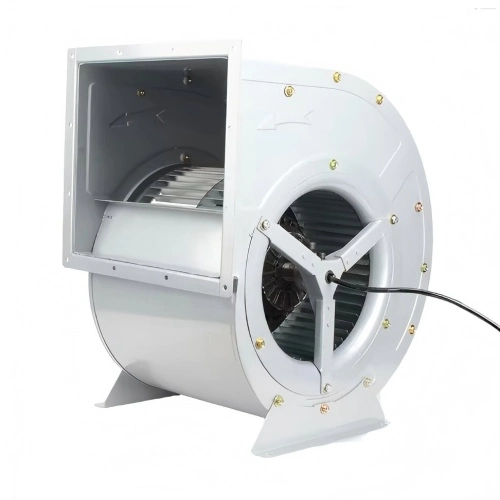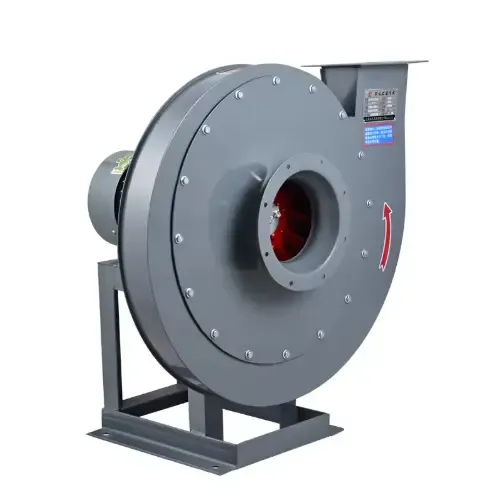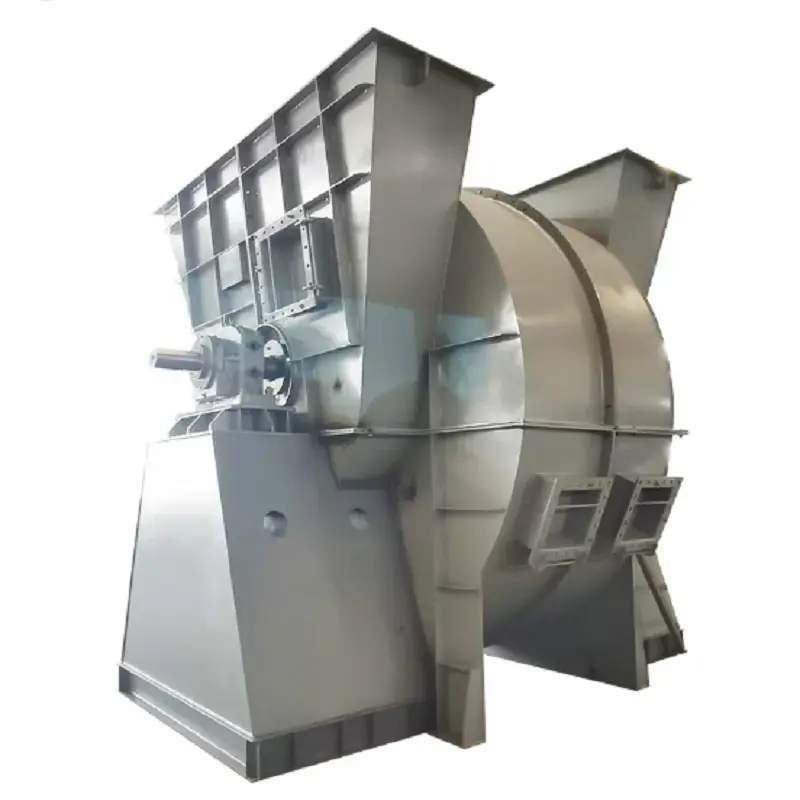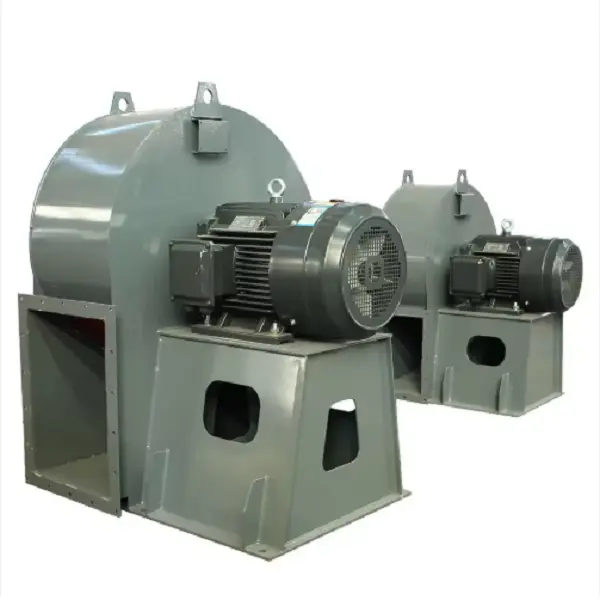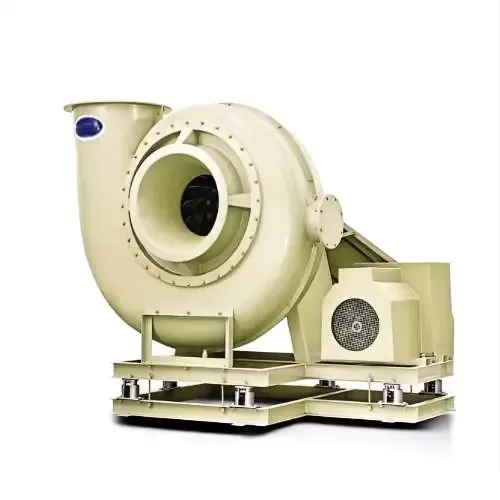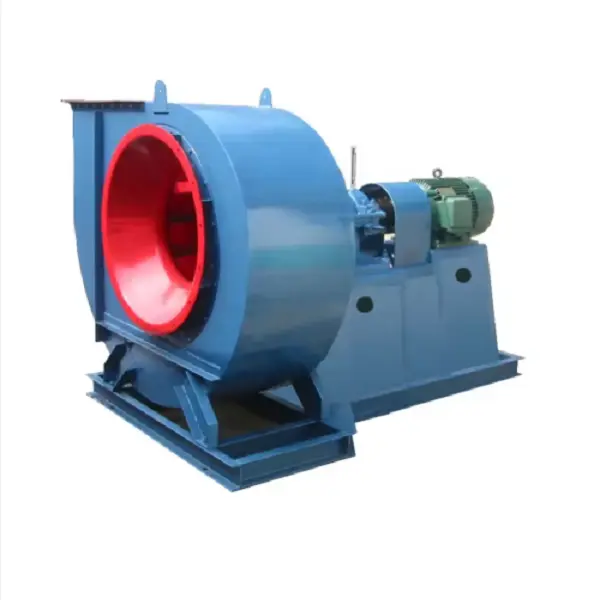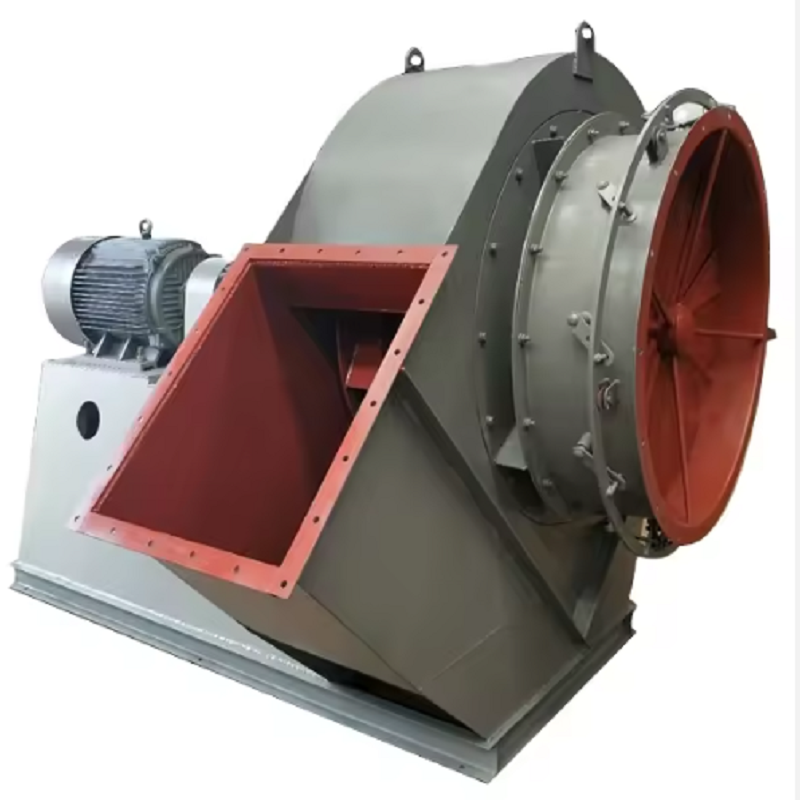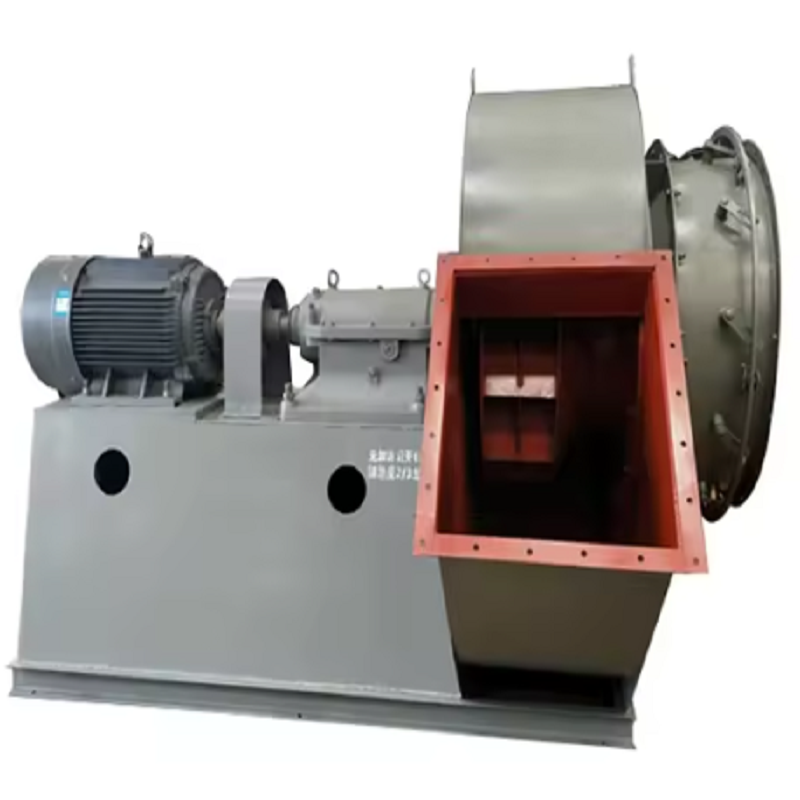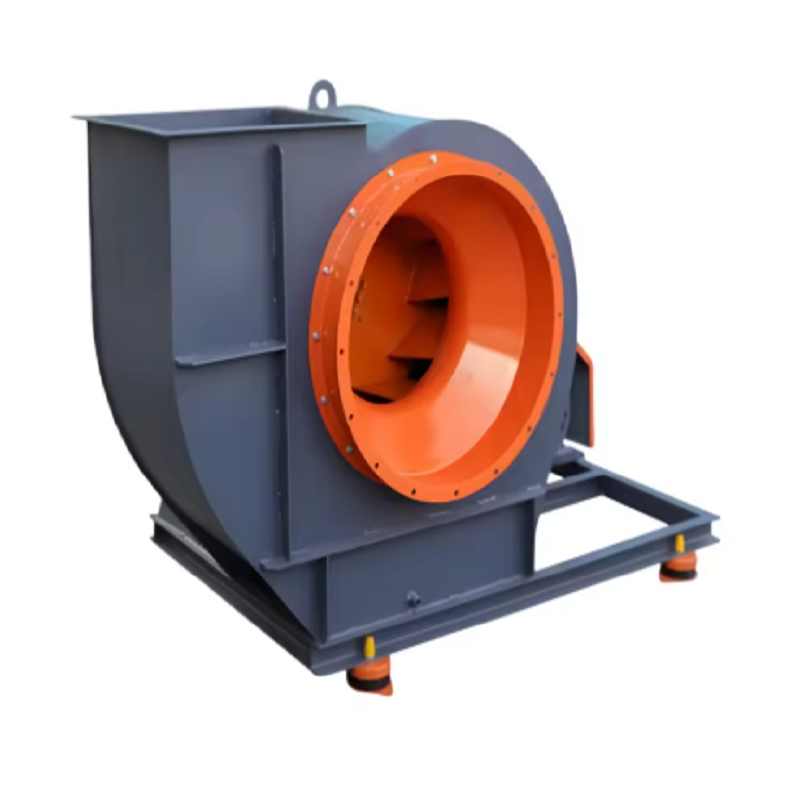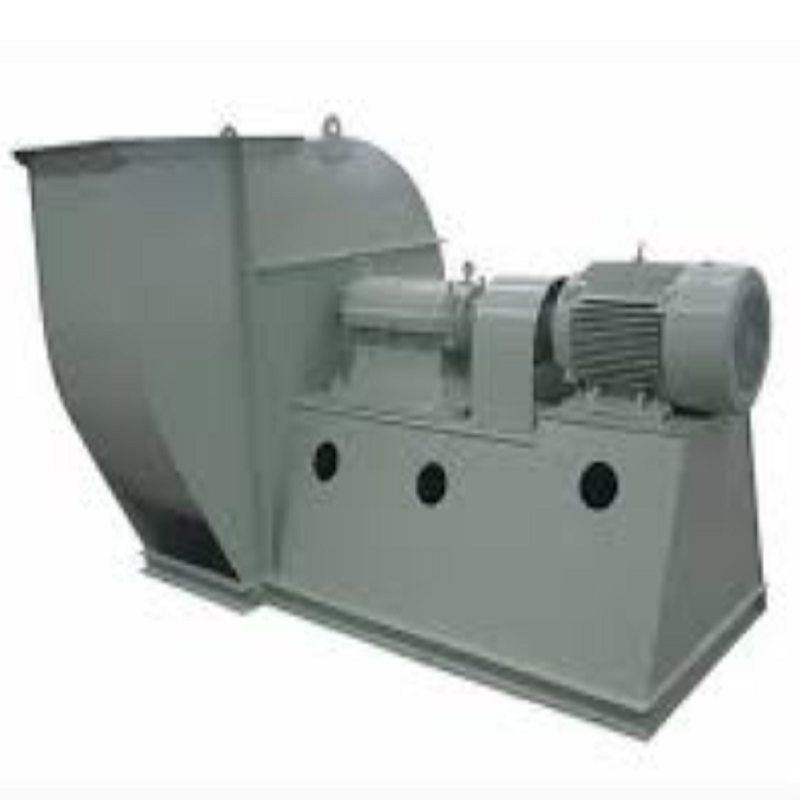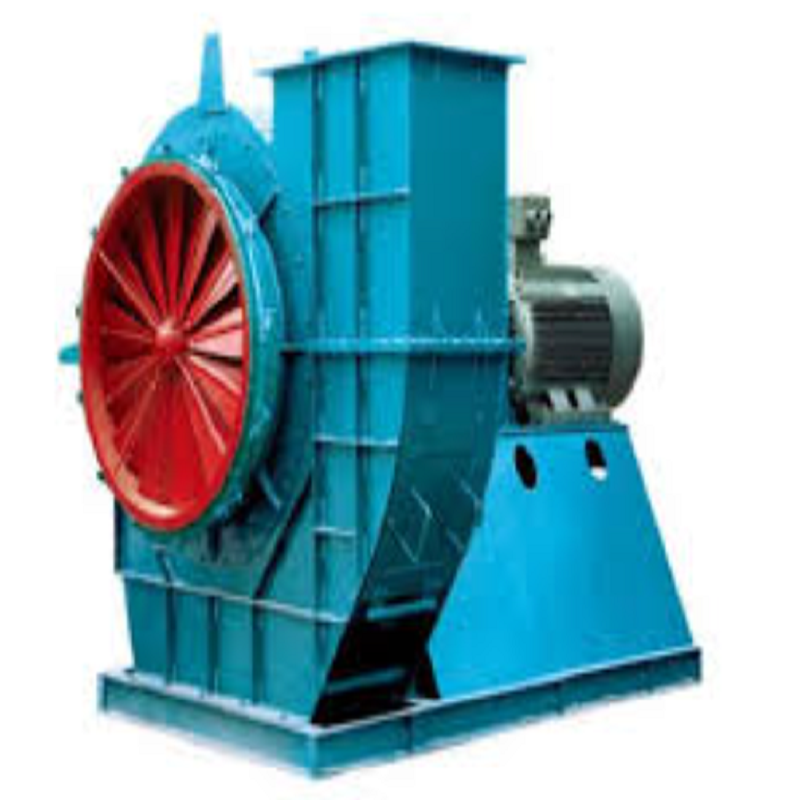
Industrial exhaust systems rarely operate under clean and stable conditions. Dust, abrasive particles, high temperatures, moisture, corrosive gases, and continuous operation can all place additional loads on a fan. In these applications, Heavy-Duty Centrifugal Fans are often selected because the fan has to do more than move air—it has to maintain a stable operating point while surviving the actual process environment.
The first mistake I see in industrial fan selection is choosing a fan according to airflow alone. A requirement such as 20,000 m³/h does not tell us whether the fan is suitable. We also need to know the static pressure, gas temperature, gas composition, dust concentration, installation altitude, operating hours, and duct configuration. Heavy-Duty Centrifugal Fans should be selected against the complete system duty rather than a catalogue airflow value. The operating point is determined by the intersection of the fan curve and the system resistance curve.
A heavy-duty exhaust fan normally operates against considerable system resistance. The air or process gas may have to pass through long duct sections, elbows, dampers, filters, cyclones, scrubbers, heat exchangers, or dust collectors before reaching the discharge point. Every component adds pressure loss.
For example, suppose an exhaust system requires 18,000 m³/h. The initial duct calculation may show 1,600 Pa of resistance, but the actual system could reach 1,900–2,000 Pa after filter loading and other operating changes. If the selected fan can only provide 1,600 Pa at the required airflow, the problem will appear during operation as insufficient extraction rather than as an obvious fan-selection error. Heavy-Duty Centrifugal Fans therefore need sufficient pressure capability as well as the required airflow.
The practical approach is to calculate the complete system resistance before selecting the fan. Include duct friction, elbows, transitions, dampers, filters, collectors, scrubbers and outlet losses. Then check the fan curve at the actual duty point. A pressure margin may be necessary, but excessive oversizing should also be avoided because it can push the fan away from its efficient operating region and increase motor power consumption.
A fan operating with clean ambient air has very different material requirements from one handling cement dust, steel-process fumes, chemical exhaust or hot flue gas.
For abrasive dust, the impeller is usually one of the first components to inspect. Continuous particle impact can gradually reduce blade thickness and change the aerodynamic profile. In severe service, a wear-resistant construction, reinforced blades or replaceable wear components may be more appropriate than simply increasing the motor size.
For corrosive gases, the selection process needs to consider the actual chemical composition, concentration, temperature and moisture content. Stainless steel, protective coatings or other corrosion-resistant constructions may be required depending on the process. Heavy-Duty Centrifugal Fans should not be described as universally suitable for every harsh environment; the construction must be matched to the medium.
Temperature also changes the engineering calculation. Hot gas has a lower density than standard air, so the actual operating condition cannot simply be copied from a standard-air fan table. The fan designer needs to account for gas temperature and density when checking pressure, power, shaft speed and motor selection.
Consider a cement production line requiring approximately 24,000 m³/h of exhaust air at around 2,200 Pa. The gas contains fine mineral dust, and the fan operates for extended periods every day.
The first design step is not to select a fan model. The duct system should be reviewed to determine whether the 2,200 Pa requirement includes the filter, elbows, expansion sections and discharge resistance. If the dust collector becomes progressively loaded, the system resistance can increase further.
For this application, the impeller should be checked for dust-handling capability, blade strength and wear exposure. The inlet should also be designed to minimize unnecessary turbulence. After installation, technicians should record airflow, static pressure, motor current, speed and vibration under stable operating conditions.
Suppose the initial commissioning data shows 24,000 m³/h at 2,180 Pa and acceptable motor current. Six months later, airflow has fallen to 20,500 m³/h while fan speed remains unchanged. Before replacing the fan, check filter pressure drop, duct blockage, damper position and impeller buildup. A dirty filter can move the operating point without any mechanical failure of the fan. This type of troubleshooting is one reason Heavy-Duty Centrifugal Fans should be monitored using operating data rather than judged only by whether the motor is still running.
The impeller is the working component of a centrifugal fan, so its geometry and construction have a major effect on performance.
Backward-curved blades are commonly considered when efficiency is important and the gas stream is relatively clean. Radial or heavy-duty blade designs can be more appropriate where the fan must tolerate dust or material loading. The correct choice depends on the pressure requirement, particle characteristics, temperature, speed and expected maintenance conditions.
Balancing is another critical issue. An impeller may be correctly designed but still create excessive vibration if it is not properly balanced after fabrication or repair. Dust accumulation can create the same problem later. If a fan originally operates at acceptable vibration but gradually develops higher vibration, technicians should inspect the impeller for buildup, erosion, deformation and imbalance before immediately changing the bearings.
For Heavy-Duty Centrifugal Fans, dynamic balancing should be treated as part of reliability engineering rather than simply a factory inspection item. A balanced rotor reduces unnecessary loading on bearings, shaft and foundation and provides a better baseline for future vibration monitoring.
Drive selection also affects long-term reliability. Direct drive is mechanically simple and eliminates belts, but the fan speed is tied more closely to the motor speed. Belt drive provides greater flexibility in speed selection and can be useful where the operating point may need adjustment during commissioning.
For high-temperature exhaust, the motor may need to be separated from the hot gas stream through an appropriate shaft arrangement, bearing configuration or cooling arrangement. The final configuration depends on the temperature at the fan shaft and bearing location, not simply the temperature measured somewhere upstream in the duct.
A variable frequency drive can also be useful when the process load changes significantly. However, reducing fan speed changes both airflow and pressure, while the power requirement can change substantially with speed. Therefore, VFD control should be based on the actual process requirement and the fan's allowable operating range rather than treating speed reduction as an automatic energy-saving solution.
A correctly designed fan can still perform poorly if it is installed incorrectly.
The foundation should be rigid and properly leveled. The fan should be aligned with the connected ductwork without imposing excessive external loads on the casing. Flexible connectors can help isolate vibration, but they should not be installed in a way that restricts airflow.
The inlet arrangement deserves particular attention. Sharp elbows or sudden transitions immediately before the fan inlet can create an uneven velocity distribution across the impeller. This can increase noise, vibration and performance loss.
During commissioning of Heavy-Duty Centrifugal Fans, I recommend recording at least six parameters:
Airflow
Static or total pressure
Fan speed
Motor current or power
Bearing temperature
Vibration
These measurements create the baseline for future maintenance. If airflow decreases while speed remains constant, the problem may be increased system resistance. If vibration increases while airflow and pressure remain stable, mechanical inspection may be more appropriate.
Consider a heavy-duty exhaust fan that has been operating normally for eight months. The original vibration reading was 3.2 mm/s. The latest measurement is 6.1 mm/s, while airflow has changed only slightly.
Replacing the bearing immediately would not be the first step.
The technician should first inspect the impeller for dust buildup, check the shaft and coupling alignment, inspect the bearing condition, verify foundation bolts, and compare vibration measurements at the motor and fan bearings. If the impeller has accumulated an uneven layer of dust, cleaning and rebalancing may solve the problem without replacing the entire rotor assembly.
This is an important maintenance principle for Heavy-Duty Centrifugal Fans: diagnose the change in operating data before replacing components. A bearing failure, rotor imbalance, loose foundation, belt misalignment and aerodynamic instability can produce very different vibration patterns.
Motor sizing should be based on the fan's actual operating condition, not simply the maximum airflow listed in a catalogue.
For example, if a fan requires 18.5 kW at the normal duty point but the system can operate at a significantly higher pressure under certain conditions, the engineer needs to check the maximum absorbed power across the expected operating range. A motor selected too close to the calculated operating power may trip when the system resistance or process condition changes.
The motor should also be compatible with the local electrical supply. Voltage, frequency, starting method, enclosure, insulation class and ambient temperature all need to be considered.
For Heavy-Duty Centrifugal Fans, motor protection is particularly important because these machines may operate continuously and may be exposed to variable loads. Monitoring motor current alongside airflow and pressure provides useful information about changes in the fan system.
A fixed maintenance interval is useful, but trend monitoring is more valuable for critical exhaust equipment.
After commissioning, record the normal operating values. Later, compare the new measurements with this baseline.
For example:
Initial condition
Airflow: 20,000 m³/h
Static pressure: 1,800 Pa
Speed: 900 rpm
Motor power: 18 kW
Vibration: 3.0 mm/s
Six months later
Airflow: 17,800 m³/h
Static pressure: 1,950 Pa
Speed: 900 rpm
Motor power: 19.5 kW
Vibration: 3.4 mm/s
This trend suggests that system resistance may have increased. The first inspection should focus on filters, dampers, ducts and other resistance-producing components. If instead airflow remains stable but vibration rises sharply, mechanical inspection becomes more important.
This approach prevents unnecessary replacement of Heavy-Duty Centrifugal Fans when the real problem is located elsewhere in the exhaust system.
For an industrial RFQ, the minimum technical information should include:
Required airflow in m³/h or CFM.
Static pressure or total pressure.
Gas temperature, including maximum temperature.
Gas composition and corrosive components.
Dust concentration and particle characteristics.
Installation altitude.
Operating hours per day and year.
Motor voltage and frequency.
Required fan speed or VFD operation.
Fan rotation and inlet/outlet orientation.
Drive arrangement.
Material requirements.
Ambient temperature.
Noise and vibration requirements.
Required inspection, balancing and documentation.
Providing these details allows the manufacturer to check the actual duty point rather than selecting a fan from airflow alone. For difficult exhaust applications, this information can make the difference between a fan that simply operates and one that remains stable over years of service.
The reliability of an industrial exhaust system is determined by more than the fan itself. System resistance, gas properties, impeller construction, material selection, drive arrangement, motor sizing, installation quality and maintenance practices all influence the final result.
The main advantage of Heavy-Duty Centrifugal Fans is their ability to be engineered around demanding industrial conditions rather than treated as standard ventilation equipment. But heavy-duty construction alone does not guarantee reliable operation. The fan still has to be correctly selected, properly installed and monitored against a known performance baseline.
For applications involving high dust, abrasive particles, corrosive gases, high temperatures or continuous operation, the engineering process should begin with the actual process data. Once airflow, pressure, temperature, gas composition and system resistance are clearly defined, the fan type, impeller, material, motor and drive arrangement can be selected with much greater confidence.