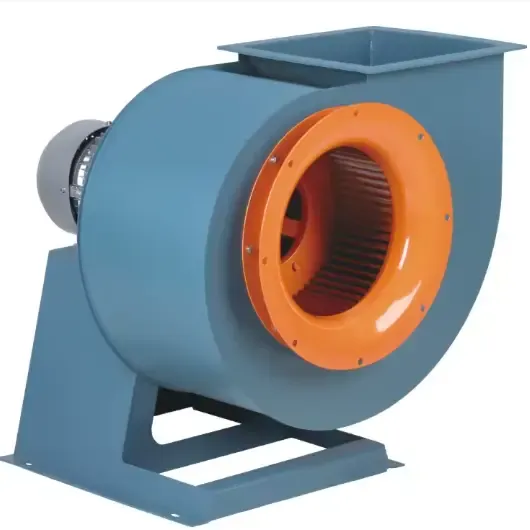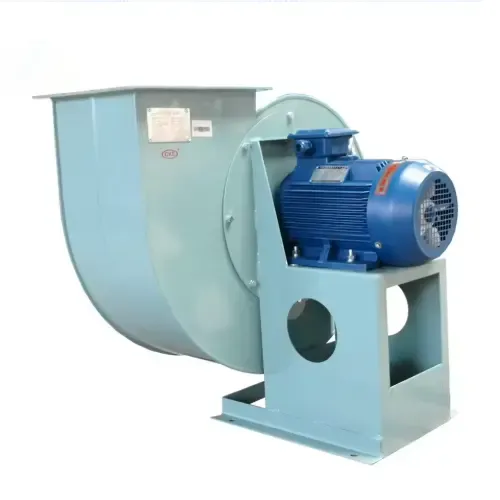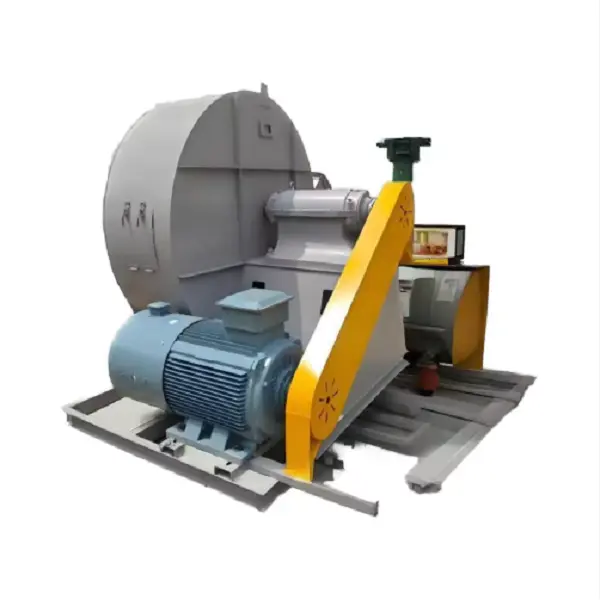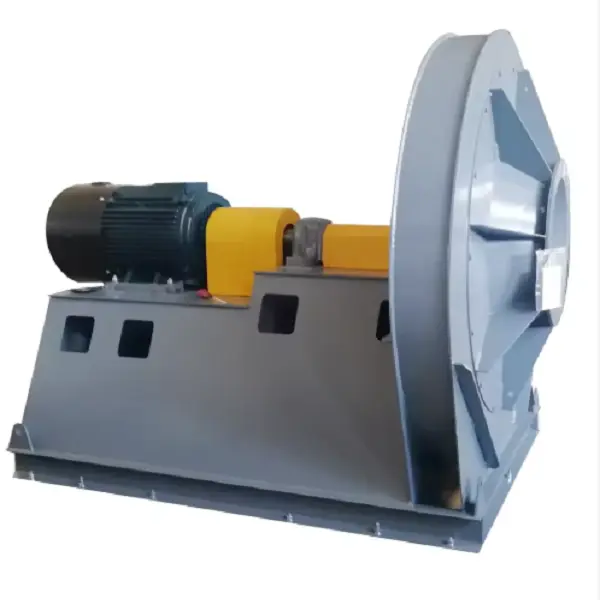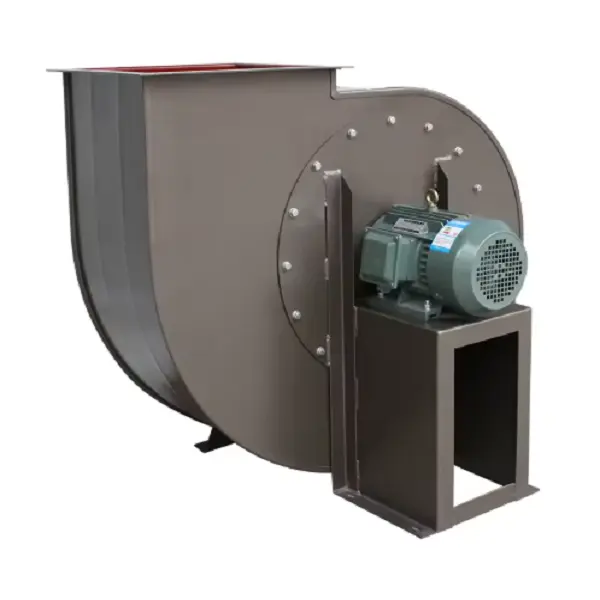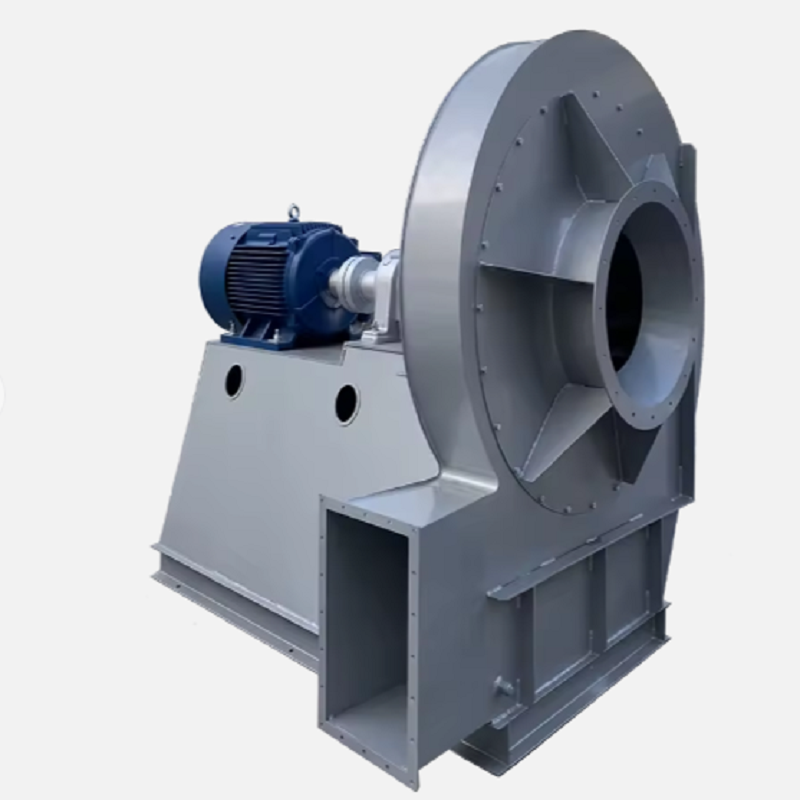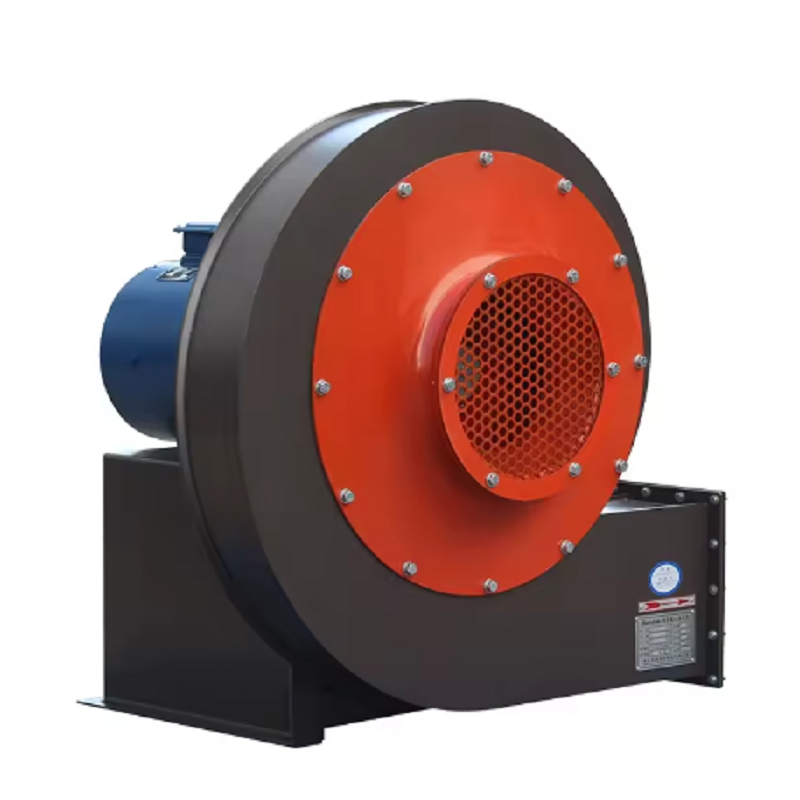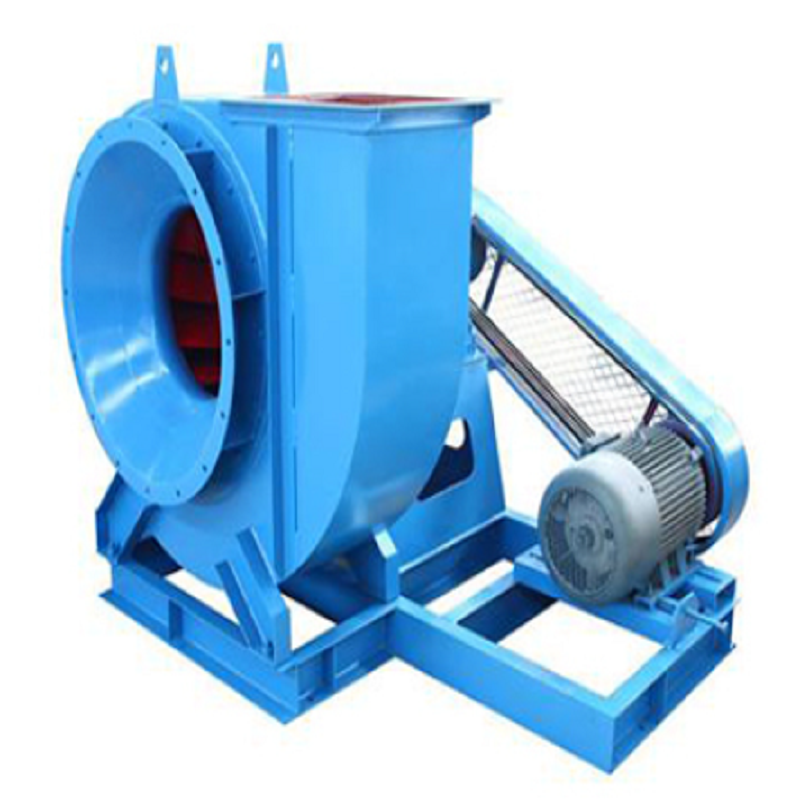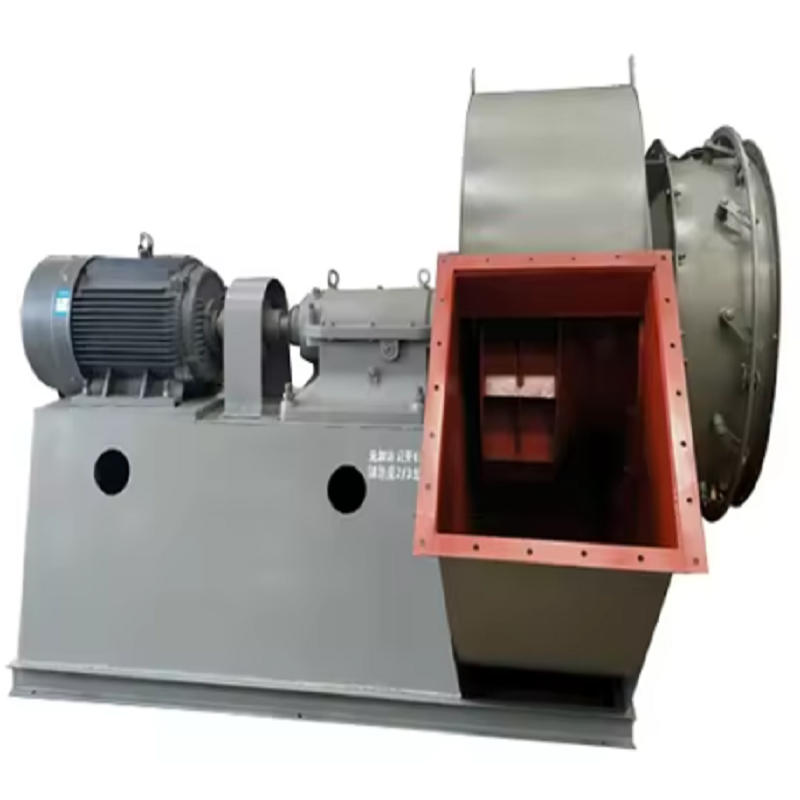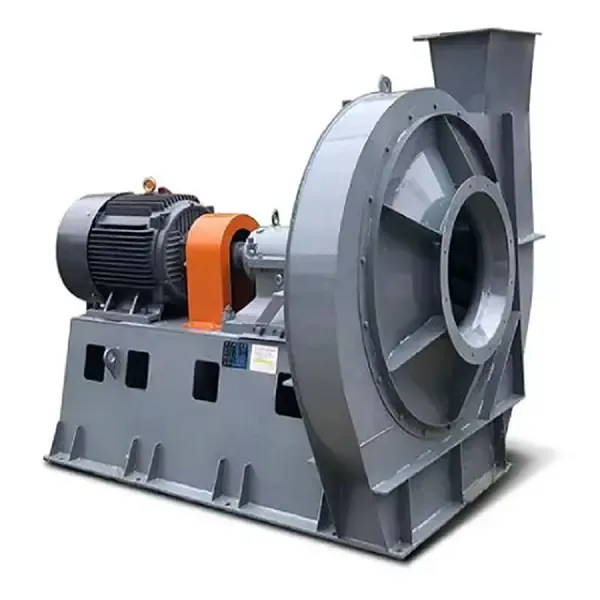
A boiler cannot maintain stable combustion if the furnace does not receive the right amount of combustion air. In many industrial boiler systems, the forced draft fan is responsible for supplying this air and maintaining the pressure required by the burner and furnace. High-Performance Boiler Forced Draft Fans are therefore not selected simply according to motor power. Airflow, static pressure, gas temperature, altitude, system resistance, fuel type, and operating range all need to be considered before the fan is finalized.
One of the most common mistakes in boiler fan selection is starting with the required motor power. The better approach is to determine the required air volume and pressure first. For example, if a boiler requires 30,000 m³/h of combustion air at a total pressure of 3,500 Pa, the fan should be selected around this operating point rather than choosing a 30 kW or 37 kW motor first. High-Performance Boiler Forced Draft Fans should operate close to their efficient region under normal load instead of relying on damper throttling to compensate for an oversized fan.
When calculating the required airflow, engineers should consider the boiler's fuel consumption and excess-air requirement. A simplified calculation can start from the theoretical combustion air requirement and then apply the required excess-air coefficient. The final design airflow should also include an appropriate margin for operating fluctuations. For example, if the calculated requirement is 25,000 m³/h, selecting a fan for 40,000 m³/h without checking the actual system curve may result in excessive airflow, higher motor current, and unnecessary energy consumption. High-Performance Boiler Forced Draft Fans should therefore be matched to the actual combustion system rather than selected from airflow alone.
Fan pressure is often underestimated because only the burner pressure requirement is considered. In an actual boiler installation, air passes through the inlet duct, filters, dampers, air preheater, silencers, bends, expansion sections, and burner system. Every component creates resistance. The pressure requirement of High-Performance Boiler Forced Draft Fans should include these losses at the design airflow.
A practical calculation should list each resistance separately. For example, assume the burner requires 1,200 Pa, the air preheater causes 700 Pa loss, the duct system accounts for 900 Pa, and other components add another 400 Pa. The basic system resistance is already about 3,200 Pa. After allowing for reasonable operating margin, the fan may need to deliver approximately 3,500–3,800 Pa at the design airflow. This method is much more reliable than selecting a fan from the burner pressure alone.
Combustion air temperature also needs to be defined before ordering the fan. If the fan handles normal ambient air, the design is relatively straightforward. However, when the air temperature rises because of air preheating or process conditions, gas density decreases and the fan's actual operating performance changes. High-Performance Boiler Forced Draft Fans must be designed according to the actual inlet temperature, not simply the standard atmospheric condition.
For example, a fan handling 30,000 m³/h of air at 20°C does not experience the same gas density as a fan handling the same volume at 120°C. The pressure conversion, shaft power, bearing arrangement, and cooling requirements should be checked accordingly. If the temperature is significantly higher than normal, the manufacturer may need to consider a different bearing arrangement, shaft design, sealing method, or cooling configuration. Providing the actual operating temperature at the RFQ stage can prevent major problems later.
Boiler load rarely remains constant throughout the day. A fan operating at full speed while the boiler is running at partial load can waste considerable energy. For this reason, High-Performance Boiler Forced Draft Fans are often operated with variable-frequency drives or other control systems that allow airflow to follow boiler demand.
For centrifugal fans, the affinity laws provide a useful reference. Approximately, airflow varies with fan speed, pressure varies with the square of speed, and power varies with the cube of speed. This means reducing fan speed can significantly reduce power consumption. For example, if a fan operates at 80% of its original speed, its theoretical power requirement can fall to around 51% of the original value under comparable conditions. The actual result depends on the system curve and operating point, but the principle explains why speed control can be much more efficient than continuously throttling a damper.
Consider an industrial boiler originally equipped with a fan designed for 35,000 m³/h at 4,000 Pa. During normal production, however, the boiler required only around 27,000 m³/h. Operators were controlling the airflow mainly through the inlet damper, while the motor was running close to full speed. The result was higher-than-necessary power consumption and unstable airflow during load changes.
For this type of application, High-Performance Boiler Forced Draft Fans should be evaluated against the actual operating range rather than the maximum possible load. A revised selection could target the normal operating point while retaining sufficient capacity for peak boiler demand. If the control system allows variable-speed operation, the fan can then reduce speed as boiler load decreases. Before making the change, technicians should record airflow, fan pressure, motor current, fan speed, and boiler load at several operating conditions. These measurements provide the baseline needed to verify whether the new configuration actually improves performance.
Once airflow, pressure, temperature, gas density, and fan efficiency are known, shaft power can be estimated using the relationship between airflow, pressure, and efficiency. A simplified calculation is:
Fan Power ≈ Q × ΔP / η
where Q is airflow in m³/s, ΔP is pressure in Pa, and η represents the overall fan efficiency.
For example, at 30,000 m³/h, the airflow is approximately 8.33 m³/s. If the required pressure is 3,500 Pa and the overall efficiency is 75%, the estimated fan power is roughly 38.9 kW. The motor should not be selected at exactly this calculated value. A suitable service margin is normally required, while avoiding excessive oversizing. This is why High-Performance Boiler Forced Draft Fans should be selected together with the motor rather than treating the fan and motor as independent components.
A boiler forced draft fan may handle relatively clean air, but operating conditions can still affect the impeller. Dust, moisture, corrosion, high temperature, and repeated thermal cycling can reduce service life. Impeller diameter, blade profile, blade angle, rotational speed, and material thickness should therefore be considered according to the duty point.
For applications involving abrasive particles or corrosive air, standard carbon steel may not always be the best solution. Depending on the operating environment, the impeller may require a wear-resistant construction, corrosion-resistant material, protective coating, or other customized design. For High-Performance Boiler Forced Draft Fans, material selection should be based on the actual gas composition and operating temperature rather than simply choosing the strongest-looking material.
After installation, commissioning should be performed systematically. First check the foundation, anchor bolts, shaft alignment, coupling, lubrication, bearing condition, electrical connections, and rotation direction. The fan should then be started at a controlled operating condition while technicians monitor vibration, bearing temperature, motor current, airflow, and pressure.
A useful field procedure is to record the fan data at several load points instead of taking only one measurement. For example, measurements can be recorded at approximately 50%, 75%, and 100% boiler load. This creates an operating reference for future troubleshooting. If vibration or motor current gradually increases over several weeks, technicians can compare the new readings with the original commissioning data. High-Performance Boiler Forced Draft Fans perform reliably over the long term only when installation and operating data are monitored after commissioning.
When a boiler FD fan fails to achieve its expected airflow, replacing the fan should not be the first response. The actual problem may be a blocked filter, excessive duct resistance, incorrect damper position, fouling in the air preheater, burner resistance, belt slip, incorrect fan rotation, or a change in boiler operating conditions.
For example, if the fan speed and motor current remain normal but airflow has dropped, technicians should first compare the current system resistance with the original commissioning data. If the pressure drop across the filter or air preheater has increased significantly, the system—not necessarily the fan—is restricting airflow. This diagnostic approach can prevent unnecessary fan replacement and helps maintain the expected performance of High-Performance Boiler Forced Draft Fans.
For a new boiler project, the RFQ should provide enough information for the manufacturer to make an engineering-based selection. At minimum, the required data should include airflow, static or total pressure, inlet temperature, gas composition, altitude, operating frequency, power supply, fan speed requirements, installation arrangement, rotation direction, and preferred control method.
For a customized project, it is also useful to provide the boiler capacity, fuel type, burner information, duct layout, air preheater pressure loss, and expected operating range. With these parameters, the manufacturer can evaluate the fan curve, motor power, impeller design, bearing arrangement, material, and control method together. This is the correct engineering approach to specifying High-Performance Boiler Forced Draft Fans for demanding industrial service.
A high-performance boiler fan is not defined by a large motor or a high maximum airflow. Its real performance is determined by how accurately the fan matches the boiler's actual operating conditions. Correct airflow and pressure calculations, proper temperature and material selection, efficient speed control, suitable motor sizing, and disciplined commissioning all contribute to reliable operation.
For power plants and industrial boilers, High-Performance Boiler Forced Draft Fans should ultimately be treated as part of the complete combustion-air system. When the fan is selected from real operating data rather than a single nominal parameter, it is possible to achieve more stable combustion, lower unnecessary energy consumption, and better long-term equipment reliability.