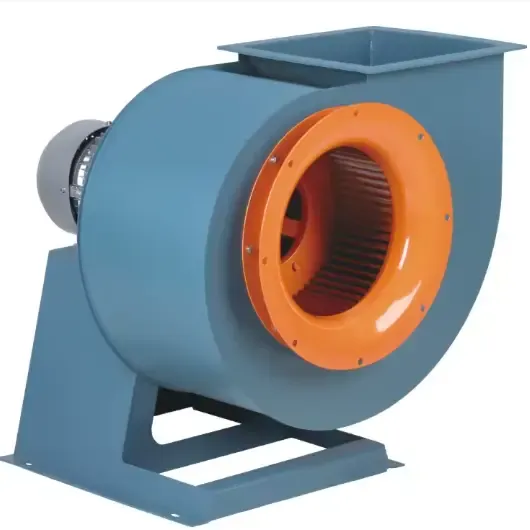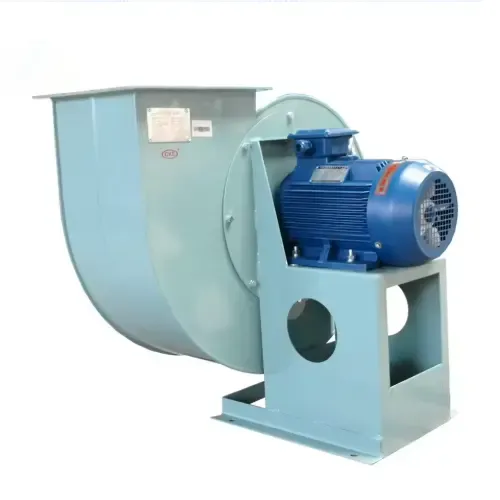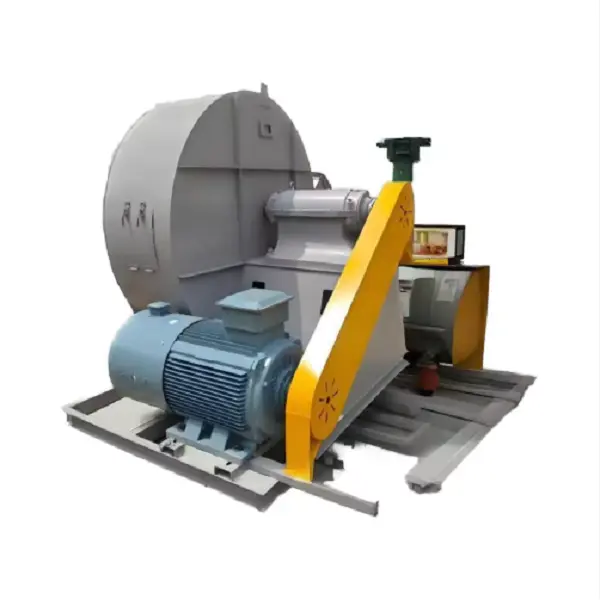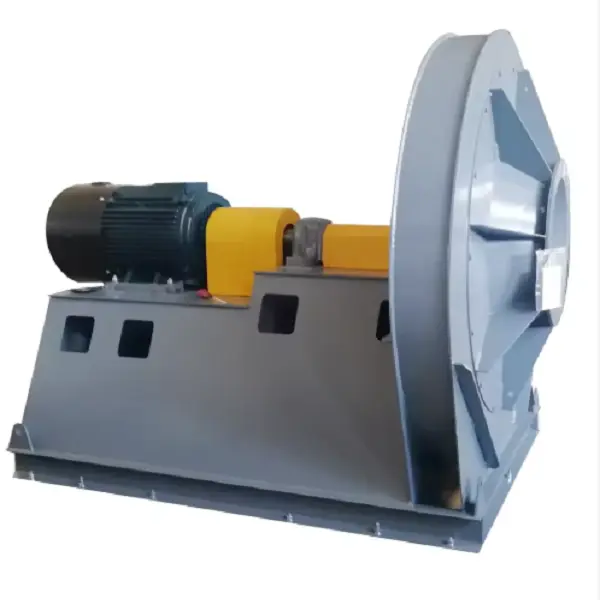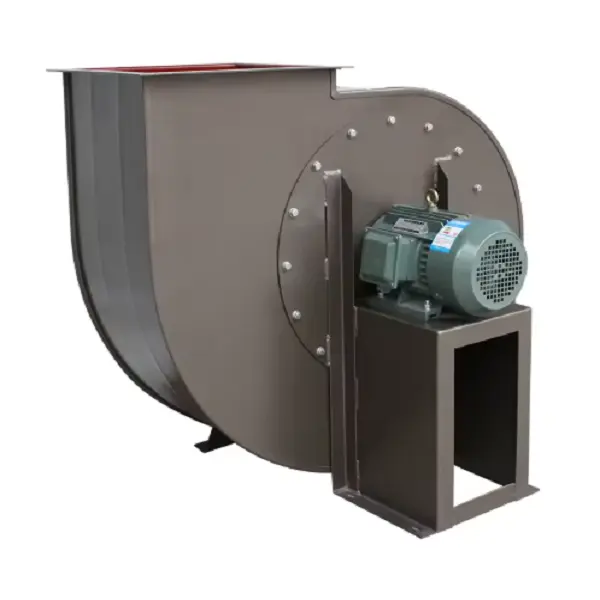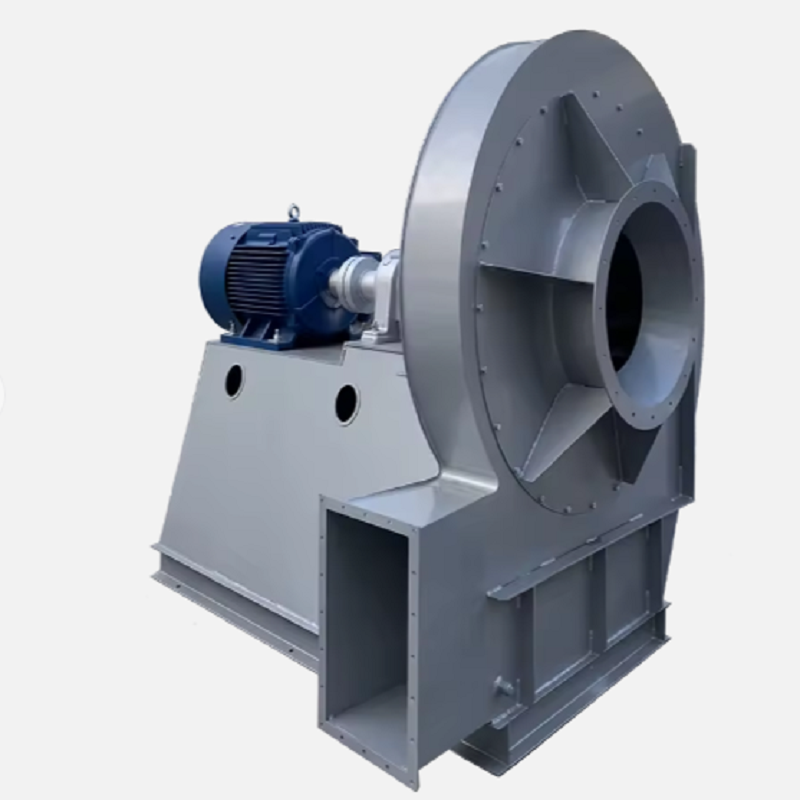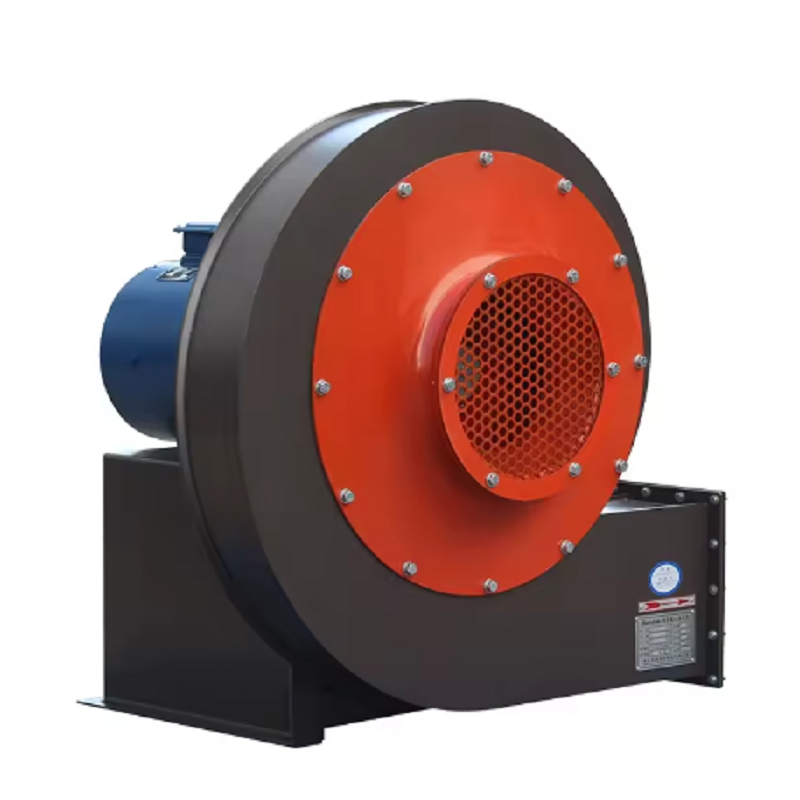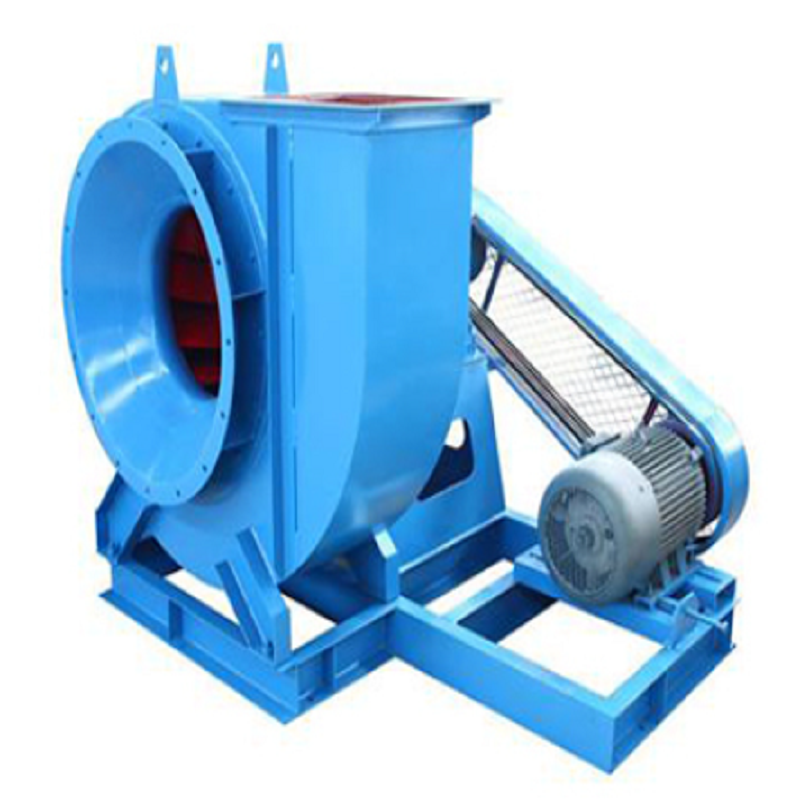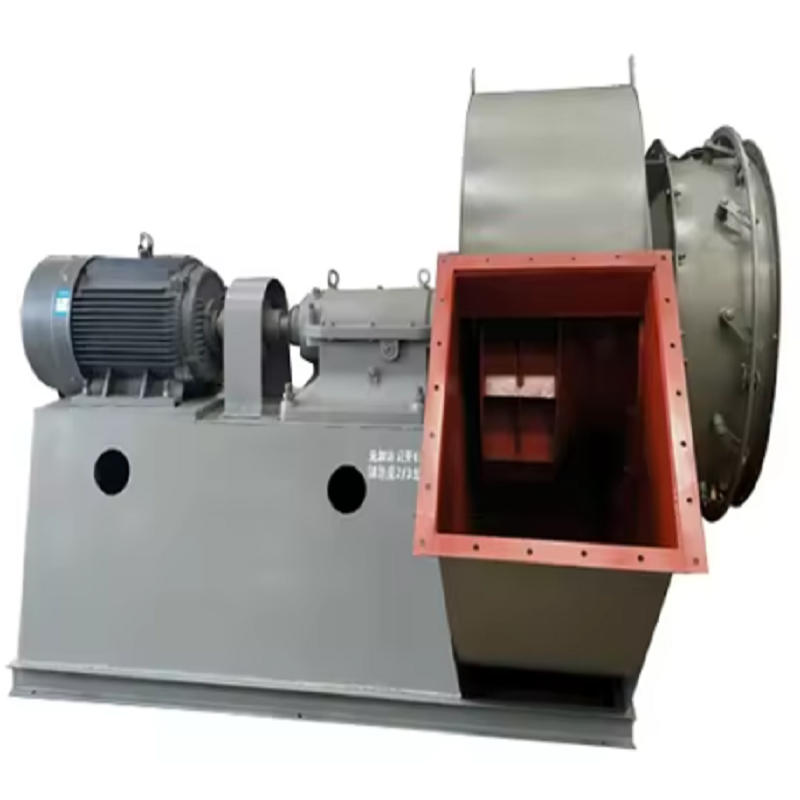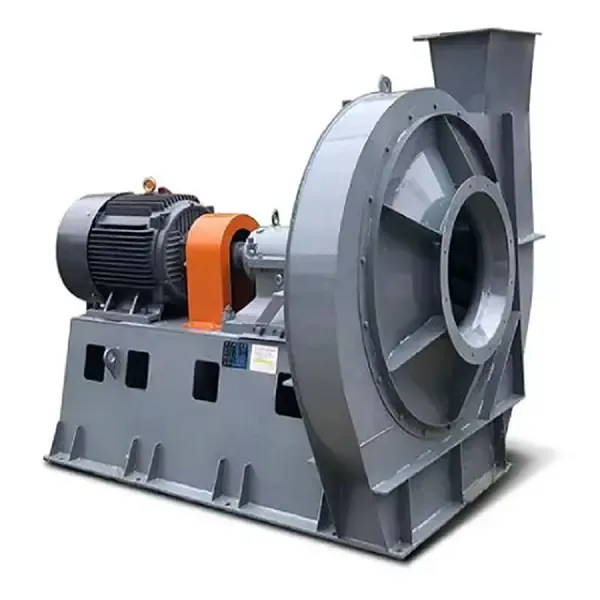
Modern industrial boilers are under increasing pressure to reduce fuel consumption while maintaining stable combustion and reliable production. The forced draft fan plays an important role because it supplies combustion air to the furnace and must overcome resistance from ducts, dampers, air preheaters, burners, and other equipment. A High-Efficiency Boiler Forced Draft Fan should therefore be selected according to the actual operating point rather than simply choosing a larger motor or a higher-capacity fan.
The first step is to determine how much combustion air the boiler actually requires. This depends on boiler capacity, fuel type, burner or grate design, excess-air requirements, and the expected operating load. A gas-fired boiler, biomass boiler, and coal-fired boiler will not necessarily require the same airflow strategy even at a similar thermal capacity. When selecting a High-Efficiency Boiler Forced Draft Fan, engineers should obtain the required airflow and pressure at normal and maximum boiler load before comparing fan models.
For example, assume an industrial boiler requires 28,000 m³/h of combustion air at full load. If the normal operating load is only 70–80% of full capacity, selecting a fan solely for maximum airflow may create an oversized operating condition during most of the year. The better approach is to check the complete load range and determine whether speed control, inlet guide vanes, or another control method can keep the fan close to its efficient operating region.
Fan pressure is another parameter that is frequently underestimated during the purchasing stage. The fan does not only overcome the burner resistance. Air may pass through an inlet screen, filter, silencer, ductwork, dampers, air preheater, expansion sections, windbox, and burner register. The pressure loss from all these components should be included in the fan duty. This is particularly important when specifying a High-Efficiency Boiler Forced Draft Fan for a new boiler or a retrofit project.
Consider a practical example where the burner requires 1,100 Pa, the air preheater causes 650 Pa loss, the duct and fittings account for 850 Pa, and other components contribute another 350 Pa. The basic system resistance is already 2,950 Pa. If the fan is selected for only 2,500 Pa because the buyer considered the burner pressure alone, the actual airflow may be significantly below the required value after installation. A proper pressure-loss calculation should therefore be completed before the final fan model is selected.
Forced draft fans generally handle relatively clean combustion air, but the temperature of that air can vary considerably when an air preheater is installed. Higher inlet temperature changes air density and can affect the relationship between volumetric airflow, mass flow, pressure, and power. A High-Efficiency Boiler Forced Draft Fan should be evaluated at the actual inlet temperature rather than an assumed standard atmospheric condition.
For instance, a requirement of 30,000 m³/h at 20°C is not mechanically identical to 30,000 m³/h at 120°C. The engineer should confirm the actual operating density and temperature when checking fan performance and motor loading. If the temperature is higher than expected, bearing arrangement, shaft design, sealing, lubrication, and cooling provisions may also require review. Providing normal and maximum air temperature in the RFQ can prevent an otherwise suitable fan from being incorrectly specified.
Motor power should normally be calculated after the airflow, pressure, gas density, and fan efficiency have been established. A simplified relationship is:
P = Q × ΔP / η
where P is fan shaft power, Q is airflow in m³/s, ΔP is pressure in Pa, and η is the overall fan efficiency.
Suppose the required airflow is 30,000 m³/h, which equals approximately 8.33 m³/s. If the required pressure is 3,000 Pa and the estimated overall efficiency is 75%, the calculated power is approximately 33.3 kW. The final motor should then be selected with an appropriate engineering margin based on the actual duty and starting conditions. This is a more reliable method than receiving a request such as “30 kW boiler fan” and trying to determine the fan from motor power alone. A properly selected High-Efficiency Boiler Forced Draft Fan should have the motor matched to its real operating point.
Oversizing is one of the easiest ways to create unnecessary energy consumption in a boiler fan system. A fan that is significantly larger than the actual requirement may need to operate with a damper partially closed. The boiler may still receive the required amount of air, but part of the fan's pressure capability is being wasted across the control device.
A practical solution is to compare the design point with the expected operating point. For example, if the boiler normally needs 24,000 m³/h at 2,800 Pa but the selected fan naturally delivers 32,000 m³/h at the same speed, technicians may have to throttle the airflow continuously. Instead, a better High-Efficiency Boiler Forced Draft Fan selection would place the normal operating point closer to the fan's efficient region while still maintaining sufficient reserve for maximum boiler load.
Boiler load changes throughout the day, so the fan does not necessarily need to operate at full speed continuously. With a suitable variable-frequency drive, fan speed can be adjusted according to combustion-air demand. For centrifugal fans, airflow is approximately proportional to speed, pressure changes approximately with the square of speed, and power changes approximately with the cube of speed.
For example, reducing fan speed to 80% theoretically reduces the fan's power requirement to about 51% under comparable conditions. The actual saving depends on the system resistance and control strategy, but the cubic relationship shows why speed control can be valuable. When a High-Efficiency Boiler Forced Draft Fan is paired with an appropriate control system, the fan can respond more closely to boiler load instead of constantly generating excess pressure and wasting it through a damper.
Consider a boiler operating at approximately 70% load for most of its production time. The original FD fan was selected for 40,000 m³/h at 4,000 Pa, while actual operation required approximately 27,000 m³/h at 3,000 Pa. The operator controlled the airflow mainly through the damper, and the motor continued to operate close to rated speed.
The first step should not be to replace the motor. Technicians should record airflow, fan pressure, motor current, fan speed, damper position, and boiler load at several operating points. If the data confirms that the fan is consistently operating far from the required duty point, a properly matched High-Efficiency Boiler Forced Draft Fan with variable-speed control may provide a better solution. The potential improvement should then be verified by comparing kWh consumption per operating hour before and after the modification rather than relying on estimated savings.
A fan with high catalog efficiency is not automatically the most efficient solution for every boiler. The system operating point matters just as much. A fan may have excellent peak efficiency at one airflow and pressure but perform poorly if the actual boiler operates far away from that point.
For this reason, engineers should examine the fan performance curve together with the system resistance curve. The intersection of these curves represents the approximate operating point. The selected High-Efficiency Boiler Forced Draft Fan should ideally operate within a stable and efficient portion of the performance curve under normal conditions, while maintaining enough capacity for maximum boiler demand.
Even a correctly selected fan can perform poorly if the installation is not handled correctly. Inlet turbulence, sharp elbows close to the fan inlet, insufficient straight duct length, air leakage, incorrect rotation, poor alignment, loose foundation bolts, and excessive vibration can all affect performance.
During commissioning, technicians should verify rotation direction first and then record airflow, pressure, motor current, bearing temperature, vibration, and fan speed. These measurements provide a useful baseline. If the motor current is unexpectedly high, the cause could be excessive airflow, excessive system loading, incorrect rotation, mechanical problems, or an operating point different from the original design. Installation quality is therefore an essential part of obtaining the expected performance from a High-Efficiency Boiler Forced Draft Fan.
Forced draft fans usually handle cleaner air than induced draft fans, but they still require regular inspection. Bearing temperature, vibration, lubrication, coupling condition, shaft alignment, impeller condition, and foundation bolts should be monitored according to the operating environment and maintenance plan.
Trend monitoring is more useful than waiting for a failure. For example, if vibration increases from 2.5 mm/s to 4.0 mm/s over several months, technicians should investigate the reason before the condition becomes critical. Possible causes include impeller imbalance, bearing deterioration, coupling misalignment, loosened bolts, or deposits on the rotating assembly. Regular monitoring can significantly improve the reliability of a High-Efficiency Boiler Forced Draft Fan in continuous industrial service.
For a new project, a useful RFQ should include at least the required airflow, static or total pressure, inlet temperature, fuel type, boiler capacity, operating load range, altitude, motor voltage and frequency, control method, installation arrangement, and rotation direction. If the fan is replacing an existing unit, the existing fan nameplate, performance data, motor information, duct dimensions, and actual operating measurements are also valuable.
If the only information available is motor power—for example, “a 160 kW fan is required”—the selection is still incomplete. Several different fans could potentially use a 160 kW motor while having completely different airflow and pressure characteristics. The manufacturer should therefore request the actual duty point before confirming a High-Efficiency Boiler Forced Draft Fan.
Improving boiler fan efficiency is not simply a matter of buying a fan with a higher efficiency rating. The real improvement comes from matching airflow, pressure, temperature, fan speed, motor power, and control method to the boiler's actual operating conditions. A correctly sized fan also reduces the need for unnecessary damper throttling and provides better control during load changes.
For modern industrial boilers, a High-Efficiency Boiler Forced Draft Fan should be treated as part of the complete combustion-air system rather than as an isolated piece of rotating equipment. By calculating system resistance correctly, checking the actual operating point, using appropriate speed control, and monitoring performance after commissioning, plants can achieve more stable combustion, lower electrical consumption, and more reliable long-term operation.