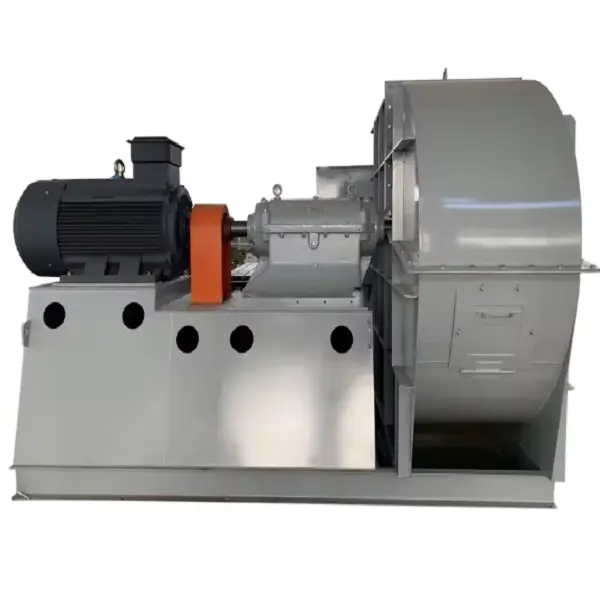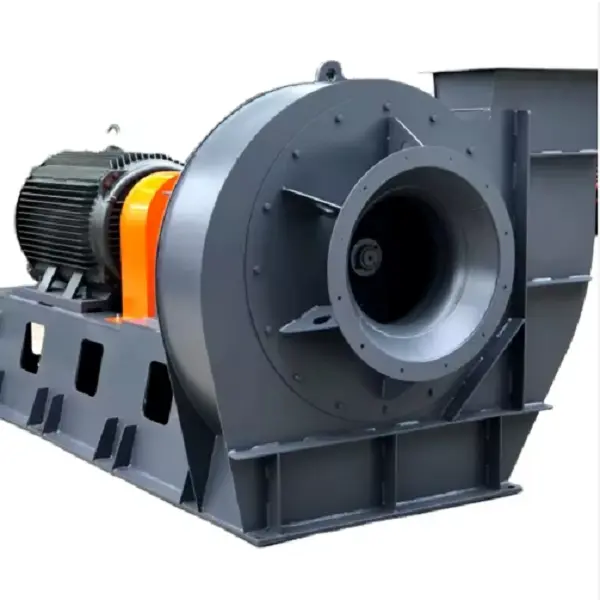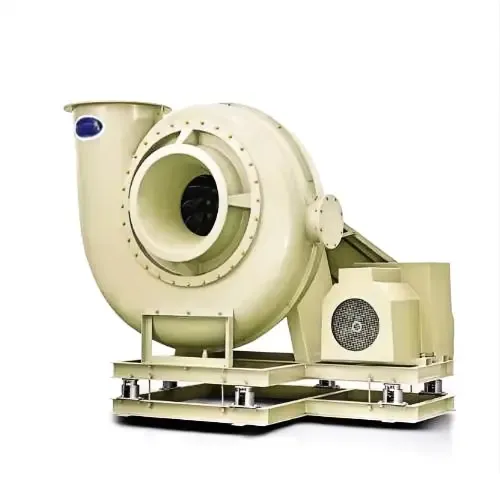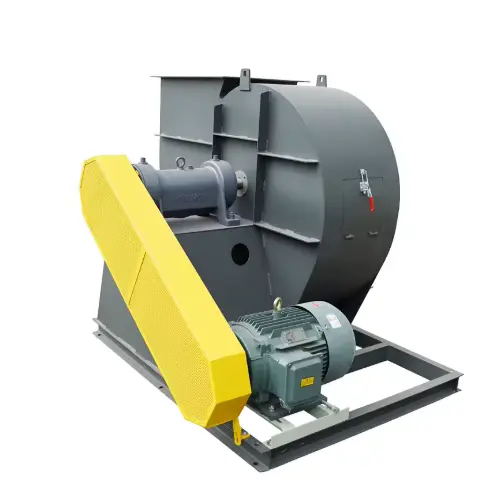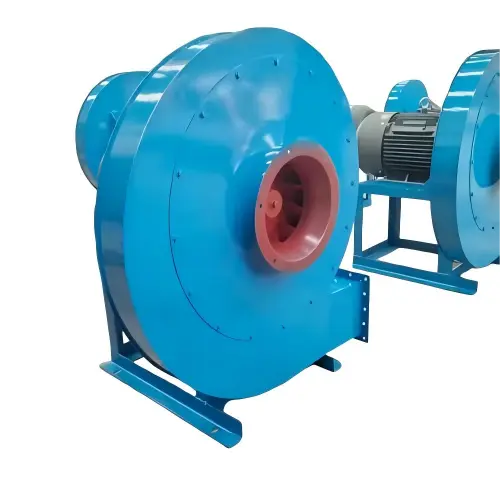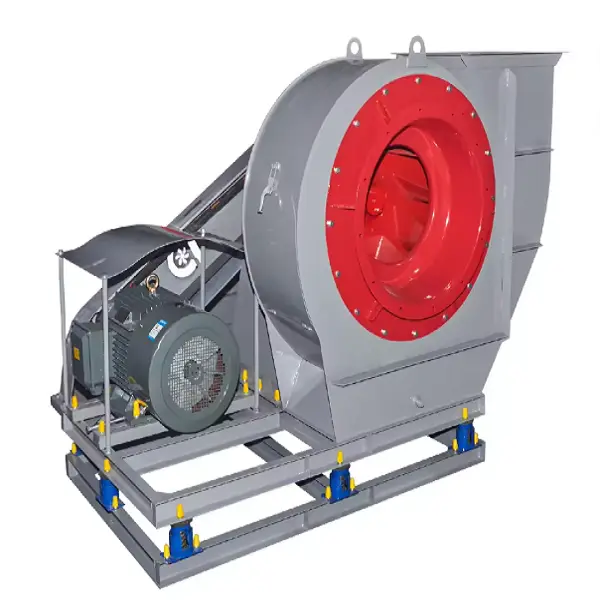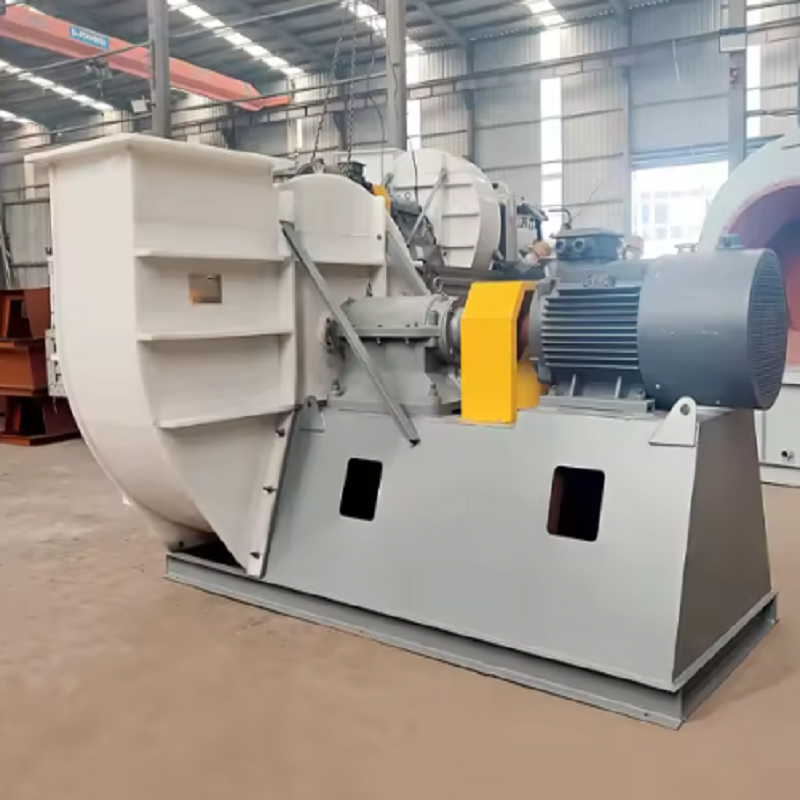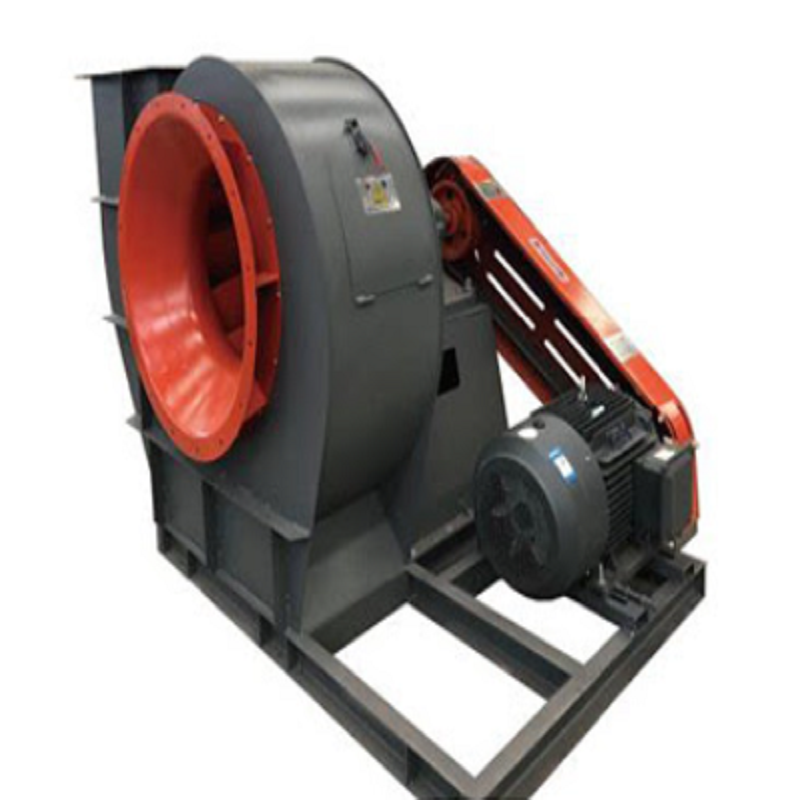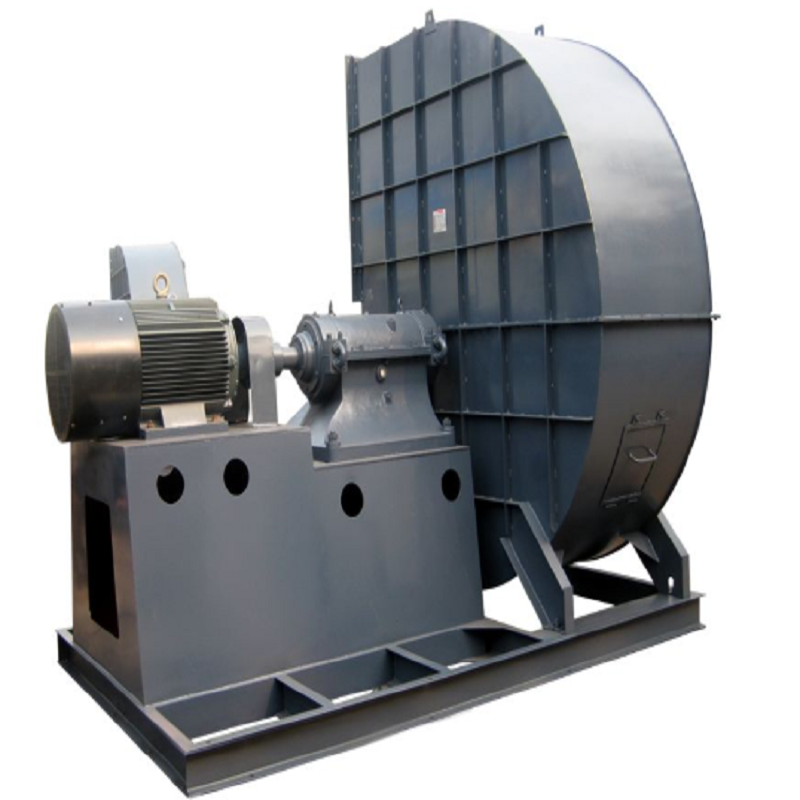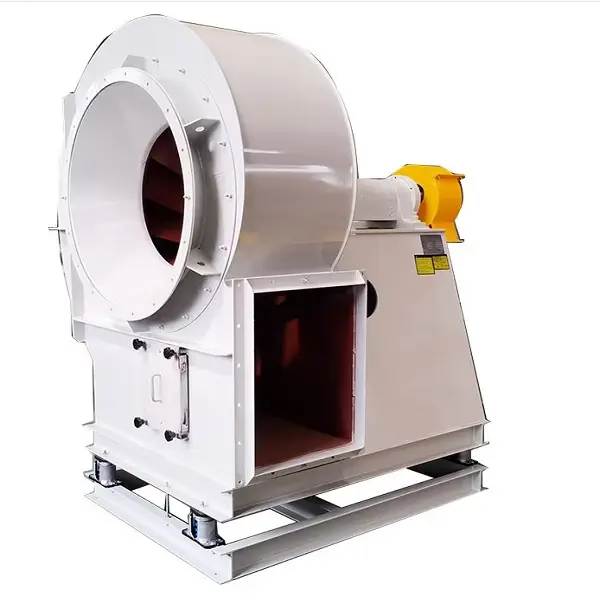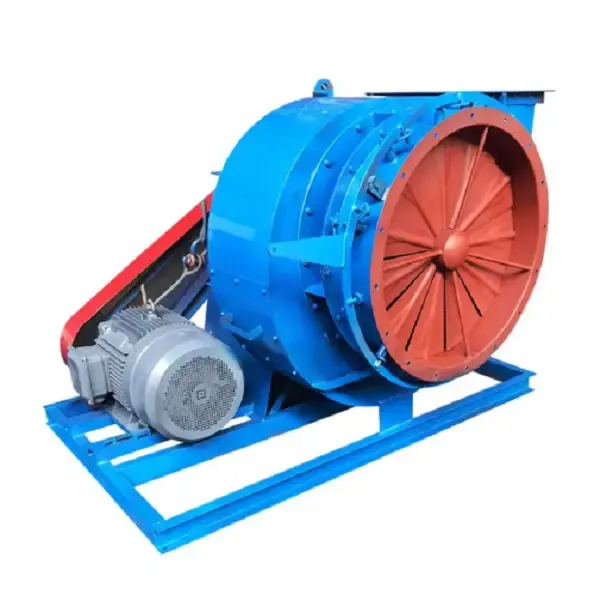
Industrial ventilation systems rarely operate under ideal conditions. Long duct runs, multiple elbows, filters, dampers, heat exchangers, scrubbers, dust collectors, and process equipment can create substantial resistance. When the required airflow must be maintained against high system resistance, a standard ventilation fan may no longer be the right solution. This is where a Customized High Pressure Centrifugal Fan becomes useful.
A Customized High Pressure Centrifugal Fan is not simply a centrifugal fan with a larger motor. The fan should be designed around the actual operating point, including airflow, static pressure, gas temperature, medium characteristics, installation layout, and operating hours. In practical fan selection, airflow and pressure need to be considered together rather than selecting a model from airflow alone.
A common mistake in industrial projects is to specify a fan based only on the required air volume. For example, a process may require 20,000 m³/h, but that number says very little about whether the fan will actually perform after installation. If the system includes a bag filter, cyclone, long duct, several elbows and a discharge stack, the total pressure requirement can be considerably higher than expected.
A Customized High Pressure Centrifugal Fan should therefore be selected from the complete system resistance. A practical specification should include airflow, static or total pressure, gas temperature, gas composition, dust concentration, duct dimensions, filter resistance, outlet direction, motor voltage and operating schedule. These parameters determine the impeller diameter, blade profile, rotational speed, motor power, casing arrangement and construction material.
For example, if an existing system requires 18,000 m³/h at 3,500 Pa but the original fan was selected for only 2,500 Pa, increasing motor size alone will not necessarily solve the problem. The impeller and casing must be capable of generating the additional pressure while remaining within a stable operating region. This is one reason a Customized High Pressure Centrifugal Fan is often preferable to simply modifying a standard unit.
Before designing a Customized High Pressure Centrifugal Fan, I would first establish the actual duty point. The basic calculation starts with airflow and pressure, but the gas density also matters.
For relatively clean air, the required air power can be estimated as:
Air Power = Q × ΔP
where Q is volumetric flow rate in m³/s and ΔP is pressure in Pa.
For example, a system requiring 12,000 m³/h at 4,000 Pa has an airflow of approximately 3.33 m³/s. The theoretical air power is therefore:
3.33 × 4,000 ≈ 13.3 kW
The actual motor rating must be higher because fan, transmission and motor losses must be considered. A reasonable engineering margin should also be evaluated rather than simply installing an oversized motor.
Temperature must be included as well. Hot gases have lower density than ambient air, which affects fan pressure generation, mass flow and motor selection. Altitude and inlet pressure can also influence density and fan performance.
The impeller is one of the most important components in a Customized High Pressure Centrifugal Fan. When the system requires higher pressure, the designer may need to adjust blade geometry, impeller diameter, blade number, blade angle, rotational speed or impeller width.
Backward-curved blades are often attractive when efficiency and a relatively stable operating characteristic are important. Radial blades may be more suitable for applications involving heavier dust or particulate loading because of their robust geometry. The final choice, however, depends on the specific gas and process conditions rather than a universal rule.
Consider a steel-processing exhaust system handling approximately 30,000 m³/h at 5,000 Pa. If the gas contains abrasive particles, simply increasing the fan speed could create excessive tip speed and accelerate wear. A better approach may involve selecting a suitable radial or reinforced impeller, increasing material thickness at critical locations, and adding replaceable wear plates where necessary.
This is where a Customized High Pressure Centrifugal Fan differs from a catalogue fan: the design can be adapted around the actual wear mechanism rather than treating pressure as the only requirement.
Pressure is only one part of the engineering problem. The material flowing through the fan can determine its service life.
For clean air, conventional carbon steel construction may be adequate. For high-temperature gas, the designer may need to consider thermal expansion, bearing arrangement, shaft temperature and casing clearances. For corrosive gases, stainless steel or other corrosion-resistant materials may be required. For abrasive dust, wear-resistant steel or replaceable wear components can extend maintenance intervals.
For example, a chemical exhaust system carrying humid corrosive gas should not be treated in the same way as a dry-air ventilation system. A Customized High Pressure Centrifugal Fan for this service may require corrosion-resistant construction, appropriate shaft sealing and careful material selection for the impeller and casing.
The same principle applies to dust. Particle size, hardness, concentration and stickiness should be documented before selecting the impeller. Industrial fan selection guidance also identifies dust characteristics, filter resistance and system layout as important factors in selecting the appropriate fan construction.
Consider a hypothetical cement-processing line where the dust collection system needs approximately 25,000 m³/h at 4,500 Pa. The original fan was operating close to maximum speed, but the airflow at the collection hoods remained below the required value.
The first step should not be replacing the motor. The duct system should be inspected for excessive leakage, blocked filters, accumulated dust and unexpected pressure losses. The actual static pressure should then be measured at several points.
Suppose testing shows that the clean system requires approximately 4,200 Pa rather than the original design value of 3,500 Pa. A properly selected Customized High Pressure Centrifugal Fan could then be specified around the revised operating point.
The upgraded system could use a more suitable impeller geometry, reinforced wear areas and a motor selected for the actual pressure-flow duty. After commissioning, technicians should measure airflow, fan pressure, motor current, bearing temperature and vibration rather than judging performance only by whether the fan reaches its rated speed.
A high-pressure fan can produce the required pressure at the impeller but still perform poorly if the casing and discharge arrangement are poorly matched.
The casing must provide an appropriate flow path from the impeller to the outlet. Poor inlet conditions, abrupt transitions and unnecessary turbulence can increase losses and reduce the useful pressure available to the process.
The outlet direction should also be confirmed before manufacturing. Depending on the installation, the fan may require a specific rotation direction, discharge angle, base arrangement, inspection door or access configuration.
For a Customized High Pressure Centrifugal Fan, these details should be included in the technical drawing before production. Changing the outlet direction or foundation arrangement after fabrication can be considerably more expensive than incorporating the requirement during the design stage.
Another frequent mistake is choosing the motor first and trying to make the fan fit it. The better approach is to determine the fan operating point and calculate the required shaft power.
For example, suppose a fan requires 40,000 m³/h at 3,000 Pa. The theoretical air power is approximately:
11.1 m³/s × 3,000 Pa = 33.3 kW
If the overall fan and transmission efficiency is assumed to be 70%, the shaft power requirement would be roughly:
33.3 ÷ 0.70 ≈ 47.6 kW
The final motor selection must then consider service conditions, starting requirements, ambient temperature, voltage, frequency, duty cycle and appropriate engineering margin.
This calculation illustrates why a Customized High Pressure Centrifugal Fan should not be specified simply as a “50 kW fan.” The motor power is a consequence of the airflow, pressure and efficiency at the operating point.
Many industrial processes do not require maximum airflow all the time. If production changes during the day, operating a high-pressure fan continuously at full speed can waste energy.
A variable frequency drive can provide a practical way to adjust fan speed according to process demand. Under the affinity laws, approximately:
Q ∝ N
P ∝ N²
Power ∝ N³
where Q is airflow, P represents pressure, and N is rotational speed.
This means even a moderate reduction in speed can produce a significant reduction in theoretical fan power, provided the process can operate at the reduced airflow and pressure.
This issue has become increasingly important in industrial fan projects. EU Ecodesign Regulation 2024/1834, applicable from July 24, 2026, introduces minimum efficiency requirements for covered industrial fans and includes requirements related to performance at different loads and speeds.
Therefore, when specifying a Customized High Pressure Centrifugal Fan for an international project, it is worth discussing not only full-load performance but also the expected operating range.
After installing a Customized High Pressure Centrifugal Fan, commissioning measurements should be recorded as the baseline for future maintenance.
At minimum, I would record:
Airflow
Fan static or total pressure
Motor current
Motor voltage
Fan rotational speed
Bearing temperature
Vibration
Gas temperature
Damper or VFD position
The fan should then be compared against the design operating point.
For example, if the design requirement is 22,000 m³/h at 4,000 Pa but commissioning produces only 17,000 m³/h at 3,000 Pa, the problem should be investigated before accepting the equipment. Possible causes include incorrect rotation, excessive system resistance, inlet turbulence, leakage, incorrect damper position or an incorrect fan operating point.
A commissioning record is particularly valuable because it gives maintenance personnel a reference point. If vibration, motor current or pressure gradually changes over six months, the original data provides a much better basis for diagnosis than a generic statement that the fan is “running normally.”
High pressure operation places continuous demands on bearings, shafts, impellers and drive components. Preventive maintenance should therefore focus on measurable conditions rather than waiting for failure.
For dusty applications, inspect the impeller regularly for buildup. Even a relatively small amount of uneven dust accumulation can create imbalance. Bearing temperature and vibration should also be trended over time.
If vibration increases gradually, technicians should check impeller balance, bearing condition, shaft alignment, foundation bolts and coupling alignment. If motor current rises while airflow falls, system resistance, filter loading and impeller condition should be investigated.
A properly designed Customized High Pressure Centrifugal Fan can reduce these problems through suitable material selection, access doors, wear protection and maintenance-friendly construction, but no fan design can eliminate the need for routine inspection.
When requesting a quotation for a Customized High Pressure Centrifugal Fan, providing only “high pressure, 20,000 m³/h” is not enough for a reliable technical proposal.
A useful RFQ should include:
Required airflow: m³/h or CFM
Required static pressure or total pressure
Gas temperature
Gas composition
Dust concentration and particle characteristics
Inlet pressure or altitude, when relevant
Duct dimensions and approximate layout
Filter, scrubber or collector resistance
Fan inlet and outlet dimensions
Rotation direction and outlet orientation
Motor voltage and frequency
Required control method
Continuous or intermittent operating hours
Installation environment
Required material and corrosion/wear resistance
Quantity and spare-parts requirements
This information allows the manufacturer to evaluate the actual duty instead of guessing from a model number. Current industrial fan selection practice likewise emphasizes airflow, pressure, temperature, medium condition and duct layout as core selection information.
A Customized High Pressure Centrifugal Fan should be treated as part of the process system rather than an isolated piece of rotating equipment. The right design starts with the actual operating point, then works through pressure losses, gas density, impeller geometry, material selection, motor power, casing arrangement and control requirements.
The best result is not necessarily the fan with the highest pressure rating. It is the fan that delivers the required airflow and pressure at an efficient operating point, survives the actual gas conditions and remains maintainable throughout its service life.
For industrial applications involving boilers, furnaces, dust collectors, chemical exhaust, steel processing or other high-resistance systems, a Customized High Pressure Centrifugal Fan can provide a more practical solution when standard catalogue specifications cannot accurately match the process requirements.
The most useful engineering question is therefore not simply, “Which high-pressure fan should we buy?” It is: What airflow, pressure, gas condition and operating range does the system actually require? Once those values are established, the fan can be engineered around the process rather than forcing the process to work around a standard fan.