News

Wear-Resistant Centrifugal Fans Support Long-Term Operation in Cement and Mining Industries

2026-08-28 0 Leave me a message

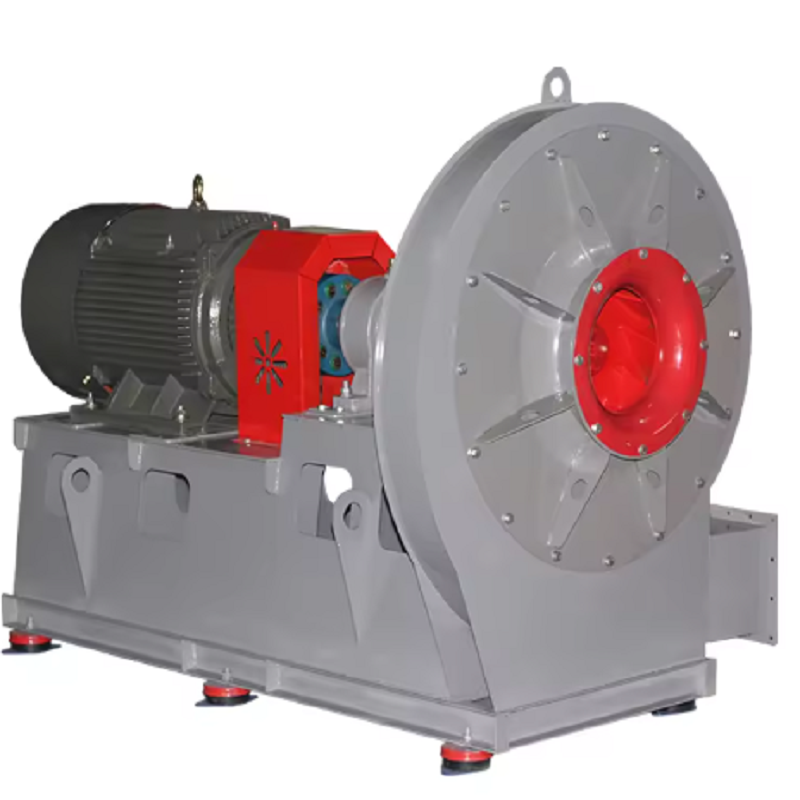
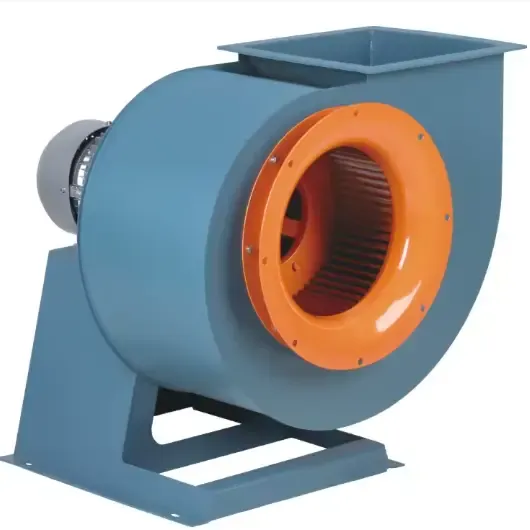
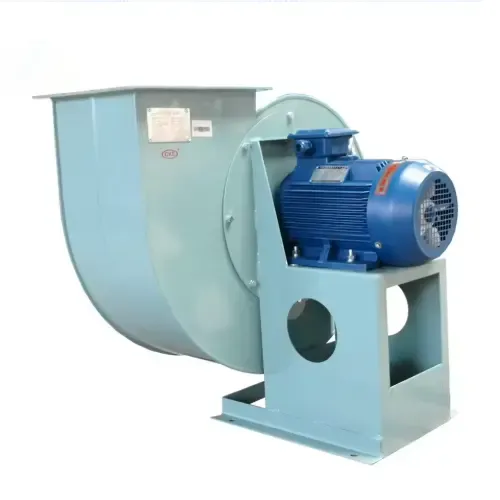
Cement and mining plants operate some of the harshest industrial ventilation systems in terms of dust loading, particle hardness, temperature, and continuous operating hours. Ordinary centrifugal fans can move the required air volume, but their impellers, inlet cones, casings, and wear plates may deteriorate quickly when exposed to abrasive particles. This is where Wear-Resistant Centrifugal Fans become important. Instead of simply increasing plate thickness, a properly designed fan considers particle characteristics, gas velocity, impeller geometry, wear-resistant materials, and the actual operating point together. Research on large cement-plant fans has shown that solid-particle erosion can become a major failure mechanism, particularly in clinker and grinding applications.

Why Abrasive Dust Causes Fan Problems

The main difference between ordinary ventilation and heavy-duty dust handling is what travels through the fan. Cement raw meal, clinker dust, limestone particles, quartz, ore dust, and similar materials can repeatedly strike the rotating impeller at high velocity. Over time, this removes material from the blade leading edges, pressure surfaces, back plates, shrouds, and casing. In severe cases, uneven wear changes the impeller profile and creates dynamic imbalance.

For this reason, Wear-Resistant Centrifugal Fans should be selected according to the actual dust conditions rather than airflow alone. Engineers should collect at least five operating parameters before selecting a fan: required airflow, static or total pressure, gas temperature, dust concentration, and particle characteristics. Particle size and hardness are also useful because a fine silica-rich dust can produce a very different wear pattern from relatively soft organic dust. Cement-industry guidance similarly identifies dust load, temperature, and process variation as major factors affecting fan selection and reliability.

Impeller Design Is More Important Than Simply Using Thicker Steel

A common mistake is to assume that a heavier impeller automatically provides better wear resistance. It does not. Excessive weight can increase shaft loads, starting torque, bearing loads, and manufacturing costs without solving the actual erosion problem.

In Wear-Resistant Centrifugal Fans, protection should normally be concentrated in the areas where particle impact is strongest. Depending on the application, these may include the blade leading edge, pressure side, impeller back plate, shroud, inlet cone, and sections of the volute. Engineering research on a large cement fan, for example, examined wear-resistant plates installed on the blade pressure side and leading edge, impeller disk, shroud area, and part of the spiral casing.

A practical approach is to inspect a failed or worn impeller and mark the areas with the greatest material loss. If 70% of the wear is concentrated on the first 20–30% of the blade surface, applying expensive wear protection to every internal surface may not be economically justified. Localized protection can often provide a better balance between service life, weight, and cost.

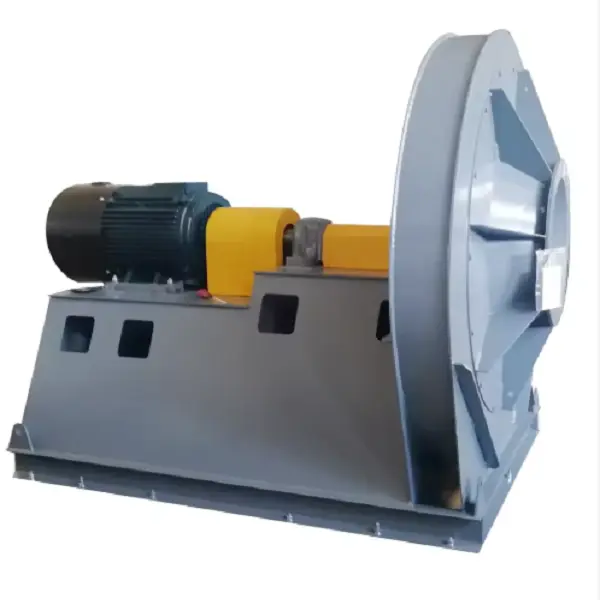
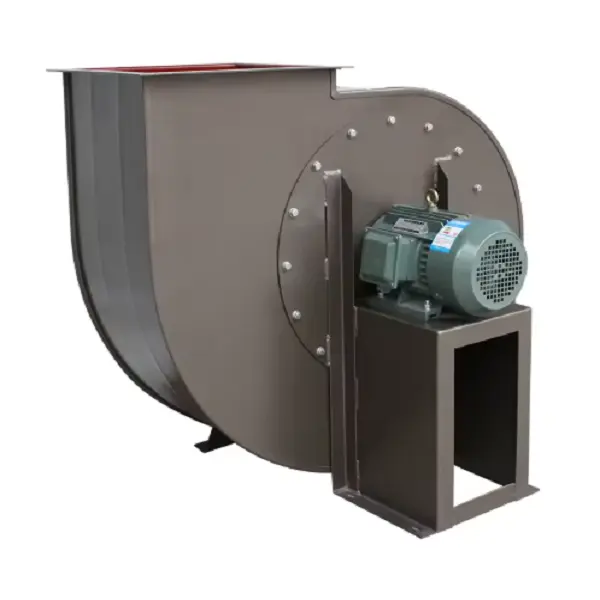
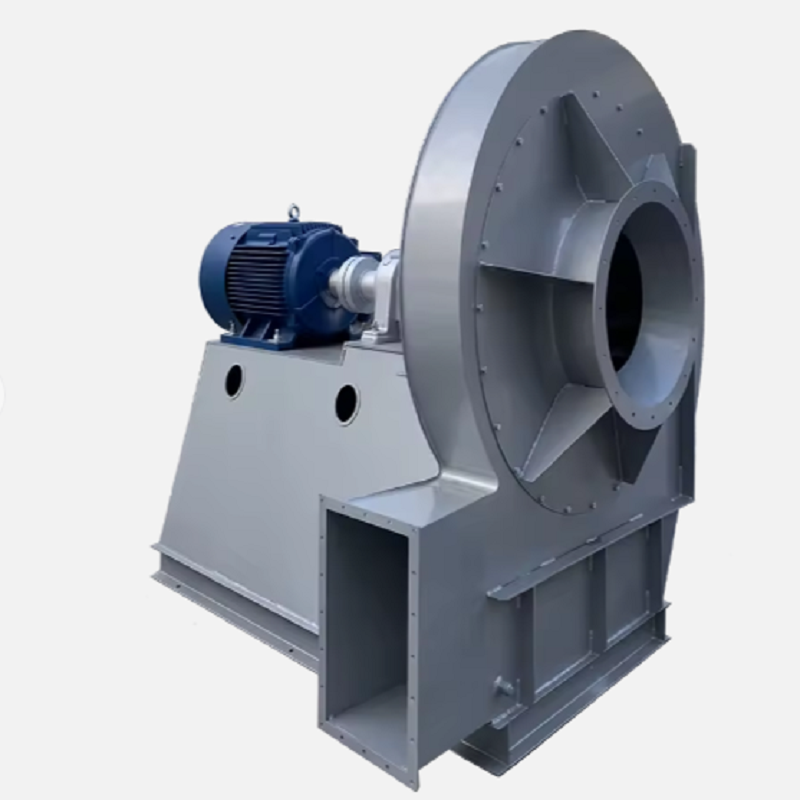
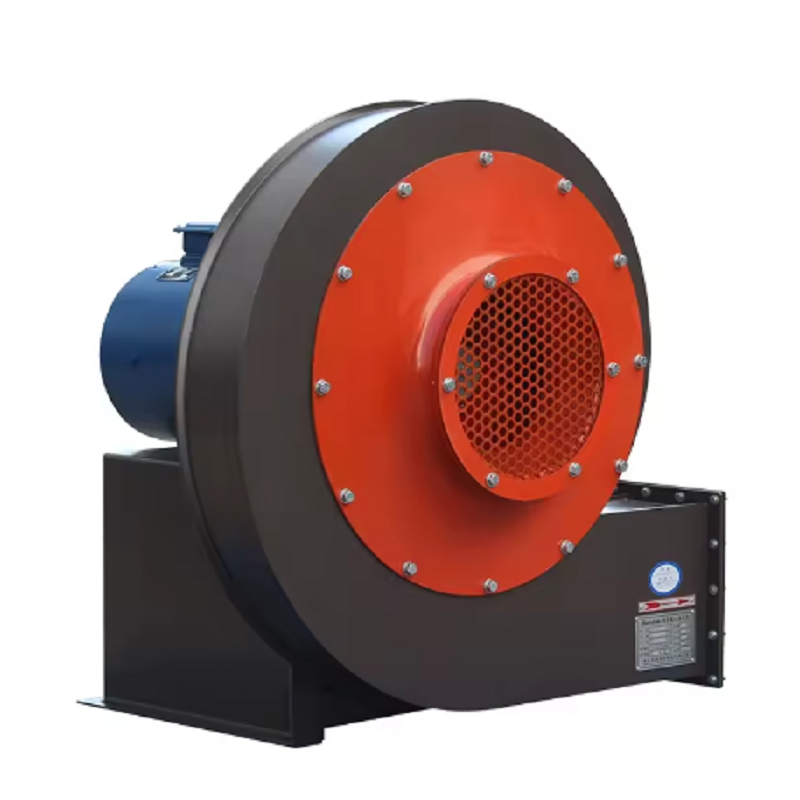
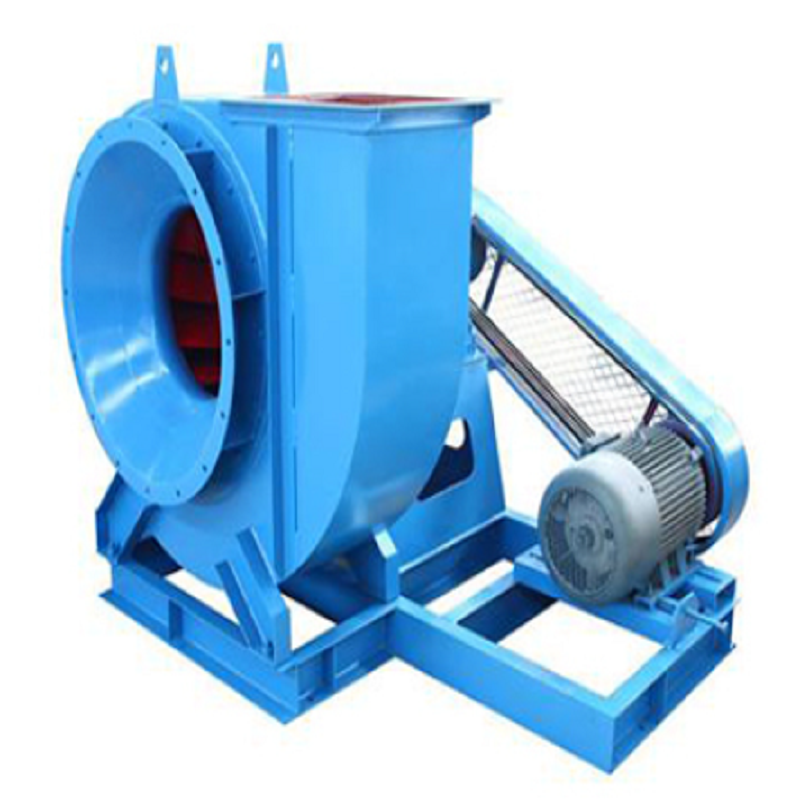
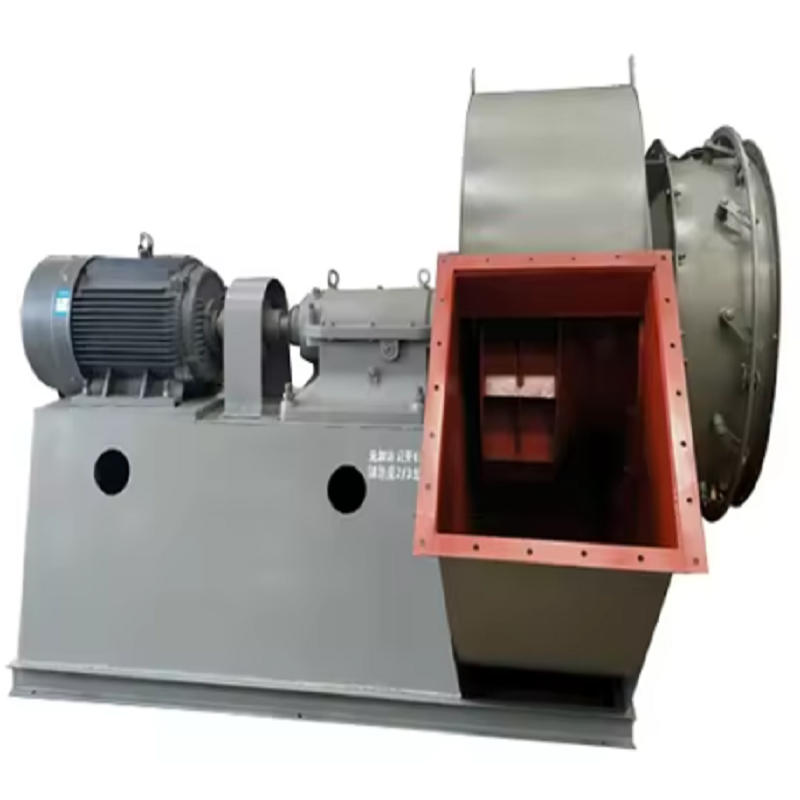
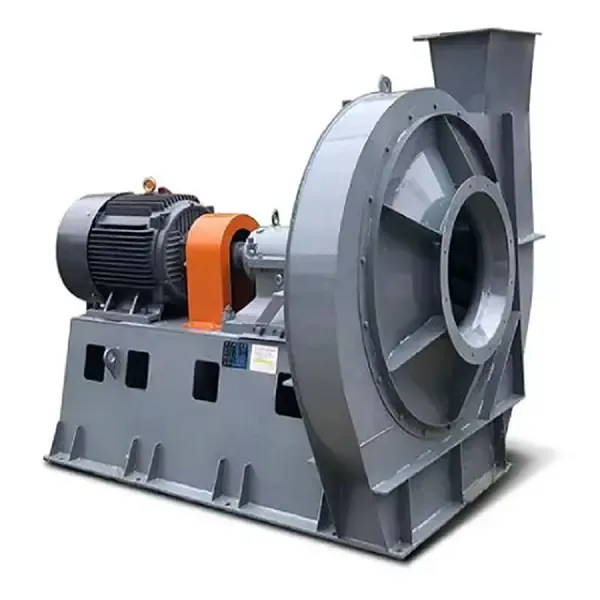
Wear-Resistant Centrifugal Fan

Choosing Wear-Resistant Materials

Material selection should be based on the actual operating environment. Abrasion-resistant steel is commonly used as a basic protection option, while chromium-carbide overlay and other high-hardness wear-resistant materials can be considered for more severe conditions. Cement-industry engineering references identify AR steel and chromium-carbide materials among commonly used liner solutions.

For Wear-Resistant Centrifugal Fans operating with highly abrasive particles, the hardness of the protective layer is only one consideration. Impact resistance, weldability, operating temperature, thermal expansion, liner attachment, and repairability also matter. A very hard but brittle material may perform poorly if the fan experiences large particles or repeated impact. Conversely, a tougher material may be preferable where particles are relatively coarse and impact loading is high.

The selection process should therefore start with the dust rather than the material catalog. Record particle composition, approximate particle size, concentration, temperature, and gas velocity. Then determine which areas require replaceable liners, hardfacing, abrasion-resistant plate, or a different impeller construction.

Control Air Velocity to Reduce Erosion

Fan speed has a direct influence on particle velocity and erosion. For the same basic duty, a smaller fan running at higher speed may reduce equipment size, but the increased internal velocity can accelerate particle impact and wear. Cement-industry engineering guidance specifically notes that fan wear associated with particulate loading can increase strongly with velocity.

This is one reason Wear-Resistant Centrifugal Fans should not be selected simply by choosing the smallest fan capable of meeting the required airflow. Suppose a dust-extraction system requires approximately 100,000 m³/h at a specified pressure. A high-speed compact fan may meet the duty, but if the gas contains a large quantity of hard mineral particles, a larger, slower-running configuration may provide a better lifecycle cost.

During commissioning, measure actual airflow, pressure, motor current, fan speed, vibration, and bearing temperature. If the fan is operating far above the intended velocity or pressure range, correcting the system operating point may reduce wear without modifying the impeller.

Case Example: Cement Grinding Application

Consider a clinker grinding plant where a large centrifugal fan handles dust-laden process gas continuously. The original impeller experiences rapid thinning around the blade leading edges and pressure surfaces. Operators respond by replacing the complete impeller at fixed intervals, resulting in repeated shutdowns and spare-part costs.

A better engineering approach begins with an inspection of the worn impeller. Measure the remaining plate thickness at several locations and compare the measurements with the original drawing. If the highest wear occurs near the blade inlet and outlet zones, the redesign can concentrate wear-resistant protection in these regions rather than adding excessive material everywhere.

A large-scale cement fan study provides a useful real-world reference: the investigated fan had a 4 m-class impeller and operated at approximately 652 rpm, with wear-resistant plates applied to specific high-risk areas of the impeller and casing. The lesson is practical: wear protection should follow the actual particle-flow pattern instead of being applied uniformly without analysis.

Mining Applications Require a Different Approach

Mining ventilation and material-processing systems can expose fans to ore dust, rock particles, mineral fines, and other abrasive solids. Crusher ventilation is particularly challenging because coarse particles can produce impact damage in addition to normal erosion.

For Wear-Resistant Centrifugal Fans used in mining, engineers should therefore distinguish between erosion and impact. Fine particles moving at high velocity tend to produce progressive surface erosion, while larger particles can create localized impact damage, deformation, or cracking.

A practical inspection program should include blade thickness measurements, visual inspection of leading edges, weld inspection around liners, shaft runout checks, and vibration measurements. If wear is highly uneven, dynamic balancing should be considered after cleaning and before returning the fan to service. Dust accumulation itself can also create imbalance, meaning that not every vibration problem is caused by bearing failure.

Maintenance Should Be Based on Wear Rate

Replacing components only after perforation is usually too late for a critical process fan. A more useful method is to establish a wear-rate record.

For example, if a blade section measures 12 mm when new and drops to 10 mm after 6,000 operating hours, the average wear rate is approximately 0.33 mm per 1,000 hours. The actual rate may not remain linear, but the measurement provides a useful baseline for planning inspections and replacement.

For Wear-Resistant Centrifugal Fans, inspection intervals should be adjusted according to operating conditions. A fan handling highly abrasive mineral dust may require much more frequent inspections than a fan handling relatively clean air. Critical checkpoints include impeller thickness, liner condition, blade cracks, weld integrity, shaft alignment, bearing temperature, vibration, and motor current.

Dust accumulation should also be removed before balancing or vibration diagnosis. Uneven deposits can produce an apparent mechanical imbalance and lead technicians toward unnecessary bearing or shaft replacement. Cement-industry sources also identify dust accumulation and wear as important contributors to vibration and performance deterioration.

Do Not Ignore the Fan Casing

The impeller normally receives the most attention, but casing erosion can eventually become just as serious. High-velocity particles leaving the impeller can repeatedly strike specific sections of the volute. Once the casing becomes thin, a local repair may no longer be sufficient.

When specifying Wear-Resistant Centrifugal Fans, the casing should therefore be inspected together with the impeller. Replaceable liners can be useful in locations where wear is predictable and maintenance access is available. The advantage is straightforward: instead of replacing a complete casing, technicians can replace only the sacrificial wear component.

This approach is particularly practical for continuous-process industries because maintenance work can be planned around production schedules. The objective is not to make every component indestructible; it is to make the parts exposed to predictable wear easy to inspect and replace.

Energy Efficiency and Wear Must Be Considered Together

Wear resistance should not come at the expense of fan performance. Adding thick liners or changing blade geometry can affect impeller weight, aerodynamic efficiency, and operating point. A poorly designed modification may extend component life while increasing power consumption.

For Wear-Resistant Centrifugal Fans, the best design is therefore a compromise between abrasion resistance, aerodynamic efficiency, mechanical strength, and maintenance cost. Variable-speed control can also be useful when the process requires a wide operating range. Compared with excessive damper throttling, variable-speed control can reduce unnecessary pressure losses, although the fan manufacturer must account for the required speed range during mechanical design.

When evaluating an existing fan, record kW, airflow, pressure, and operating hours before making modifications. A fan that saves one impeller replacement per year but consumes substantially more electricity may not provide the expected lifecycle savings.

A Practical Selection Checklist

Before ordering a fan for a cement or mining application, engineers should prepare a complete duty sheet rather than providing only airflow and pressure.

The minimum information should include:

Airflow: m³/h or CFM

Static or total pressure

Gas temperature

Dust concentration

Particle size and material

Gas composition and corrosiveness

Continuous or intermittent operating hours

Fan speed or preferred speed range

Motor power and voltage

Required service life

Maintenance access limitations

Existing duct dimensions

Expected process variations

For Wear-Resistant Centrifugal Fans, these details allow the manufacturer to determine whether the application requires AR steel, hardfacing, chromium-carbide overlay, replaceable liners, reinforced blades, or another protection strategy.

Long-Term Reliability Comes From the Complete System

The service life of an industrial fan is not determined by the impeller material alone. Duct geometry, inlet flow distribution, gas velocity, dust concentration, fan operating point, maintenance practices, and process stability all influence the final result.

In cement and mining plants, the most reliable Wear-Resistant Centrifugal Fans are usually those designed around the actual process rather than selected from a standard catalog. A fan handling abrasive dust should be treated as a process machine, not simply as an airflow device.

The practical objective is straightforward: reduce unnecessary particle impact, protect predictable wear zones, maintain correct operating conditions, monitor deterioration before failure, and make worn components easy to repair or replace. When these measures are combined, a wear-resistant fan can provide significantly more stable long-term operation while reducing unplanned shutdowns and maintenance costs.

Related News
Leave me a message
X
We use cookies to offer you a better browsing experience, analyze site traffic and personalize content. By using this site, you agree to our use of cookies.Privacy Policy
RejectAccept