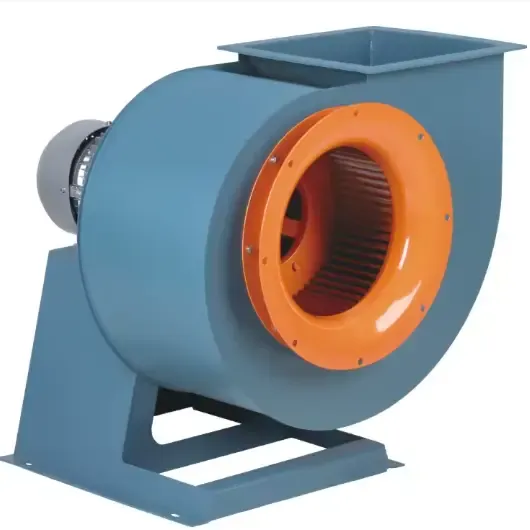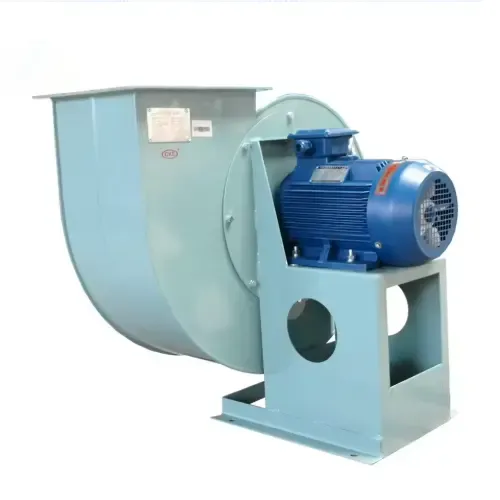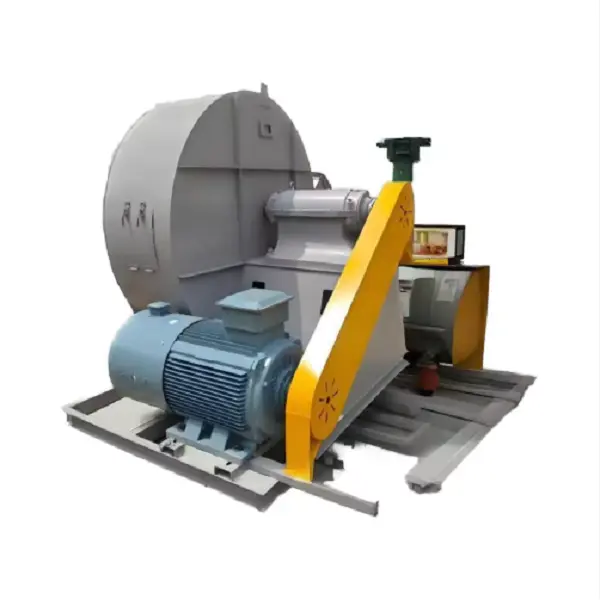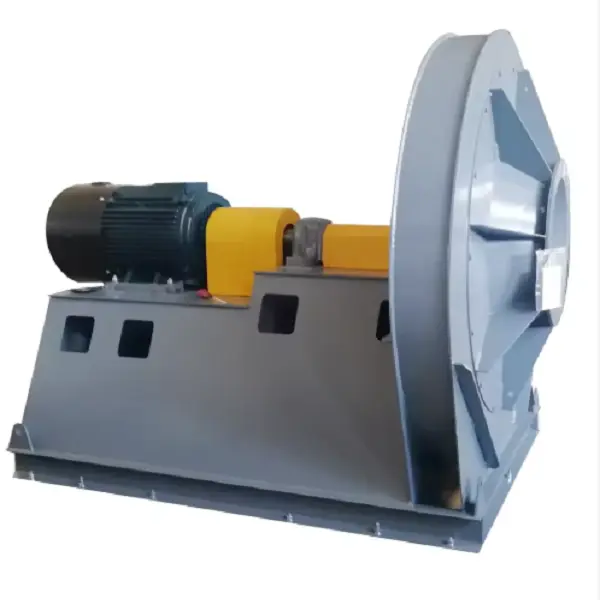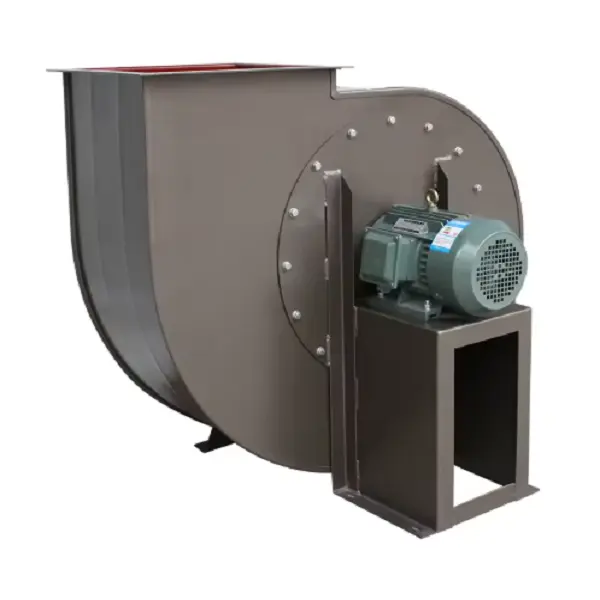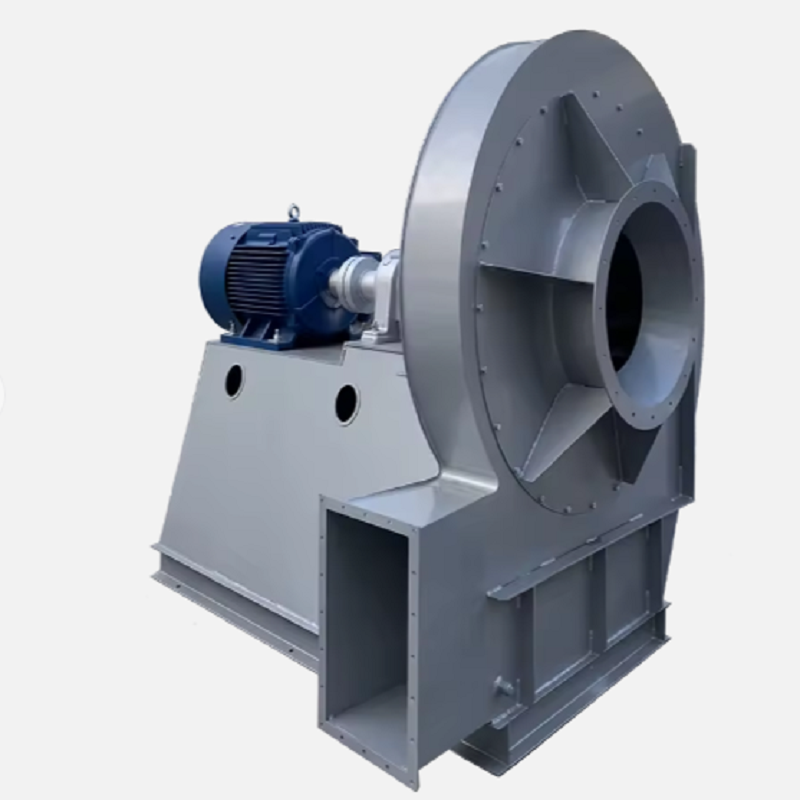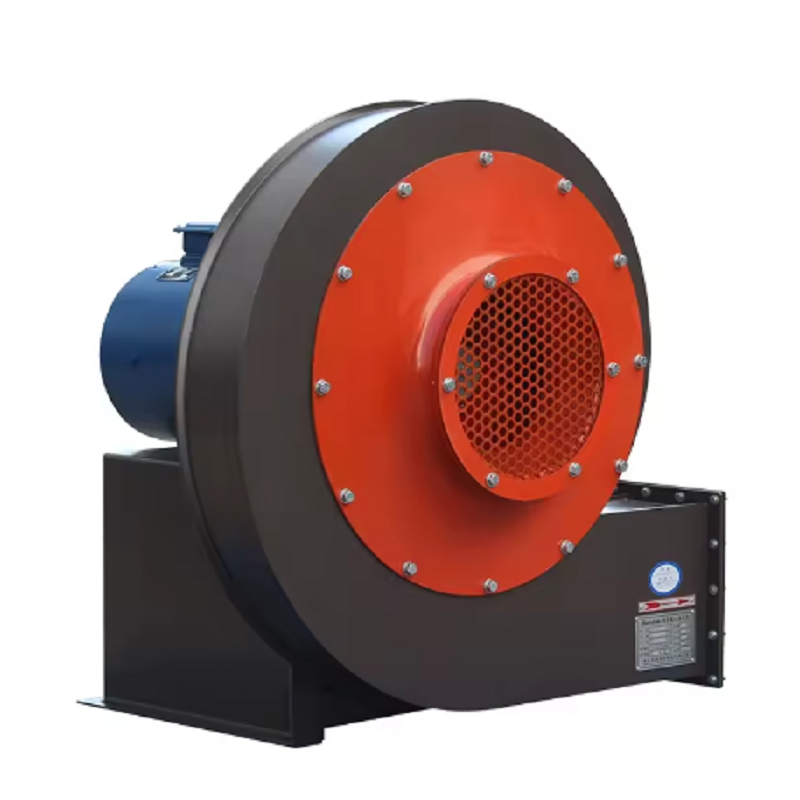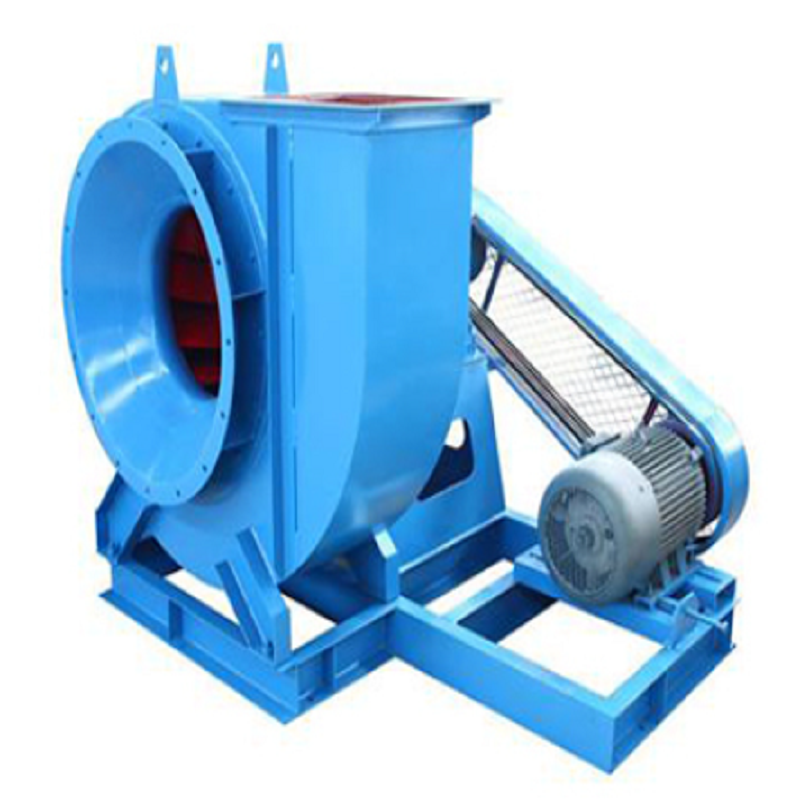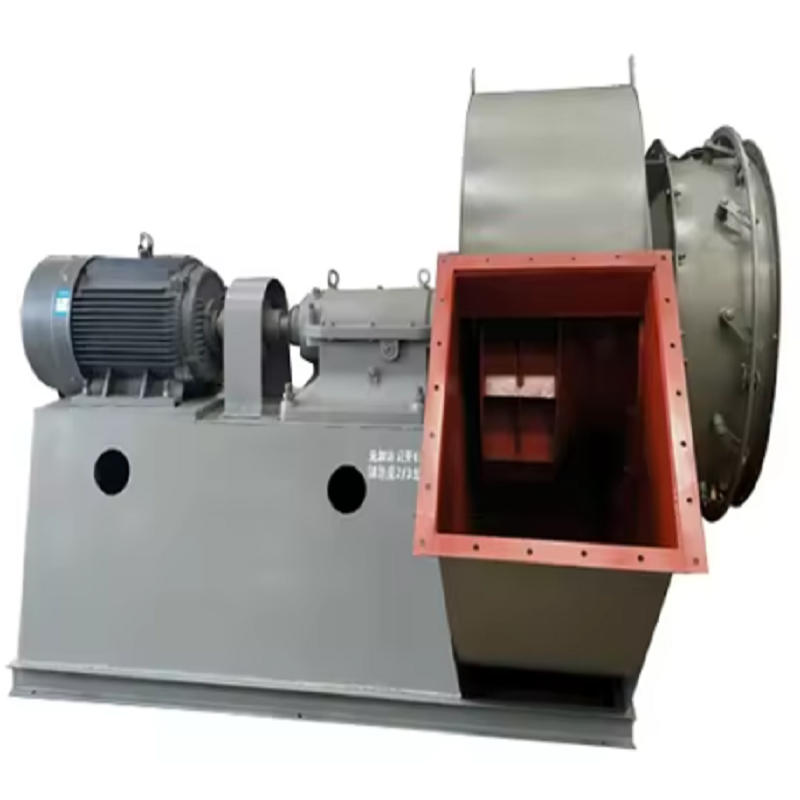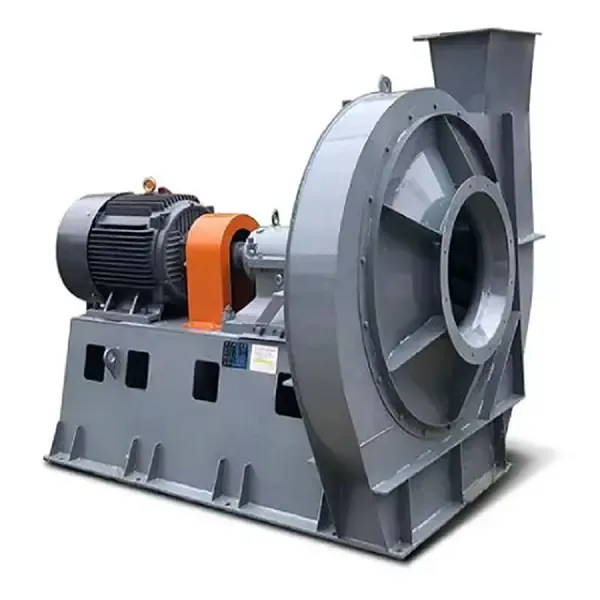
Industrial ventilation systems rarely operate under clean and stable conditions. In cement plants, steel mills, foundries, boilers, kilns, and mineral processing facilities, fans may have to handle hot air, abrasive dust, fumes, and continuous operation at high loads. Under these conditions, an Industrial Centrifugal Fan needs more than sufficient airflow and pressure. Its materials, impeller design, bearing arrangement, shaft structure, sealing method, and cooling system all need to match the actual operating environment.
One common mistake is selecting an Industrial Centrifugal Fan according to airflow and pressure while ignoring gas temperature. Temperature affects gas density, fan performance, bearing life, shaft expansion, lubrication, and motor loading.
For example, if a fan is designed for 20°C air but the actual process gas reaches 200°C, the same volumetric airflow does not represent the same mass flow. Hot gas is less dense, and the fan's pressure performance must be evaluated under the actual operating temperature.
Before confirming a fan, engineers should record:
Normal operating temperature
Maximum temperature
Possible temperature fluctuations
Gas composition
Required airflow
Static or total pressure
Dust concentration
Continuous operating hours
For an Industrial Centrifugal Fan handling hot process gas, it is also important to determine whether the high temperature exists continuously or only during short production periods. A fan designed for 150°C continuous operation is not necessarily suitable for a process where the gas occasionally reaches 250°C.
High dust concentration creates a different problem. Dust can accumulate on the impeller, causing imbalance and gradually increasing vibration. Abrasive particles can also wear the blade surface, especially when the gas velocity is high.
For an Industrial Centrifugal Fan operating in a dusty environment, the impeller should therefore be selected according to the characteristics of the particles rather than simply choosing a larger motor.
Several practical measures can improve service life:
Use an impeller profile suitable for the required pressure and dust conditions.
Select wear-resistant steel or apply wear protection where necessary.
Avoid unnecessary increases in blade tip speed.
Provide inspection openings where regular cleaning is required.
Balance the impeller after fabrication and after major repair.
Check whether the dust collector or cyclone is functioning correctly upstream.
If the dust is highly abrasive, simply increasing the plate thickness is not always the best solution. The particle size, hardness, concentration, impact angle, and gas velocity should be considered together.
The casing and impeller materials of an Industrial Centrifugal Fan should be selected according to temperature and gas composition.
For moderately hot and relatively clean air, conventional carbon steel may be sufficient. However, high-temperature gases containing corrosive compounds may require stainless steel or other heat-resistant materials.
Another important issue is thermal expansion. When a large impeller operates at elevated temperatures, dimensional changes can occur. If the shaft, bearings, housing, and impeller arrangement does not allow for thermal expansion, additional mechanical stress may develop.
In practical engineering, material selection should therefore consider both temperature resistance and mechanical loading. A material that performs well against corrosion may not automatically be the best choice for a high-speed rotating component.
The bearing assembly is often one of the first components affected when an Industrial Centrifugal Fan operates continuously under harsh conditions.
For high-temperature applications, the bearing should be kept away from excessive heat whenever possible. Depending on the fan configuration, engineers may use a shaft extension, cooling disc, bearing housing, or other heat-isolation measures.
During commissioning, technicians should establish baseline values for:
Bearing temperature
Vibration velocity
Motor current
Fan speed
Inlet pressure
Outlet pressure
These values provide useful reference points for future maintenance.
For example, if bearing temperature gradually increases while airflow remains unchanged, the problem may not be the fan itself. Possible causes include incorrect lubrication, bearing deterioration, shaft misalignment, excessive belt tension, or insufficient cooling around the bearing housing.
A cement production line provides a typical example of how operating conditions affect an Industrial Centrifugal Fan.
In one hypothetical but representative application, a process exhaust fan was required to handle approximately 30,000 m³/h of gas at around 180°C, with significant dust loading. The original fan experienced increasing vibration after several months of operation.
Inspection found that dust had accumulated unevenly on the impeller. The additional mass was not large enough to stop the fan, but it was sufficient to disturb the original dynamic balance.
Instead of simply replacing the motor, the maintenance team first:
Removed and cleaned the impeller.
Checked blade deformation and wear.
Performed dynamic balancing.
Inspected the shaft and coupling alignment.
Checked bearing condition.
Measured vibration before and after balancing.
Rechecked system resistance and damper position.
After cleaning and balancing, vibration returned to an acceptable operating level.
The important lesson is that an Industrial Centrifugal Fan operating in a dusty environment should not be judged only by whether it is still rotating. Changes in vibration, motor current, pressure, and airflow can reveal deterioration before a major failure occurs.
When an Industrial Centrifugal Fan cannot achieve the required airflow, increasing motor power may appear to be an easy solution. In many cases, however, the real problem is system resistance.
Technicians should first check:
Blocked ducts
Dirty filters
Incorrect damper position
Excessive elbows
Undersized ductwork
Dust accumulation
Heat exchanger pressure drop
Changes in process conditions
Suppose a fan was originally selected for 25,000 m³/h at 1,500 Pa but the actual system has gradually developed higher resistance. Installing a larger motor does not necessarily solve the problem. The fan may simply consume more power while remaining away from its intended operating point.
A better approach is to measure the actual operating point and compare it with the original fan curve. This allows the engineer to determine whether the problem is caused by the fan, the drive system, or the connected process equipment.
For high-temperature and high-dust applications, maintenance of an Industrial Centrifugal Fan should be based on operating condition rather than a fixed calendar alone.
A practical inspection program can include weekly visual checks and periodic measurements of vibration, bearing temperature, motor current, airflow, and pressure.
For dusty applications, impeller inspection is particularly important. If deposits are found repeatedly in the same area, the maintenance team should investigate why the dust is entering or accumulating rather than simply cleaning the impeller more frequently.
For high-temperature applications, technicians should also check the condition of cooling components, bearing lubrication, shaft seals, expansion arrangements, and coupling alignment.
Trend data is more useful than a single measurement. For example, a vibration value of 3 mm/s may not be alarming by itself, but an increase from 1.5 to 3 mm/s over a short period deserves investigation.
The most reliable Industrial Centrifugal Fan is not necessarily the largest or most expensive model. Reliability comes from matching the fan design to the actual process conditions.
For high-temperature and high-dust systems, the selection process should start with accurate operating data. Airflow, pressure, temperature, dust characteristics, gas composition, operating hours, and installation conditions should all be defined before finalizing the fan.
Once these parameters are known, engineers can determine the appropriate impeller structure, material, shaft arrangement, bearing configuration, sealing system, drive method, and cooling arrangement.
In demanding industrial environments, good fan design is ultimately about controlling the factors that cause performance loss: heat, dust, wear, imbalance, vibration, and excessive system resistance. When these factors are addressed during the design stage, an Industrial Centrifugal Fan can provide much more stable performance and longer service life in continuous industrial operation.